St. Joseph the Worker: 9 Lessons About the Dignity of Work
Knights of Columbus video series offers a holy look at jobs and daily employment.
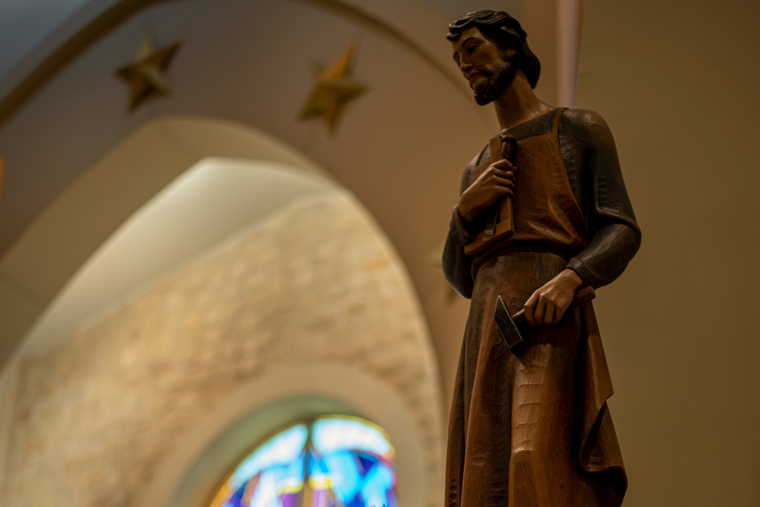
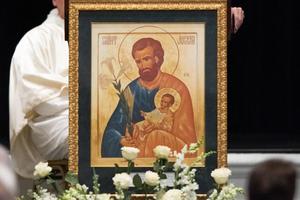
Every May 1, the Church celebrates the feast of St. Joseph the Worker, instituted in 1955 by Venerable Pius XII.
Pius reminded workers that “the humble craftsman of Nazareth … embodies before God and the Holy Church the dignity of the manual laborer.”
As the meaning and goal of work has gradually been misunderstood and overlooked over the decades, a new video series from the Knights of Coumbus — “Into the Breach: The Dignity of Work” — will set workers back on course.
The series examines work and God’s mission for man, work and holiness, work and family life, work and the world and putting work in its place. Each part shines with clear-cut examples and insights from those who work in different fields. Here are some “takeaways” the series highlights:
1. Joseph Is a Role Model Par Excellence. Supreme Knight Patrick Kelly sets the scene: “Looking for role models in our work, there’s no one better than St. Joseph. He spent his entire life supporting his family through manual labor. It’s impossible to think of St. Joseph being lazy for putting his work ahead of his family. St. Joseph is the patron saint of workers, and he’s a powerful intercessor. We can turn to him for help in all sorts of work situations, and he will come through for us.”
2. His Character Comes First. Preceding the May feast day is St. Joseph’s Day on March 19, which reflects his witness. “We celebrate him as the husband of Mary and the foster father of Christ. Do I think St. Joseph was a good carpenter? Yes, absolutely,” says Benjamin Akers, a theology professor at the Augustine Institute. “But before we’re introduced to Joseph and what he did, what his trade was, we’re first introduced to Joseph as who he was. Scripture tells us that Joseph was a just man. God chose Joseph to teach Jesus what the model of a man would look like: how to love God, how to love Mary as mother, how to give a good day’s work, how to pray, how to live virtue. These are all lessons that Joseph taught Jesus, and he wants to teach us as well.”
3. Set Priorities Like Joseph. Joseph followed God’s will in his protection and guidance of Mary and Jesus, whether in his daily labor of woodworking or setting off for safety in Egypt, which inspires sources like former professional baseball player Mike Sweeney. As Sweeney says, “Whenever I make a decision on work, my relationship with God needs to always come first, followed by my relationship with my wife and my children, and then my work. So when rightly ordered, your work is not in a tug-of-war with your family. Whenever your work is destroying your family, hit the ‘pause button’ and figure out if that’s what you're called to do.”
4. Follow Proper Order. Joseph knew about work-life balance long before it was a term in popular parlance. He worked to provide but knew its value in light of eternity. “The No. 1 thing that I must focus on is my family,” Knight Damien O’Connor explains. “Sometimes I’ve had jobs where I was miserable, but it was to earn income for my family. As a man, I’m exhausted. As a Catholic man, I must be above that. I must find the ways to be loving to my wife, find ways to go deep down and to find some sort of energy to spend time with my kids ... finding ways intentionally to be with them.”
Deacon Patrick Toole, a retired IBM executive, adds a step. “How much are you actually devoting time to your family? How much are you devoting to even things like hobbies? A lot of times men get lost in their job and forget their hobbies they used to love. Make sure to have times of leisure. Make sure to have times of stepping back and realizing what’s important.” He underscores priorities: God, family and work — in that order.
5. Work Is Significant. The faithful can imagine that Joseph did even the smallest task well. “There is no job that is too small or too insignificant because all the small things add up to great things,” says Tim Gray, president of the Augustine Institute. He counsels, “Open your heart to what He’s calling you to do. When you put your heart and your mind and your faith together to drive your life, whatever work that is, that’s where you’ll find joy.”
6. Our Job Affects Many. Catholics can consider how the labor of Joseph impacted his neighbors in Nazareth. “We work for ourselves and our families, but not only for ourselves and our families,” reminds Kelly. “Our work also impacts our neighbors and society. It contributes to the right ordering of the world. And in all these ways we help build up God’s kingdom on earth. Yes, we work to earn a living, but our work also contributes to the common good, and that’s God's beautiful plan for work.”
7. Work Sanctifies Us. Working at the pace of prayer was surely characteristic of this saint. What about us? “Working with right intentions can draw us closer to God and help us grow in holiness,” adds Kelly. “We can sanctify our work if we approach every task, large and small, with the idea that this task has been given to me by God, and we do that task for His greater glory.”
“Jesus Christ wants us to understand that work is sanctifying, that work is holy, that work brings order to chaos, that work brings family together, community, society, culture,” says Father Dominic Couturier of the Diocese of Grand Rapids, Michigan.
8. Work Witnesses Faith. Joseph, ever diligent, reflected a good work ethic with each mark of the chisel. “Wherever we are — at home, at work, out abroad — we’re always called to give witness to the good news of Jesus Christ,” Akers explains. “At work, one of the ways that we can do that is through the witness of our life, by working diligently, by working with integrity and justice and honesty.”
9. Proper Leisure Is Important. Joseph would have observed the Sabbath, resting well as God commanded. True leisure for modern workers should be in the same vein, not involving distractions of worldly entertainment. “If I were trying to discern where I would find leisure or peace, I would ask God to help me identify my passion, something that’s going to be helpful and life-giving,” points out Deacon Toole, who plays cello. “We encounter God through truth, beauty and goodness, so I feel it’s really important to always have outside activities, especially leisure activities, that help us really see the truth, beauty and goodness in the world — and draw us closer to God.”