The Fabric of Faith: What Our Lady’s Wardrobe Reveals About Her Mission
Garments that reflect Mary’s poverty, humility, purity and obedience ...
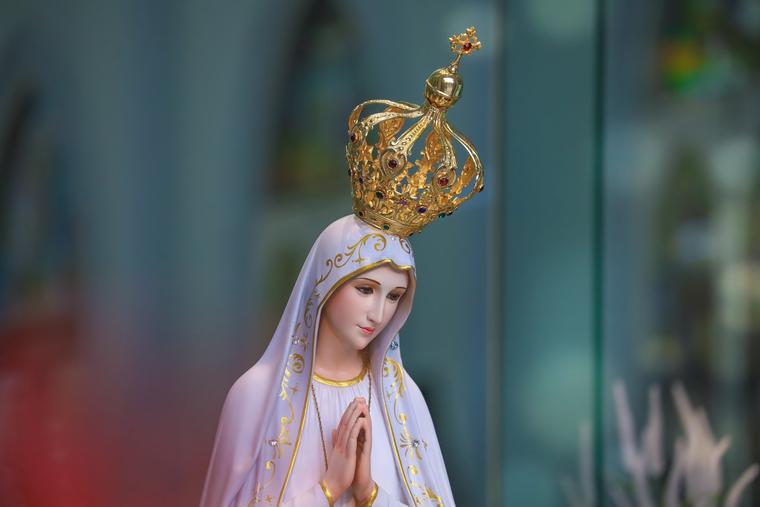
Have you ever considered the story told by Our Lady’s garments?
Whether you have come across the delightful children’s book Our Lady’s Wardrobe by Anthony DeStefano, find yourself an avid collector of Marian iconography, or perhaps have contemplated Marian apparitions over the ages, one thing is certain: The clothing of Our Lady is intentional.
The patterns, color palettes, textiles and designs tangibly point to Mary’s maternity and queenship. Her garments remind us of her constant intercession, through which she draws us to Christ.
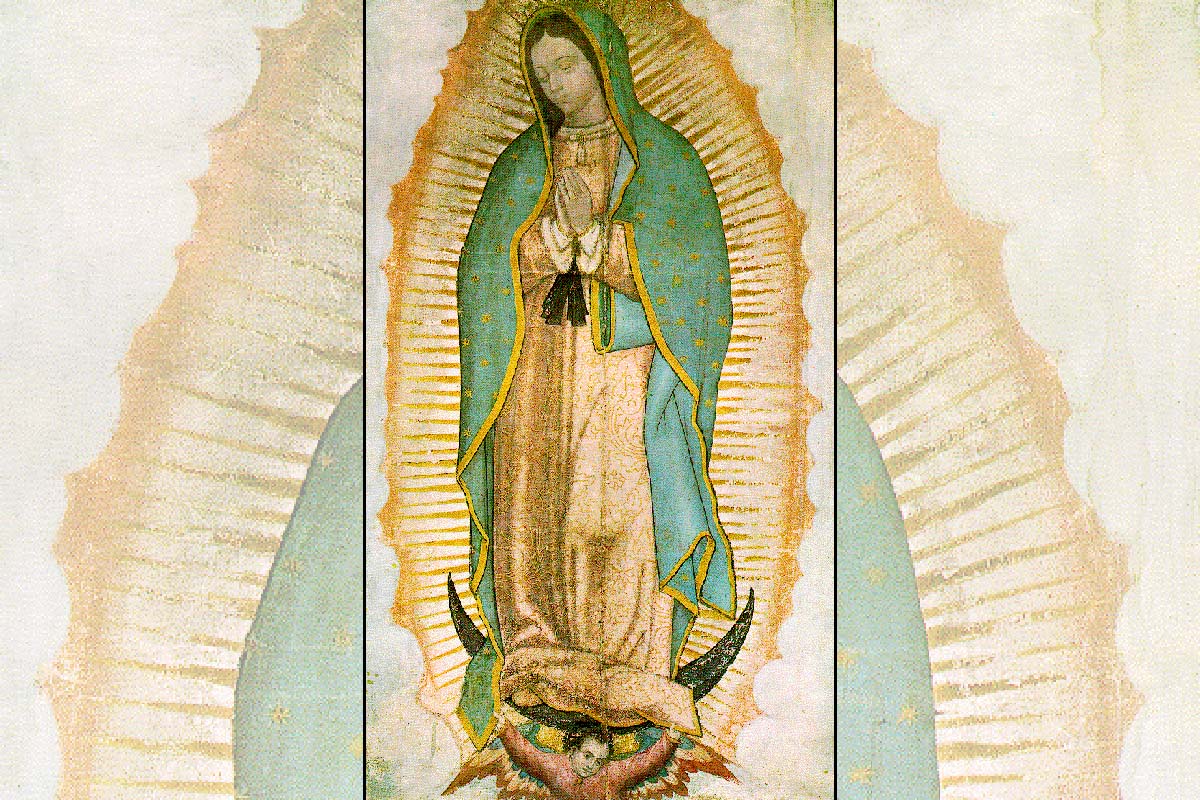
In the various Marian apparitions, Our Lady often appeared wearing simple garments reflecting her humility but also with small details that would serve as a sign to those who would later study the apparition. For instance, from France to Mexico, our Blessed Mother wore a sash to indicate that her womb was once the home of our Savior. The particular shades of blue in the apparition of Our Lady to St. Juan Diego represents royalty among the Chichimeca people, and flowers of Nahui Ollin decorated her dress, which represent the presence of God.

Our Lady is noted for wearing a bright-white dress when she appeared throughout the centuries in Portugal, China and Rwanda. The Fatima children specifically emphasized that her dress was brighter than light, and Nathalie, one of the visionaries of Kibeho, described that “the Virgin was dressed into two colors: a white dress and a wide blue-sky veil that took the shape of a cape going down behind up to the feet.” St. Catherine Labouré described Our Lady’s dress as being made of silk because of the way it rustled when she came to speak with her.
Even though our Blessed Mother often appeared wearing simple white garments, artists took creative liberty in depicting Our Lady with more festive garments in order to emphasize her love, nearness to and intercession for the whole world. Our Lady of Dong Lu (China) appeared in a white robe, but “[i]n thanksgiving, Father Wu commissioned an artist to paint an image of the Madonna dressed in the royal robes of a Chinese dowager empress with a Christ Child on her knee. The image became known as Our Lady of Dong Lu, commemorating the victory over the Boxer assault. The regal appearance of Mary was meant to convey her intercessory power and queenship,” as the Hawaii Catholic Herald reported.
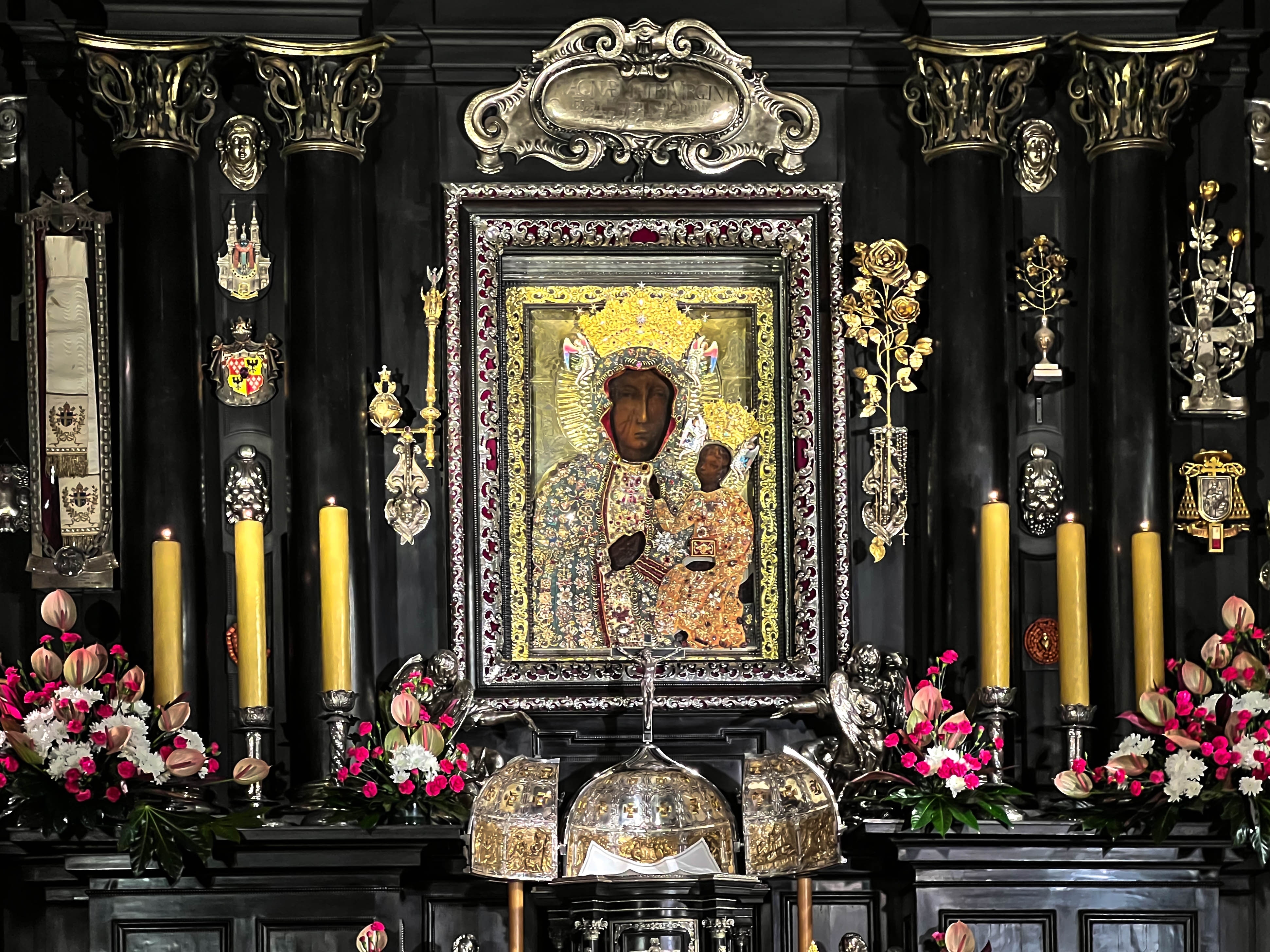
Our Lady of Częstochowa is a miraculous icon that is believed to have been painted by St. Luke the Evangelist. She wears a dark blue gown, “The dark navy blue coat is a sign of the interior life that leads to infinity. The dark blue in iconography is a symbol of the life of God. In the Icon of Czestochowa, dark navy blue emphasizes Mary’s virginity while the coat with dark carmine lining emphasizes her divine Motherhood,” as the National Shrine of Our Lady of Częstochowa explains on its website. The icon is traditionally dressed with an overlay on the icon made up of precious gems and materials to honor her queenship and maternity. “The image of the Mother of God is covered by a silver screen from 1723 with an allegorical composition referring to the Immaculate Conception of the Blessed Virgin Mary,” Jasna Góra Monastery that safeguards the icon explains online. There are 12 different dresses that have been switched out to overlay the frame, each with its own history. See various examples and explanations of the overlays here.
The historical garments of the Blessed Virgin Mary can be highlighted in some rare relics that have been preserved by the faithful over the years. Whether these relics are definitely the clothing of the Blessed Virgin Mary, we won’t know for certain until heaven, but for centuries there is one specific relic that has been venerated with special care. Germany’s Aachen Pilgrimage honors relics from the Holy Family, one of which is Mary’s robe:
“St. Mary’s robe is an ancient work of domestic embroidery. It may be assumed that it was used as a slip as the earlier name for the relic, ‘camisia’ — shirt — indicates. It is made of naturally colored linen and is embroidered with vertical and horizontal lines in a grid pattern. In Israel flax and cotton were only to be found on the coast and in the lowlands of Jordan; woolen fabric was therefore used for everyday purposes. The dress, woven from one piece of cloth with no seams, exhibits a finely sewn neck edging, which is freely shaped. Two perpendicular cuts on the lower sides of the seam are likewise freely embroidered, however in a different form than that of the neck edging. One sleeve of the dress seems previously to have been longer, because something seems to have been cut off the left sleeve. It is the only one of the four relics in Aachen Cathedral to be unfolded for the pilgrimage. The dress is 153 cm long, the seam circumference amounts to 246 cm, the span of the sleeves is 132 cm,” according to the Aachen Cathedral website.
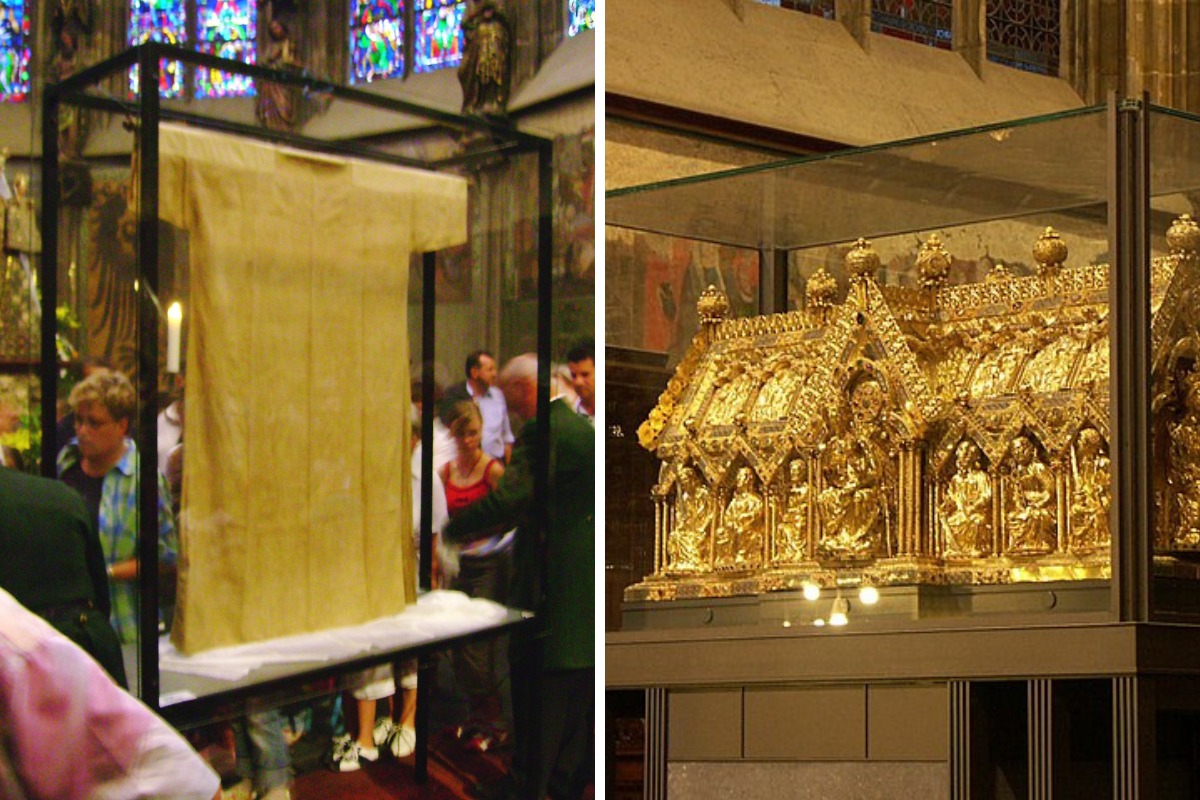
The garment reflects Mary’s poverty, humility, purity and obedience. Linen is a textile that is crafted by a purification process of several washings, followed by a time of beating down the fibers in order that they become flexible and pliable. This is one of the reasons linen is often associated with penance, sacrifice and purification in Scripture.

If you are interested in learning more about the theological significance of clothing, I invite you to dress like the saints and think you will enjoy The Liturgical Style Guide. My book visually guides you to dress with the liturgical year through sacred art, museum sketches and fashion photos. The book is steeped in theological research, with more than a hundred footnotes referencing Scripture, the saints, the Church Fathers and papal encyclicals — all to share the beauty of how our clothing tangibly reminds us of God’s mercy. Be inspired as you get dressed for Mass on Sunday or just an ordinary day of chores where you want your clothing to remind you what feast day it is. When you learn about the theological significance of colors and textiles, you will be amazed how much your outfit can tangibly remind you of the graces offered to us each day — an especially beautiful aim as the new year begins as we honor the Mother of God.
As I posted on Instagram, “The clothing of the Holy Family reminds us of their humility, perseverance, obedience, compassion, and mercy. … [T]he fact that these garments have been venerated for centuries is no small thing. If nothing else, these pieces of clothing offer a sweet opportunity for the contemplation of Mary and Joseph’s quiet, hidden life with Christ in those early days.”
- Keywords:
- clothing
- blessed mother
- fashion expert