As America Turns 250, Bishops Sound the Alarm on Religious Freedom
COMMENTARY: The U.S. bishops’ latest religious liberty report warns that threats are coming from multiple directions — and calls Catholics across the political spectrum to respond.
There are moments when a document arrives not merely as information but as a summons. The annual religious liberty report released Feb. 17 by the U.S. Conference of Catholic Bishops' Committee for Religious Liberty is exactly that kind of document.
Issued as Americans stand on the threshold of the 250th anniversary of our nation's founding, it arrives at a moment when the very freedoms that made this country exceptional are being tested — and tested, it must be said, from multiple directions at once.
The work of the bishops’ Committee for Religious Liberty is, of course, guided particularly by the Church’s teaching on religious freedom. As the Church taught in the Second Vatican Council’s Dignitatis Humanae, religious liberty is the precondition for love — it is the freedom to respond to God’s invitation without coercion or constraint. In addition to guarding against coercion in religious matters, the Church notes that government also has a role in nurturing the conditions necessary for the free exercise of religion.
Archbishop Alexander Sample of Portland, Oregon, chairman of the committee, frames the report with admirable clarity. The ideals enshrined in the Declaration of Independence — that human beings are endowed by their Creator with inalienable rights — have never been merely political abstractions for American Catholics.
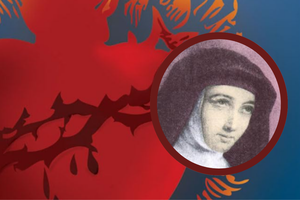
Archbishop Sample’s foreword importantly anchors the report in the bishops’ decision last November to consecrate the nation to the Sacred Heart of Jesus in June. It reminds us that the Church’s engagement with public life is not a legal or political project. It is a missionary one.
Catholics enter the public square not to win arguments or elections but to, as Archbishop Sample notes while quoting Pope St. Paul VI’s decree on the apostolate of the laity, Apostolicam Actuositatem, “do our part in carrying out the task of ‘perfecting the temporal order with the spirit of the gospel.’”
That is precisely why the bishops deserve to be heard — and why Catholics across the entire political spectrum should take this report seriously. It is the mark of a moral authority that answers to something higher than any political coalition.
The commission’s report identifies six areas of critical concern for 2026, and together they paint a picture that should unsettle any person of conscience, whatever their politics.
Consider violence and the threats of violence directed toward places of worship and individuals because of their religious identity, which heads the list. A spate of recent incidents indicates a trend that demands a unified response — and the Church is right to name it plainly.
No less troubling is the report’s attention to unjust terms and conditions attached to federal grants. For decades, Catholic institutions have faced pressure to compromise their identity as the price of participating in public life. Catholic hospitals, schools, adoption agencies, and social service organizations do extraordinary work that governments at every level depend upon and could not easily replicate. Demanding that these institutions check their convictions at the door is not religious neutrality.
The bishops’ concern for access to sacraments for ICE detainees and for the sanctity of houses of worship during immigration enforcement operations is similarly irreducible to a talking point. Whatever one’s position on the broader immigration debate — and faithful Catholics hold a range of views — the right of every human soul to receive the sacraments should be safeguarded.
On school choice, the bishops are carrying forward a fight rooted in the principle of subsidiarity: that education should follow the family rather than the state. Additional work is underway to guarantee that religious freedom protections are part of school choice initiatives like the Federal Scholarship Tax Credit, part of the One Big Beautiful Bill, which allows donors to receive tax credits for gifts to scholarship-granting organizations.
The report also calls for the repeal of provisions that exclude religious organizations from government programs, and for the further repudiation of gender ideology as it has been imposed through federal policy.
The Catholic Church in the United States runs the largest nongovernmental school system, the largest nongovernmental hospital network, and one of the largest social service networks in the country. It serves the poor, the sick, the immigrant, the incarcerated and the forgotten — not because the government asks it to, but because the Gospel commands it. An institution with that track record has earned the right to speak plainly about what threatens its ability to keep doing that work — and those threats, this report makes clear, do not come from one direction alone.
The bishops are not asking for privilege, and they are not carrying water for any political party or ideology. They are asking for what the First Amendment promises: the freedom to be fully Catholic in public life.
As the nation turns 250, that is not too much to ask. It is exactly what America was built to protect.
- Keywords:
- usccb
- us bishops
- religious freedom
- religious liberty