The Jubilee of St. Francis: Rediscovering the Call to Holiness and the Journey of Becoming ‘Perfectly Changed in Heart’
This year, 800 years after his death, the patron of Assisi’s journey from sinner to saint resonates with our world while echoing the Gospel message. As Pope Francis said, his namesake focused on ‘working to make the countenance of Christ shine ever more brightly ...’
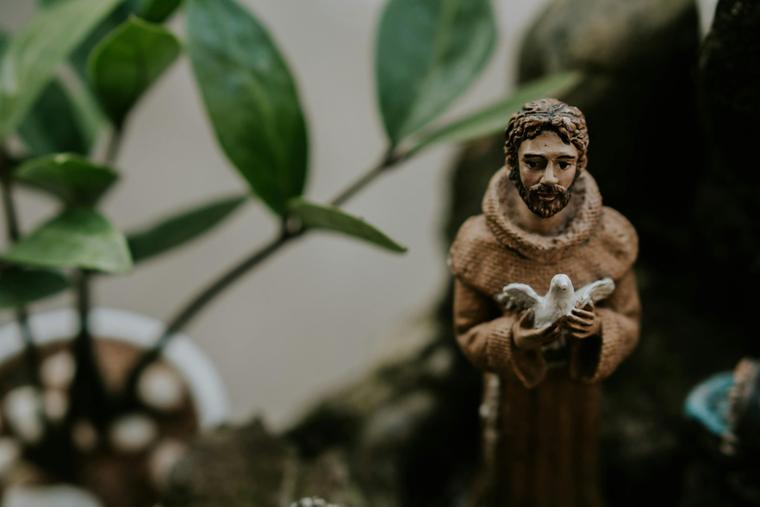
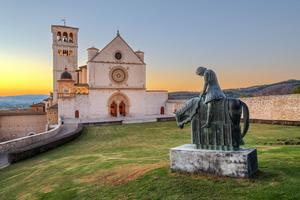
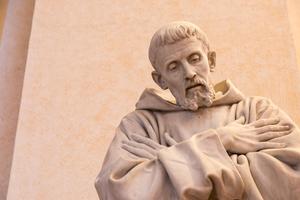
Although the Jubilee Year of Hope has come to an end, the Church never ceases to celebrate the mercies of God. This year, in particular, the Jan. 10 close of this ordinary Jubilee also marked the beginning of another special Jubilee Year to commemorate the 800th anniversary of St. Francis of Assisi’s passing from this earthly life.
This Year of St. Francis will continue until Jan. 10, 2027, and constitutes a new opportunity to look to the example of the Saint of Assisi as “a model of holiness and a constant witness of peace,” according the Vatican’s announcement of the Jubilee. The Secular Franciscan Order in the United States has set up a website that lists many valuable resources for this time.
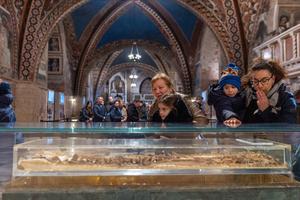
During this period, the Church has granted the grace of a plenary indulgence, a special grace that cleanses the soul from the effects of sin. As detailed in the text of the decree, this indulgence is available to those who belong to the Franciscan Order, those who belong to an institution inspired by St. Francis’ spirituality, or anyone who spends time in meditation at a place connected to the saint. The same document states that “our times are not very different from those in which Francis lived,” adding: In “an era of so-called holy wars, relaxed morals and misguided religious fervour,” the great Saint of Assisi became another Christ (alter Christus) “on earth, providing the world with tangible examples of evangelical life and a real image of Christian perfection.”
Francis: A Sinner’s Journey to Sainthood
Among the countless holy lives of men and women that shine out throughout the Church’s history, St. Francis of Assisi’s life reveals in a unique manner the power of grace to transform a soul’s worldliness into burning love for God. No one has captured this drama in a more vivid manner than Thomas Celano, an early disciple of Francis who knew him well. Celano’s First Life of St. Francis of Assisi, written just two years after the saint’s death, and his Second Life, written as a supplement to the first work, remain unparallelled texts for understanding Francis’ life and message.
Celano is frank about the mundanity of the saint’s early years. As he writes, Francis “from his earliest years was brought up by his parents to be self-willed and to pursue the vain pleasures of this world” and would become “ever more worldly and loose-living than they.” Celano depicts such a style of life as characteristic of the late Middle Ages, in which young people tended towards “the service of vice” and showed “nothing of the Christian religion in their lives or characters.”
Francis not only followed such a profligate style of life, he was also a ringleader of young men who indulged in unspiritual ways. Celano notes Francis’ affable style but states that this disposition was his “undoing,” as it made him vulnerable to friends who encouraged him in iniquity.
Such a portrait of Francis’ early years can give us hope amidst the many temptations that young people face today. The account of the saint’s early life ultimately highlights the strength of God’s mercy, and Celano is keenly aware that Francis’ conversion can offer hope to sinners and “serve as an example to the world.”
How did the Holy Spirit bring about such a profound change of heart? Francis’ first biographer makes note of a “long and painful illness,” which involved both “mental anguish and bodily disease,” which would have occurred while the saint was imprisoned during a civil war between Assisi and the nearby town of Perugia in the year 1202.
The experience of suffering had a decisive impact on Francis’ spiritual growth. Through it, his intimate identification with Christ in his passion, which would later be manifested in the miraculous wounds of Christ or stigmata that appeared on his body, reminds us that authentic Christian holiness necessarily passes through the crucible of sacrifice.
While Francis would still have a long journey after his illness, his adverse health helped to foster a spirit of contemplation through which a new spiritual vitality entered into his heart. He began to dedicate himself more intensely to prayer, to rid himself of his possessions, and to speak in a veiled manner about the new spiritual ideals that inspired him.
This process of spiritual purification would famously involve another essential pillar of the Christian life: the corporal works of mercy. As Francis wrote in his Testament, dictated just before his death, God himself changed his heart so that the sight of lepers no longer nauseated him but rather was a source of “spiritual and physical consolation.”
As Celano recounts in his Second Life, Francis’ early commitment to obey the divine will was put to the test by the sight of a leper that he encountered as he rode near Assisi. Francis, eager to fulfill God’s commandment of love, overcame his natural revulsion and instead dismounted and gave the ill person a kiss as well as some money. Getting back on his horse, he looked back again and the leper had disappeared, indicating that had experienced a profound spiritual encounter with Christ.
Celano portrays Francis’ service to the lepers as a moment of new spiritual maturity, in which he becomes “perfectly changed in heart” and achieves complete mastery over himself. Francis, Celano writes, stayed among the lepers, “serving them all with the most loving care for God’s sake, washing all the filth from them and even wiping the pus from their sores.” Francis’ compassion to the poor remains vivid in the Church’s memory today, as a luminous reference point for the way Christians are called to exercise charity towards the many forms of poverty present in our modern society.
Francis’ love for the poor prepared his soul for another defining moment of his vocation, as related by Celano. “Led by the Spirit,” Francis entered the dilapidated Church of St. Damian (San Damiano) near Assisi, where he became immersed in deep prayer before a crucifix.
There, the painted image of Christ spoke out and told him: “Francis, go repair My house, which as thou seest is wholly falling into ruin.” The grace of that moment instilled in the saint a fervent and tender love for Christ Crucified. Francis, who at first set out to repair the church building where he prayed, would only later come to grasp that the term “house” referred to the Church, for which the beloved saint would serve as an exceptional instrument of renewal.
As recalled by Pope Francis — who chose his papal name in honor of the saint — Jesus’ call to “rebuild my house” was not about “repairing a stone building, but about doing his part for the life of the Church.” In doing so, St. Francis’ life manifested the beauty of the Church’s identity. As the late pontiff said: “It was a matter of being at the service of the Church, loving her and working to make the countenance of Christ shine ever more brightly in her.”
Francis: Example for Modern Times
The vocation of St. Francis, however special and extraordinary, illuminates the calling that God directs to each and every baptized person.
In the midst of a world so often marked by materialism and spiritual indifference, St. Francis’ life provides us with a valuable reminder that the Gospel is always capable of revitalizing the life of the Church and the world. God just needs men and women who are willing to listen to his call and respond generously. The current Jubilee Year of St. Francis is a fitting occasion to rediscover this perennial truth, so that we might play our own role in building up the house of God which is the Church.
LEARN MORE ABOUT ST. FRANCIS
A new “EWTN Learn” series has launched here:

Father Joseph Thomas Opus Dei Father Joseph Thomas, based in Princeton, New Jersey, is dedicated to ministry that focuses on college students. He writes regularly on theological topics and is the author of The Theology of Divine Grace (Scepter, 2023). He also serves as the U.S. representative for the Pontifical University of the Holy Cross in Rome.