The Summons of Religious Freedom Week
COMMENTARY: The US bishops’ consecration to the Sacred Heart and the 250th anniversary of the signing of the Declaration of Independence adds unmistakable significance.
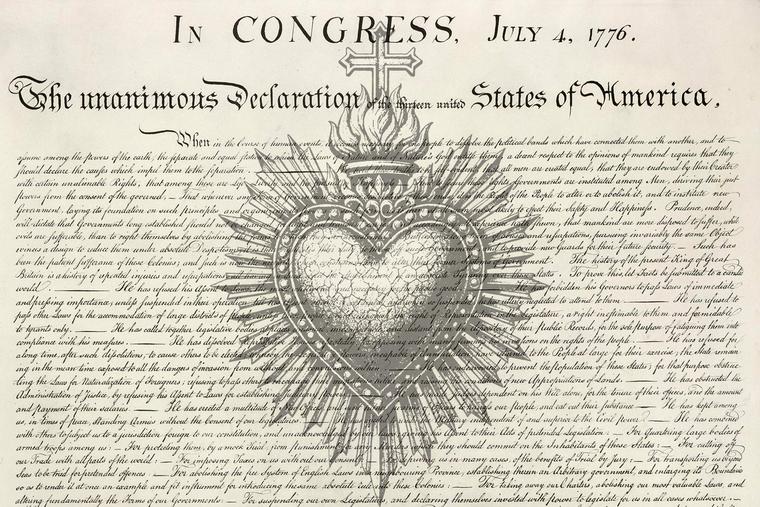
Religious Freedom Week, the annual initiative of the U.S. Conference of Catholic Bishops, calls on Catholics to pray, reflect and act in defense of our first freedom. Beginning June 22, the feast of Sts. Thomas More and John Fisher, the USCCB invites Catholics to promote religious freedom through daily intentions spanning political violence at home, the plight of immigrants seeking the sacraments, persecution in Africa and Nicaragua, gender ideology, religious discrimination in public programs, and parental choice in education.
This year, Religious Freedom Week takes on added significance: On June 11, as part of the 250th anniversary celebration of the signing of the Declaration of Independence, the U.S. bishops consecrated the United States to the Sacred Heart of Jesus. Eleven days separate the consecration from the week that follows — close enough that the two cannot reasonably be considered unrelated.
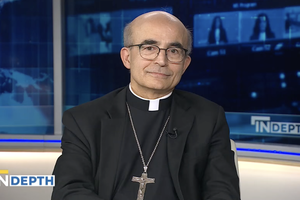
Archbishop Alexander Sample of Portland, Oregon, chairman of the U.S. bishops’ Committee for Religious Liberty, reflects that as we give thanks for the blessings God has bestowed on our country, our devotion to the Sacred Heart demands that we consider how we might foster truth, justice and charity in American life.
That is precisely the summons of Religious Freedom Week — not merely to defend a legal right, but to ask what kind of society we are called to build.
The connection between Sacred Heart devotion and religious liberty runs deeper than sentiment. Archbishop Sample notes that Pope Pius XI, drawing on the teaching of Pope Leo XIII, commended the “pious custom” of consecrating a nation to the Sacred Heart as a way to recognize the kingship of Christ — and to resist the tendency of modern political life to wall off faith from the public square. That tendency is alive and well.
Consider the week’s opening theme. The bishops express concern that the polarization long lamented by religious leaders appears to be devolving into cycles of attack and retribution, with forces in our culture cultivating political and tribal identities defined in part by hatred for others. This is not merely a political observation. It is a moral diagnosis. The bishops’ proposed remedy — examination of conscience and the sacrament of confession — is characteristically Catholic. Change the heart, and you begin to change the culture.
That logic of interior conversion animating exterior witness is also at the heart of Sacred Heart devotion itself. Pope Leo XIV, in his apostolic exhortation Dilexi Te, invited us to contemplate Christ’s love, which moves us outward on our mission to attend to our sisters and brothers suffering in the world today, particularly in our care for poor and vulnerable people. Religious freedom is not an abstraction when real people cannot safely receive the Eucharist, when pastors in Nicaragua are surveilled during Mass, when Christians are massacred in Nigeria's Middle Belt.
There is a striking piece of good news. On June 5, the U.S. State Department announced more than $240 million in humanitarian assistance to Catholic Relief Services — the first in a planned series of awards to vetted organizations capable of rapidly responding to crises worldwide. The funding will support food, nutrition, health, water and sanitation, and shelter assistance in countries including the Democratic Republic of the Congo, Ethiopia, Haiti, Nigeria and Sudan — many of the very places where religious persecution persists.
Closer to home, the week calls us to reflect on the sanctity of sacred spaces and the universal human need to worship freely.
Churches, parishes and houses of prayer are not merely buildings — they are where believers encounter God and receive the sacraments. The inviolability of those spaces is a cornerstone of any society that takes religious liberty seriously.
Among the week's most hopeful themes is parental choice in education — the Church's long-held teaching that parents are the primary educators of their children and that government should support, not obstruct, that sacred responsibility.
New federal scholarship legislation creates real opportunities for families to choose schools that reflect their faith and values. How that legislation is implemented matters enormously, and the USCCB is engaged in the regulatory process to ensure that religious schools and the families they serve are fully protected.
This is a moment for Catholics to make their voices heard.
The consecration of our nation to the Sacred Heart was not a triumphalist gesture. It was an act of rededication — an acknowledgment that the freedoms we celebrate in this 250th anniversary year are not self-sustaining. They require what the founders intuited and the Church has always taught: Ordered liberty depends on virtue, virtue requires formation, and formation flows from a people who know themselves beloved and accountable to Someone beyond the state.
Religious Freedom Week is not a civics exercise. It is a spiritual one, and this year, it begins just as our nation has been freshly entrusted to a Heart described as gentle and humble. That is the confident posture from which the work of defending religious freedom here at home and abroad can proceed.