From Schubert to Staubach: The Hail Mary Through History
COMMENTARY: As the old year gives way to the new, it is timely to recall two important anniversaries of the venerable Marian prayer.
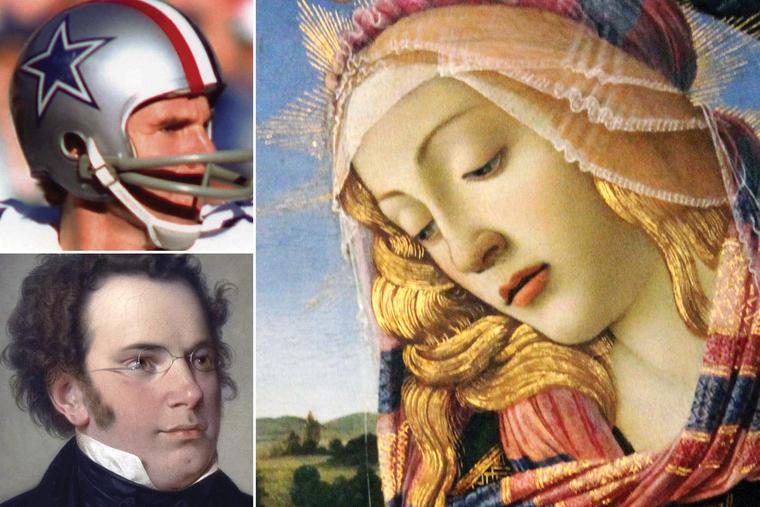
How old is the Hail Mary?
It depends.
If you mean the words addressed to the Virgin Mary in Nazareth by the Archangel Gabriel — which will be referenced in the gospel assigned for Jan. 1, the Solemnity of Mary, the Holy Mother of God — then the Hail Mary is 2,025 years old, more or less.
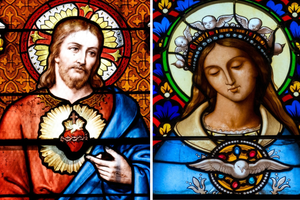
If you mean the Hail Mary (Ave Maria) prayer, then it is about 1,000 years old, likely originating in the antiphonal verses and responses prayed by monks in the 11th century.
If you mean the musical setting of the Ave Maria, often sung at Mass on Marian feast days, weddings and funerals, then it is 200 years old — at least in the most famous setting, that of Franz Schubert from 1825.
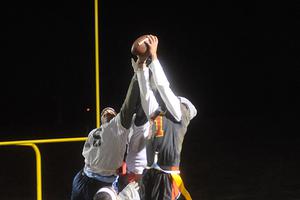
And if you mean the football play, then it is exactly 50 years old. Roger Staubach, a devout Catholic, threw the game-winning “Hail Mary” pass to Drew Pearson on Dec. 28, 1975.
First the Schubert, then the Staubach.
In early December, Michael Bublé, the Canadian crooner, headlined the annual Vatican “concert with the poor,” an initiative of Pope Francis that Pope Leo XIV has happily decided to continue.
It is not a concert “for” the poor, but “with” the poor. Music is to be shared, not transferred like consumables from one to another. It’s a type of poverty not to participate in the fruits of culture. It’s a type of poverty not to have music. It’s a type of poverty not to enjoy music together, at home, or at church or in the concert hall.
Bublé sensed those riches being abundantly shared, declaring that “this is really the greatest moment of my life, and of my career, right now!”
Pope Leo made some requests for the setlist, including the Ave Maria, which Bublé sang in Schubert’s most famous setting — his first time in a live performance.
In 1825, Schubert composed settings for seven songs from Walter Scott’s 1810 poem, The Lady of the Lake. One of the songs, sung by the character Ellen Douglas, calls upon the Virgin Mary’s intercession. Thus “Ellen’s Third Song” begins with the words “Ave Maria” (Hail Mary).
It followed, given the beauty of the setting and the Marian dimension already present, that the words of the Hail Mary in Latin (Ave Maria) would be set to the same music. Schubert’s composition was quickly recognized as a masterpiece and, while it was not written as a piece of sacred music, once the text was set to it, it became one of the most famous pieces of sacred music known throughout the Christian world — as well as in secular environs.
In 1940, Disney’s Fantasia used the Ave Maria in the final sequence, an evocation of enduring hope amidst darkness and turmoil. Schubert’s composition took on a primary cultural significance as a well-known prayer, with the words of the Annunciation and Visitation replacing the Scott poem.
Schubert’s setting is often used outside of Catholic settings, for occasions — like Fantasia — where spiritual consolation or uplift is desired. And it is frequently sung at both weddings and funerals — one of the few pieces considered suitable for both.
From Schubert to Staubach: In the divisional round of the 1975 NFC playoffs, the Dallas Cowboys were playing the favored Minnesota Vikings at Metropolitan Stadium in Bloomington, Minnesota. Time was running out, with the Cowboys trailing 14-10. With 32 seconds left in the game, the Cowboys were at midfield. What to do?
“Our only hope was to just throw it and hope for a miracle,” said Tom Landry, the Dallas Cowboys’ legendary head coach — a devout Christian, but not Catholic.
Quarterback Roger Staubach heaved a mighty 50-yard pass, a desperation attempt to win the game. Pearson caught the ball, awkwardly between his elbow and hip, and took the final steps into the end zone. Touchdown. The Cowboys would win the game.
Afterward, Staubach was asked about the play by the press, a pass that would become one of the most famous plays in Cowboys history.
“It was in the locker room,” Staubach said afterward. “It was an Associated Press writer, I believe, who picked it up. I was a Catholic kid from Cincinnati, and they asked me ‘What were you thinking about when you threw the ball?’ and I said, ‘When I closed my eyes, I said a Hail Mary. I could have said Our Father, Glory Be, the Apostles’ Creed.’”
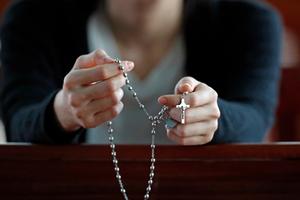
Catholics immediately recognized what Staubach did. Catholics pray quick Hail Marys in all circumstances, whether being wheeled into surgery or looking for a parking spot.
Decades later, Staubach was pleased that his answer made the last-second long pass known as a Hail Mary. Football players and commentators speak of the Hail Mary without any need for further explanation.
The pass to Pearson was the second most famous NFL play of the 1970s. The most famous, Franco Harris’ last-second touchdown catch against the Oakland Raiders in 1972, took on another Catholic-ish nickname, the “Immaculate Reception.” But the “Immaculate Reception” refers to a specific play in the past. The Hail Mary has become an ongoing part of the game — and beyond.
Nine years after Staubach’s Hail Mary, an even more remarkable Hail Mary was thrown by Doug Flutie of Boston College, then the leading quarterback in college football and winner of the Heisman Trophy in 1984. The day after Thanksgiving, playing the formidable and fearsome University of Miami, which had a rough and unruly reputation, the Catholic college was facing defeat on the last play. Flutie launched a Hail Mary even longer and more improbable than Staubach’s throw in 1975 — and Boston College won on the last play when it was caught by Gerard Phelan in the end zone.
From football, the Hail Mary was applied to any situation. A candidate down in the polls as Election Day nears may give a last-minute Hail Mary speech. A business owner, faced with impending bankruptcy, might make one final, desperate sales call — a Hail Mary to save the company.
“Now it’s really used for everything,” Staubach noted proudly. “If you’ve got a problem or something, you need a Hail Mary.”
Staubach means to actually say the prayer. The expression is often used, but the prayer might not actually be said. It is likely that many people calling for a Hail Mary now do not even know its origins as a prayer, even as concertgoers might listen to Schubert’s composition and not know of its spiritual heritage.
As the old year gives way to the new, it is timely to remember that 2025 gave us those two important anniversaries of the Hail Mary — even for those who don’t know the prayer, but unwittingly invoke the Blessed Virgin Mary nonetheless.