The Saint the Devil Lost: Bartolo Longo’s Remarkable Conversion
COMMENTARY: Freed from a life of occult practice, Bartolo Longo became a tireless apostle of the Rosary, founding the Shrine of Our Lady of Pompeii and offering enduring testimony to God’s transforming grace.
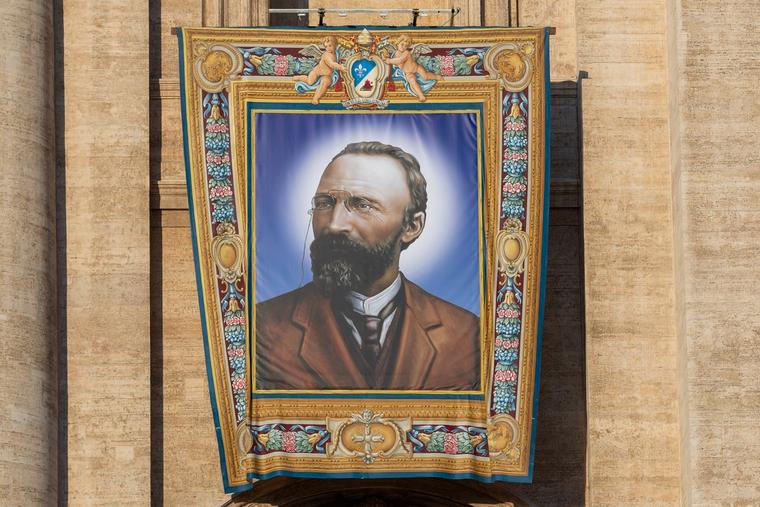
The demons in hell are howling even more now than they have at any time since their initial rebellion condemned them to eternal suffering. One who was once theirs is now lost to them forever. For them, all hope is lost.
“I tell you,” Jesus assures us, “there will be more joy in heaven over one sinner who repents than over ninety-nine righteous persons who need no repentance.” (Luke 15:7)
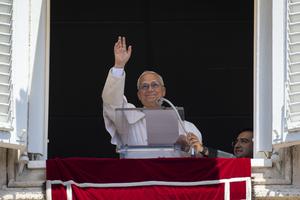
It was a long time coming. They thought they had us the Fall — but no. Jesus’ sacrifice on the cross put an end to that demonic nonsense. And to put the final seal on hell’s defeat, Pope Leo XIV canonized Bartolo Longo, an Italian layman, lawyer and founder of the Shrine of Our Lady of the Rosary in Pompeii, Italy.
You may recall that Longo was once a satanist — not merely a casual participant, but someone deeply immersed in the occult.
It’s the basic satanic-rags-to-saintly-riches story.
Say what you will about the “pious stories” about St. Christina the Astonishing (1150–1224) rising from her coffin at her funeral claiming to have visited heaven, hell and purgatory. Or St. Francis of Paola (1416–1507) crossing the Strait of Messina by laying his cloak on the water and sailing on it with his staff. Or St. Anthony of Padua (1195–1231) convincing a donkey to kneel down before the Blessed Sacrament after he challenged a heretic to a test of faith. Or St. Brigid of Ireland (c. 451–525) turning bathwater into beer for visiting clergy.
The stories about Bartolo Longo are no less remarkable — and they are all true.
Bartolo Longo was born Feb. 10, 1841, in the small town of Latiano, near Brindisi, in southern Italy. His parents, Dr. Bartolomeo Longo and Antonina Luparelli, were devout Catholics who prayed the Rosary together daily.
He studied law at the University of Naples, where he became involved with a satanic group and was eventually “ordained” as a satanist priest.
He publicly ridicule Christianity and mocked God and his saints. He even convinced other Catholics to leave the Church and participate in occult rites.
But all of this fun and frolic was secretly working against him. He was sinking into despair and started having horrifying dreams that drove him back to the Church while being chased by his demons, literally. As he walked near the chapel at Pompeii, Longo had a profound mystical experience which he later described:
As I pondered over my condition, I experienced a deep sense of despair and almost committed suicide. Then I heard an echo in my ear of the voice of Friar Alberto repeating the words of the Blessed Virgin Mary: ‘If you seek salvation, promulgate the Rosary. This is Mary’s own promise.’ These words illumined my soul. I went on my knees. ‘If it is true ... I will not leave this valley until I have propagated your Rosary.’
Longo became a Third Order Dominican and took the name Brother Rosario in honor of the Rosary. He joined a charitable apostolate in Pompeii and worked with Countess Mariana di Fusco, a wealthy widow whom he later married at the recommendation of Pope Leo XIII.
Yes — Pope Leo XIII’s recommendation.
And now Pope Leo XIV has canonized him.
When Bartolo died, the call for his canonization was immediate. Pope St. John Paul II beatified him on Oct. 26, 1980, calling him the “Apostle of the Rosary.” More than 30,000 people attended the ceremony.
The truly wonderful thing about Bartolo Longo becoming a saint in the very Church he had worked so hard to destroy is that if God could work through him, there’s still hope for the rest of us as well.
In Bartolo Longo, we see proof that with God all things are possible. Just as heaven rejoices over one sinner who repents, just as the Good Shepherd risks everything to find the lost sheep (Luke 15:1–7) and just as the woman rejoices when she finds the lost coin (Luke 15:8–10), so too can we rest assured that the Hound of Heaven never abandons those who stray.
Thanks be to God for his boundless mercy — and for the joy that accompanies every soul who finds the way home.
- Keywords:
- st. bartolo longo
- satanism
- saints