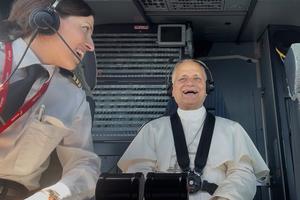
Pope Leo XIV Is Set to Visit Equatorial Guinea — Here’s What He’ll Find
COMMENTARY: The Holy Father’s upcoming trip to Africa’s only Spanish-speaking nation will bring him to a Catholic country shaped by oil wealth, inequality and decades of authoritarian rule.
The announcement of Pope Leo XIV’s second apostolic journey, scheduled for May, included a surprise stop.
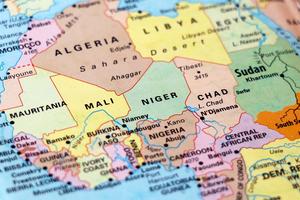
In addition to visiting Angola, the Holy Father will visit Equatorial Guinea, one of Africa’s smallest and most obscure countries but also one of the most Catholic, in terms of the percentage of the population (87%) faithful to the Church. The Maryland-size country of fewer than 2 million people consists of one large island, several smaller islands and a continental section on the African mainland.
In many ways, tiny Equatorial Guinea, like giant Angola, faces many of the major development and resource challenges common to other African countries. It is one of Africa’s oil-exporting states, with all the blessings and curses that oil wealth provides. The country has invested heavily in infrastructure, apparent in paved highways, electric lights, modern airports and sleek government buildings.
Chinese companies contracted by the government are building a new capital, Oyala (or Ciudad de la Paz), carved out of virgin rainforest. The energy boom, led by American oil companies, drew populations away from much of the country to the two main cities — Bata, on the African coast, and the former capital of Malabo, on the island of Bioko — in search of services and employment opportunities unavailable elsewhere. Oyala is an expensive attempt to reverse that trend. But with infrastructure spending came massive corruption.
Before oil was discovered in the late 1990s, Equatorial Guinea was one of the poorest countries in Africa, dependent on foreign assistance and a small cocoa crop. Now luxury items — and even many staples — are imported by air from Europe. With oil wealth has come conspicuous consumption by elites and extreme inequality between rich and poor (on paper, the country is the fourth richest in Africa). Equatorial Guinea is not unique in this. It is not the most corrupt country in the world, but it is very close to the bottom.
Many Equatoguineans aspire to secure a government or oil-company job. The service industry — waiters, barbers, laborers — is often staffed by foreigners, from elsewhere in Africa or beyond. An Equatoguinean farmer I knew hired some locals to help with his crop; they quit after a couple of days, and he hired Chinese laborers to finish the job. Like other African countries with relative wealth, Equatorial Guinea faces the problem of illegal migration from poorer countries, with migrants often resented by the native population.
When Pope St. John Paul II visited Equatorial Guinea on Feb. 18, 1982, he was blessing a country that had until recently endured ferocious religious persecution. Spain had hurriedly divested itself of its African colony in 1968 and, as a result of a democratic election, a literal madman was elected president. For 11 years, Macías Nguema — a literal psychopath and self-proclaimed “Hitlerian Marxist” — ruled with an iron hand. He executed one-sixth of the population, expelled missionaries, and shuttered all the churches. Some have called Nguema an “African Pol Pot.” He was credibly accused of practicing both witchcraft and cannibalism. Equatorial Guinea was called the “Auschwitz of Africa.”
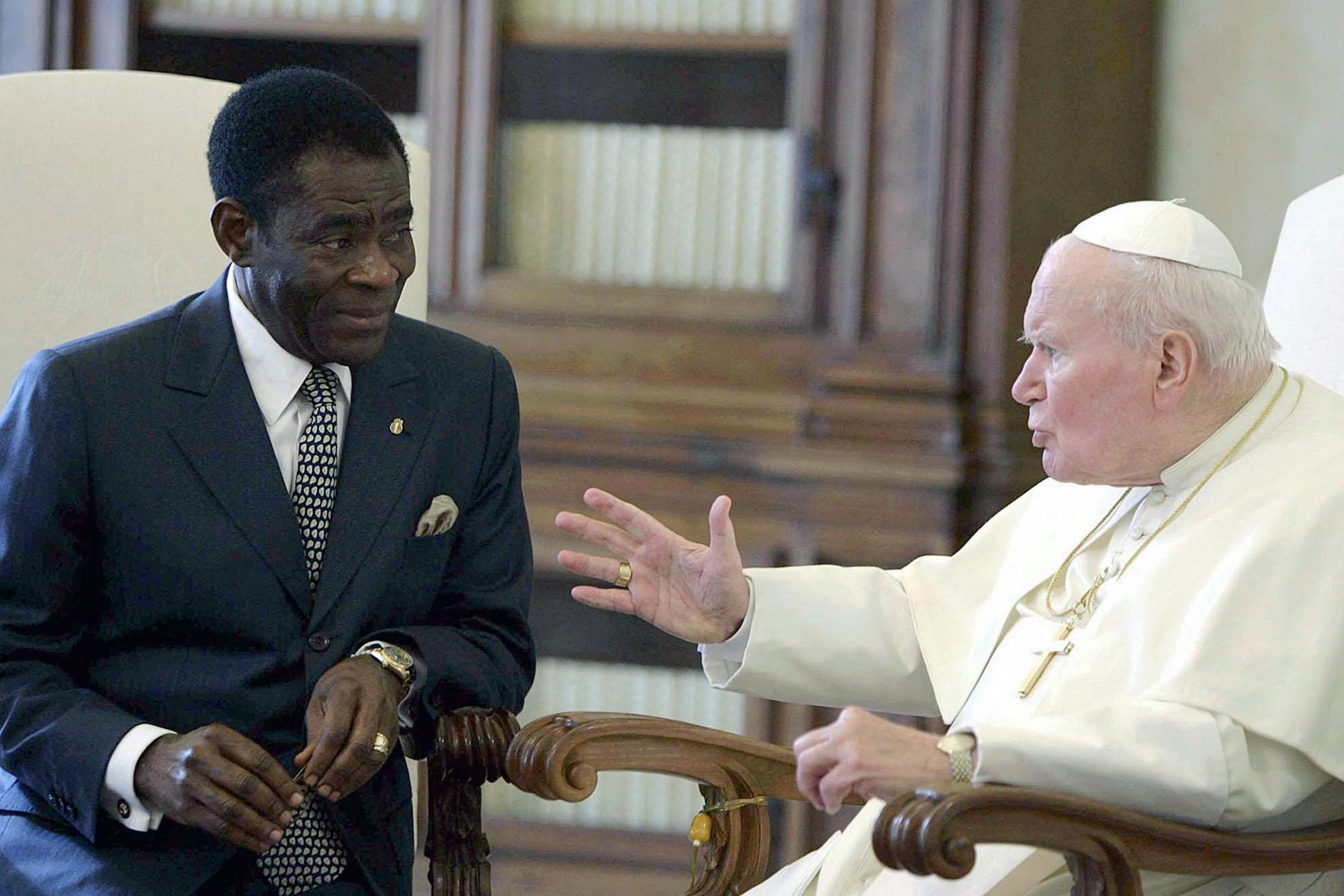
Teodoro Obiang Nguema, a young army officer — and a relative of the fearsome dictator — overthrew Macías on Aug. 3, 1979, in “the coup of liberty,” which saw church doors reopened. Macías was tried by a summary military tribunal and executed.
In 1982, Pope John Paul II was welcomed to the country by 39-year-old President Teodoro Obiang. In May 2026, Pope Leo XIV is expected to be met by Obiang, now 83, who is not only the longest-ruling leader in Africa but the longest ruling leader in the world. Most Equatoguineans — median age 20 — have not known any other president. While Obiang is no Macías — very few are — he has been an authoritarian figure, both adulated and despised. A June 2023 trial sentenced opposition political figures to long jail terms.
For all his many faults and multiple political transgressions, Obiang sees himself very much as a loyal son of the Catholic Church.
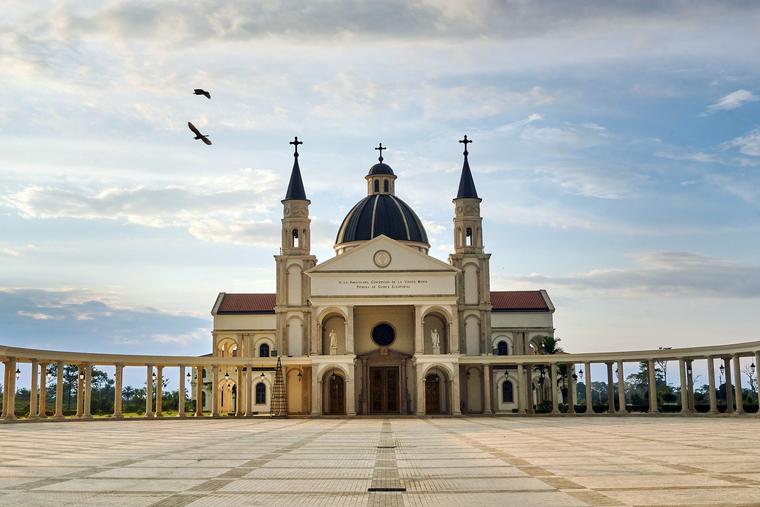
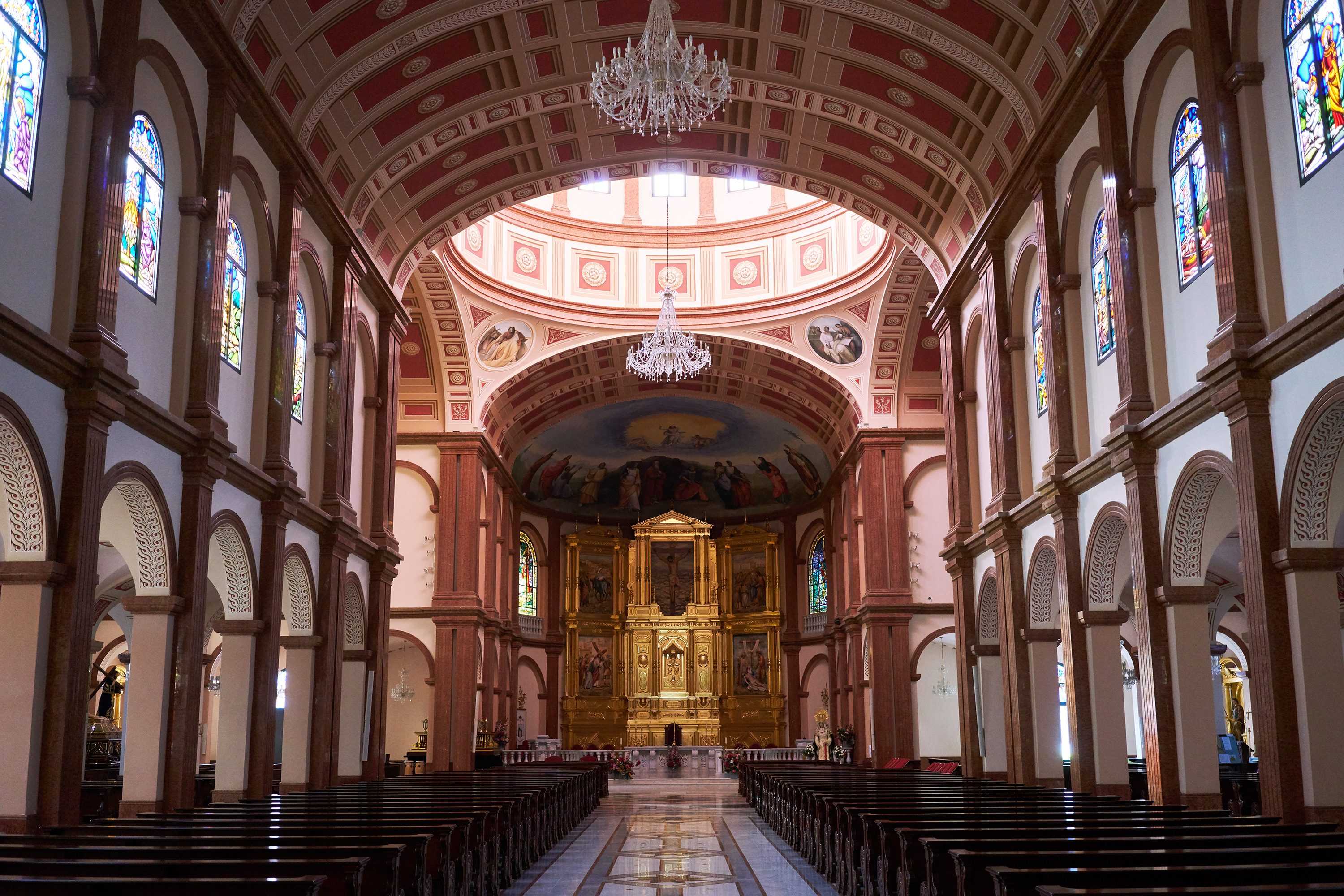
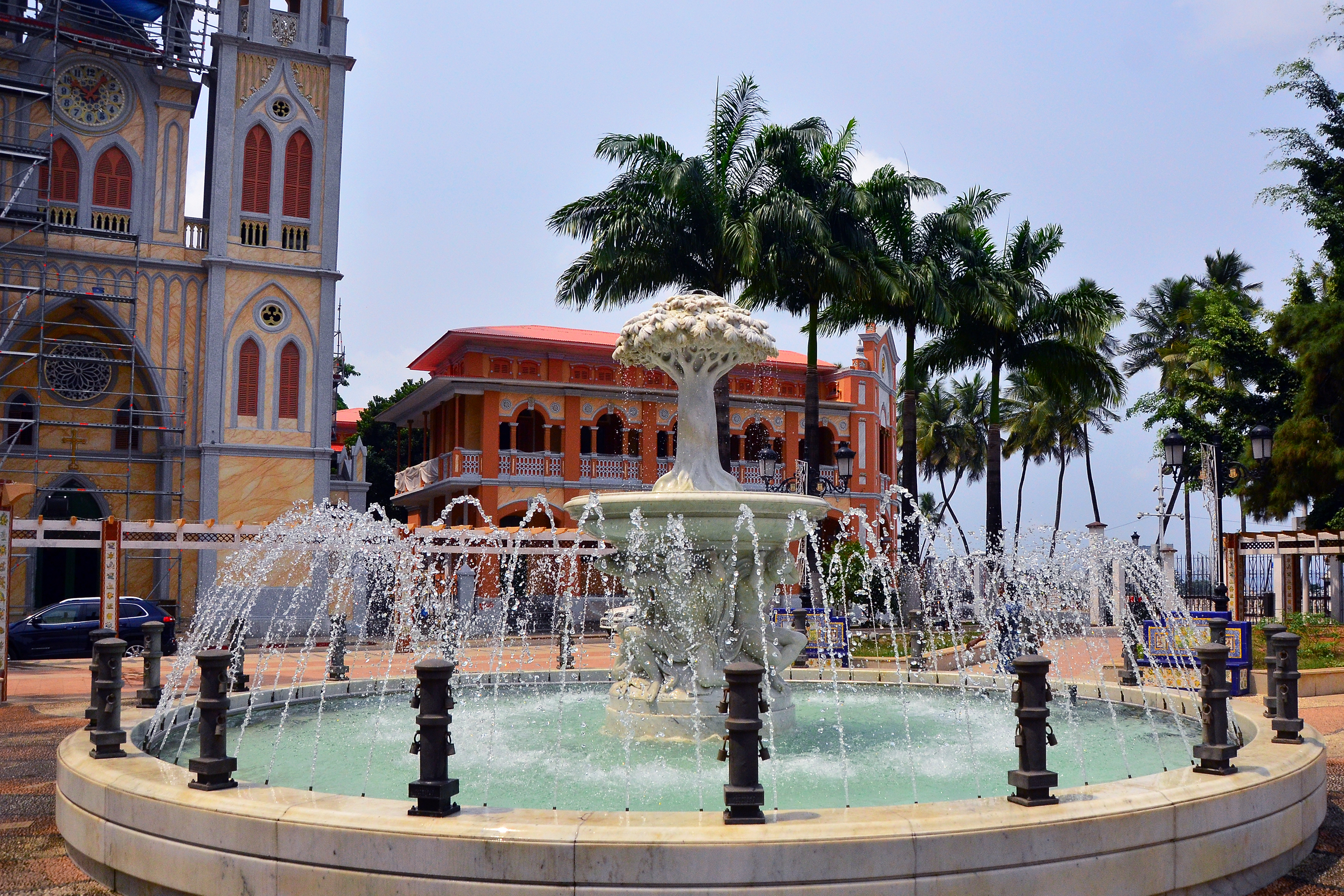
While opposition figures deride him for supposedly having several wives and as many as 30 children, Obiang ordered the construction in 2006 of the largest church in the country — and one of the largest churches in Africa. The Italian-built Basilica of the Immaculate Conception in Obiang’s native town of Mongomo was inaugurated in 2011 by Cardinal Francis Arinze. When the historic Cathedral of Santa Isabel in Malabo (built in 1897) was severely damaged by fire in 2020, Obiang ordered its restoration paid for out of government coffers.
As the Pope’s trip approaches, many media outlets will decry the regime in Equatorial Guinea as somehow uniquely evil or uniquely corrupt. It is neither. The fraught reality is difficult enough. What the regime actually represents is a survival of a late African political model — the authoritarian “Big Man” neopatrimonial state.
Angola, under the late José Eduardo dos Santos, used to be one of these countries. Both of Equatorial Guinea’s neighbors, Cameroon and Gabon, have similar strongman regimes.
In contrast to Obiang’s carefully groomed, and likely sincere, public persona as an assiduously Catholic head of state, his expected successor is his erratic 57-year-old son and First Vice President, “Teodorin” Obiang, infamous for past excesses and not known for religious devotion. The country could well face a volatile and traumatic transition sooner rather than later.
Pope Leo’s challenge to Equatorial Guinea will not only be spiritual — his main focus on this and any other trip — but also social. Without being overtly partisan, how can he best encourage human flourishing, social peace, and more just and humane societies in regimes known for authoritarianism and corruption?
In our changing world, these no longer seem to be particularly African challenges — they never were — but global ones.
Alberto Fernandez served as U.S. ambassador to Equatorial Guinea during the George W. Bush administration.
- Keywords:
- equatorial guinea
- africa
- pope leo xiv