St. Katharine Drexel Did What the Rich Young Man Couldn’t
COMMENTARY: Mother Drexel was born into one of America’s wealthiest families — and spent her fortune and life as a missionary of the Blessed Sacrament.
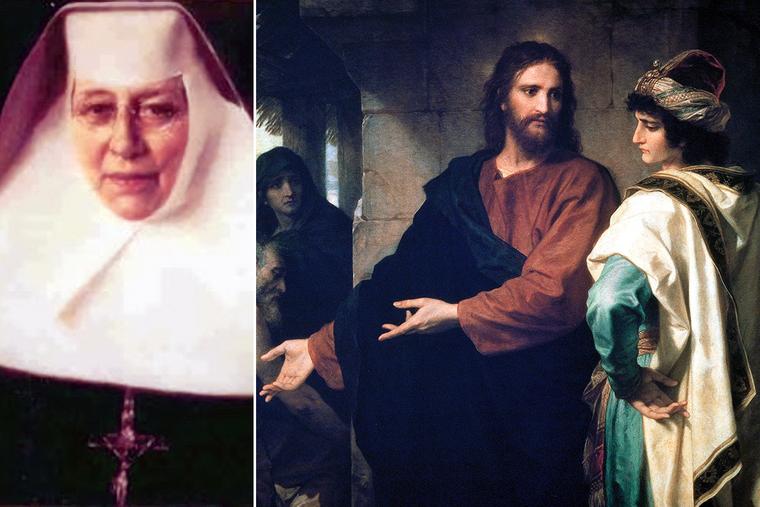
Today the Church celebrates the feast of one of the greatest Americans of all time, one of a small number elevated to the eternal hall of fame, someone who shows us how to sell all the pearls one has to obtain the Pearl of Great Price.
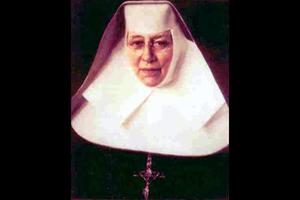
St. Katharine Drexel was born in Philadelphia in 1858, two years before the death of St. John Neumann, Philadelphia’s fourth bishop. She was born into wealth so vast, with her father a rich investment banker, that it could have insulated her from inconvenience, material suffering and responsibility for a lifetime.
Instead, beginning at an early age, she intentionally exposed herself to the wounds of the world, to the poor and forgotten, and to the radical demands of Christian charity and mission. With her two sisters and stepmother, she distributed food, clothing and rent money twice a week from their home to poor mothers and single women of the city.
This precocious charity, however, did not satisfy the divine and human love her heart contained.
Reading and hearing stories about the Black and Native Americans who were growing up not only in material poverty but spiritual poverty, she was unable to remain indifferent. She grasped that the greatest deprivation was not lack of food or shelter, but lack of access to Christ, to education in the faith, and to the protection of their human dignity. She began to contribute to their causes and take long train rides to visit their communities and reservations. After every financial gift, she would write, “Ad majorem Dei gloriam” (“To the greater glory of God”).
She was 27 when her father died, and she and her two sisters inherited his $15.5-million fortune, the equivalent of about $520 million today. Katharine decided to employ her portion, like she was dedicating her life, to God’s kingdom.
She at first began to discern becoming a cloistered nun, but a priest friend of the family suggested that she wait a little while to see what God might be asking.
She made a pilgrimage to Rome, where — like the future Sts. Frances Xavier Cabrini and Thérèse of Lisieux the same year — she had a private audience with Pope Leo XIII in 1887. She mentioned the plight of the African and Native Americans in the United States and how they needed spiritual, educational and material care. She hoped that he might be able to suggest a religious order or two that might care for them. The Pope surprised her by saying that she should found one herself to do so. That was the clarity in discernment she was desiring, and, after prayer, that’s what she did.
St. Katharine made the choice the Rich Young Man could not: to find her perfection in using all God gave her for others.
She founded the Sisters of the Blessed Sacrament to share with others the reality of Jesus’ ongoing sacramental incarnation, how he sought to be with us always until the end of time. Every Catholic, called by baptism to be a missionary, is meant like her to be a missionary brother or sister of the Blessed Sacrament — because we are summoned not only to proclaim the Gospel understood as words, but to invite people to embrace the truth that the Word made flesh continues to dwell among us under the humblest appearances of seemingly bread and wine.
Her mission was not easy. Her works were opposed. Her schools were threatened. Her sisters endured violence and hostility from governments and even from many Catholics. She herself was misunderstood, criticized and resisted. Yet she persevered. She wrote, “If we do what each moment requires, we will eventually complete God’s plan, whatever it is. We can trust God to take care of the master plan when we take care of the details.”
Before her 1955 death, she founded 51 convents, 60 schools and 145 missions in Pennsylvania, New York, Massachusetts, Virginia, Oregon, New Mexico, Arizona, Tennessee and Louisiana. She established Xavier University in New Orleans to make higher education possible for Black Americans in the South in a way that would help them integrate their learning with the truths of the Catholic faith.
I was able to be present at her canonization Mass on Oct. 1, 2000, in St. Peter’s Square. In his homily, St. John Paul II emphasized that she “learned that her family’s possessions were not for them alone but were meant to be shared with the less fortunate. As a young woman, she was deeply distressed by the poverty and hopeless conditions endured by many Native Americans and Afro-Americans. She began to devote her fortune to missionary and educational work among the poorest members of society. Later, she understood that more was needed. With great courage and confidence in God’s grace, she chose to give not just her fortune but her whole life totally to the Lord.”
He said that she taught the sisters in her community “a spirituality based on prayerful union with the Eucharistic Lord and zealous service of the poor and the victims of racial discrimination.” The two went together: Seeing Jesus under the Eucharistic species trained them to see him in others. He said she was a witness that “no greater treasure can be found in this world than in following Christ with an undivided heart and in using generously the gifts we have received for the service of others and for the building of a more just and fraternal world.”
During my time working for the Holy See’s Permanent Observer Mission to the United Nations in New York, I served as chaplain to two communities of Sisters of Life in New York. In one of them, the monstrance used for adoration of the Blessed Sacrament after Mass had been purchased by St. Katharine and used for years by her and her community. The Sisters of Life didn’t miss the connection St. John Paul II emphasized and St. Katharine lived, as they went from the treasure of Christ in the Blessed Sacrament to care for and enrich women and children in need. When I lifted the heavy monstrance in Eucharistic Benediction, I asked that Jesus bless both them and me with his own charity.
On March 3 at Mass across the country, in the Collect right before the Liturgy of the Word, priests pray for that unity of love of God and love of neighbor, for Eucharistic devotion and giving one’s body, blood and life for the life of the world.
“God of love,” they on our behalf implore, “you called St. Katharine Drexel to teach the message of the Gospel and to bring the life of the Eucharist to the Native American and African American peoples; by her prayers and example, enable us to work for justice among the poor and oppressed and keep us undivided in love in the Eucharistic community of your Church.”
St. Katharine Drexel recognized that our care for the marginalized cannot be content to remain at the level of corporal works of mercy, however important. We should desire to help them to encounter the Eucharistic Jesus. The most important justice of all is helping others know the reality of Christ’s burning Eucharistic love, which is the source of the Church’s work to remedy injustice and oppression everywhere.
- Keywords:
- st. katharine drexel