Blessed James Miller: An Unsung Hero Among American Saints
COMMENTARY: His short life is the stuff of movies: farm boy from the heartland, football coach, teacher, missionary and heroic martyr.
The widespread joy that greeted the news of the upcoming beatification of the famous Archbishop Fulton J. Sheen earlier this week shows us just how some lives of heroic virtue impact the multitudes.
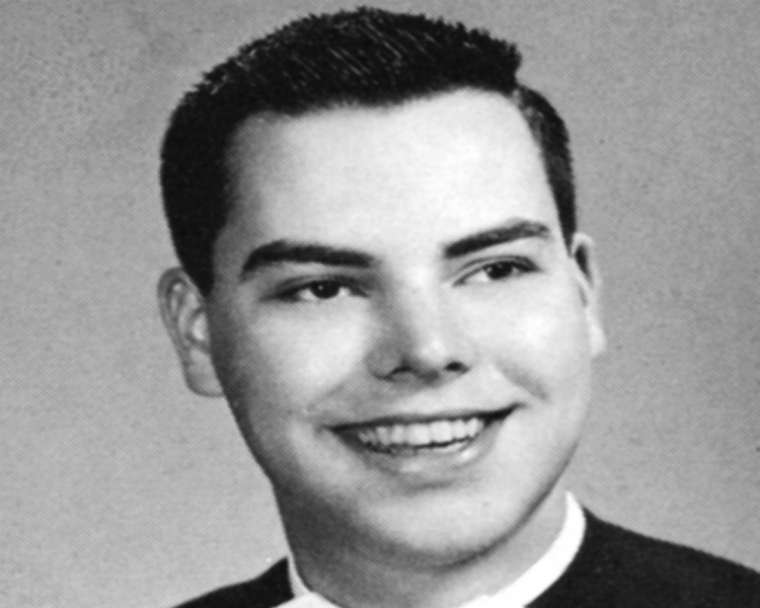
There are others, however, whose stories, witness and even martyrdom somehow remain little known. That seems to be the case with Blessed James Miller (1944-1982), whose holy life vies with St. Mother Théodore Guérin’s for the most obscure among their fellow American Catholic home team.
In Blessed James’ case, it makes little sense, because his life ought to be the stuff of movies. He was a farm boy born in the heartland — a football coach, builder, teacher, missionary and heroic martyr. Yet most Catholic daily Mass-goers wouldn’t even recognize his name, and few pulpits in our country today would mention him.
Perhaps the reason he remains so little known is because he was a religious brother, the vocation that gets the least attention in the Church today. Regardless, as we celebrate his feast today, marking the 44th anniversary of his martyrdom in Guatemala, it’s fitting for all of us to get to know him better, to share his story with others, and to pray through his intercession for the many virtues — especially faith and courage — that his life exudes.
Born in 1944 and raised on a dairy and chicken farm in Custer, Wisconsin, James Miller learned early the habits that would later define his sanctity: discipline, endurance, responsibility and humble service. He prayed at home, worked hard, desired to be a priest, and dreamed of putting the Great Commission into practice. As a teenager, he read the encyclopedia cover to cover, striving to learn about foreign lands where he hoped one day to bring the Gospel.
Attending Pacelli High School in Stevens Point, he came to know the Brothers of the Christian Schools and quickly saw that God was calling him to be one of them. At 15, he entered the juniorate. Three years later, he became a postulant and then a novice. He earned bachelor’s and master’s degrees in Spanish at St. Mary’s University in Winona, hoping to share in the Brothers’ missions in Latin America.
Those who knew him at the time said he was a “common, good guy,” “very human,” “a man of union and communion,” who had the “gift of gab,” a perpetual smile, a boisterous and infectious laugh, and a “deep faith and love for his religious vocation.” They also said he was perpetually late to prayers and class — something that Cardinal José Luis Lacunza of Panama, who beatified him in 2019 in Guatemala, joked had prepared him very well for service in Latin America, “where punctuality is not numbered among our virtues!”
His first teaching assignment was at Cretin (now Cretin-Derham Hall) High School in St. Paul, Minnesota, teaching Spanish, English and religion. He also supervised the maintenance of the school, earning the nickname “Brother Fix-It.” He coached football as well. At 6’2” and 220 pounds, he not only had the physique of a tight end but was easily capable of being a “big brother” to students and faculty both.
After a fellow brother became ill at the Brothers’ school in Bluefields, Nicaragua, “Hermano Santiago” was sent to replace him. He taught sixth grade and then high school, while also repairing the Brothers’ residence, running a bookstore and starting a soccer team.
He was later transferred to Puerto Cabezas and named director of the school. There, he not only supervised but got his hands dirty building an industrial arts complex, an auditorium and a science center. He also taught, founded a volunteer fire department, and served as janitor, fixing the plumbing, cleaning the bathrooms and sweeping the floor. Enrollment grew from 300 to 800 students. His practical know-how won the attention of the Somoza government, which contracted him to build 10 more schools in the rural region so that children there would have a chance at an education.
When the Sandinistas came to power, he was put on a list of people to be “dealt with,” because he had erected schools for the Somoza government. His superiors decided to summon him back to Cretin High School.
St. Jean Baptiste de la Salle, founder of the Brothers of the Christian Schools, had once told his spiritual sons, “Your zeal must go so far that you are ready to give your life, so dear to you are the children entrusted to you,” and Hermano Santiago took his founder’s instruction to heart. He worried that the people of Puerto Cabezas would see his departure as an act of cowardice, and so he wrote telling them he would return — but he never got his wish.
After two years of asking to return to Latin America, his superiors sent him to their mission in Huehuetenango, Guatemala, to teach and serve as sub-director at the Indigenous House School and work at the Indian Center, training indigenous Mayans in agricultural techniques, leadership skills and basic educational subjects.
His new assignment was as dangerous as his previous one. The Guatemalan government regularly conscripted indigenous students into military service, even though students were exempt by law. Hermano Santiago and his fellow Christian Brothers repeatedly presented documentation to secure their students’ release, something that those in the government resented. Word quickly spread that members of the G-2 death squad were looking for the sub-director.
Cardinal Lacunza later explained at his beatification why both the Nicaraguan and Guatemalan regimes feared him: “There is nothing that bothers totalitarianisms more than education,” because education forms conscience, dignity and freedom. And if education threatens tyrannies, the Gospel threatens them even more.
Brother James was aware of the threats. He wrote his sister a month before he died, “One of two frightening things could happen to me in Guatemala: I could be kidnapped, tortured and killed or I could simply be gunned down.” He added, however, “You can’t waste your energies worrying about what might happen. If it happens, it happens.” To lighten the mood, the jocular religious would say, “I never thought I could pray with such fervor when I go to bed!” On a more serious note, he added, “I place my life in [God’s] Providence. I place my trust in Him.”
On Feb. 13, 1982, after returning from a picnic with students, Brother Fix-It climbed a ladder to fix a broken lamp outside the school. At 4:15 p.m., a car sped past. Four hooded men opened fire with automatic weapons. Seven bullets tore through his neck and chest. Children watched from the windows as their teacher, janitor, coach and spiritual father fell from the ladder, murdered before their eyes. He was 37.
He died doing what he had always done: trying to make the light of Christ shine among students in the darkness of ignorance and the night of murderous evil. Cardinal Lacunza said he gave his life in witness of Christ’s Great Commission to teach all nations and was an icon of Christ the Teacher, who gave his life in witness to the truth.
Brother James’ funeral was held first in Huehuetenango and then in St. Paul before he was buried in Ellis, Wisconsin, at St. Martin Cemetery, just outside the family farm in the Diocese of La Crosse.
During his life, Brother James loved to do things “very quietly, behind the scenes,” and “never asked for recognition,” one of his fellow LaSallians testified. With his beatification, all that he did for the Church has been brought into the foreground, giving him the most important acknowledgment a human being can receive. His beatification shows that the Lord continues to exalt the humble and that the greatest in the Kingdom of heaven remain those who keep the faith and teach others to follow it (Luke 14:11; Matthew 5:19).
As the Church universal has exalted him, it’s time for American Catholics to follow suit — by getting to know him, seeking to imitate his virtues and priorities, and making him a celestial “Brother Fix-It” by invoking his intercession for things big and small. He could easily be invoked as a patron or co-patron of football and soccer coaches, construction workers and custodians, teachers and principals, those learning foreign languages, farmers, missionaries and more. Men in particular should be urged to grow in devotion to him, because he is among the manliest Americans in the eternal hall of fame.
The Church in America could greatly profit from this increased devotion, because she must learn anew how to form young men not just in virtue but in heroic virtue, so that like Blessed James, they may join the team he coached, embrace the full adventure of the Christian life, dedicate their talents and lives in faithful service of Christ to the end — even, if God wills it, to the shedding of blood.
This is a particular intention we could ask “Blessed Fix-it” to address.
- Keywords:
- blessed james miller
- brother james miller
- american saints
- american sainthood causes
- blesseds
- brothers of the christian schools
- guatemala