How I Became Catholic: A Journey of Faith and Conversion
COMMENTARY: Looking back, it seems I’ve been journeying to the Church my whole life.

When I considered joining the Catholic Church, I was surprised by the requirement of a nearly-nine-month class. Then, once I’d completed my studies, my rector asked me to give it more time. When I was 8, I’d simply walked down the aisle of my Baptist church and got baptized. Decades later, to become Episcopalian, I merely wrote a letter and transferred my church membership.
By contrast, the Catholic Church not only had gatekeepers but also required delayed gratification.
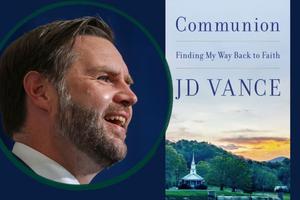
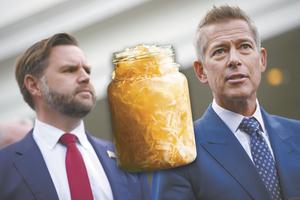
And yet, the statistics say Americans flocked to the Church this year. In recent years, high-profile Americans like JD Vance and Canadian Tammy Peterson have converted, too.
Does that make converting the latest fad? Hardly.
People follow fads to fit in. And because it’s easy, which becoming Catholic is not, requiring time commitments and internal transformation too rigorous for those with passing fancies. Not to mention surrendering control and stepping out in faith the only way it can be done — alone. Besides, anti-Catholicism in America is also alive and well.
Still, there is definite interest, particularly in recent months as the world mourned the death of Pope Francis and welcomed the election of Pope Leo XIV. This sparked much interest online, with a spike in online searches for “how to become Catholic.”
Moreover, the door of OCIA (Order of Christian Initiation) through which all converts enter comes with no guarantees of confirmation at the end during Easter or at any other time. The shepherding process still occurs with love and the goal of welcoming everyone to the Church.
Several catechumens I interviewed recently about their journeys waited for years to be confirmed. My own path took well over a year from start to finish. I know several people who took OCIA classes, but never converted due to resistance to dealing with their past marriages that had not been annulled and failure to agree to raise a child in the Catholic faith.
When people ask me about my conversion, they laugh when I ask if they have time for a book. Looking back, it seems I’ve been journeying to the Church my whole life. Starting OCIA is merely the first official step, often preceded by years of discernment. And though OCIA constitutes a period of concentrated study, it’s also a period of limbo.
Perhaps this year’s influx of converts portends a positive trend for the future that will be bolstered by the election of the first U.S.-born pope. But who can say? Decades ago, while still a cardinal, Pope Benedict XVI predicted that the Church would become smaller yet more faithful.
In America, his prediction came true.
A decade ago, the Pew Research Center reported that 40% of U.S. adults who had been raised Catholics had left the Church. A 2023 survey found that “Catholics have experienced the largest decline in affiliation of any religious group.”
Pew’s most recent study, released a few months ago, revealed that although the decline of Christianity in the U.S. had slowed, church membership continues to be challenging for Catholics, whose numbers decreased 20% since 2007. Indeed, for every 100 people who join the Church, 840 leave, compared with 180 for every 100 Protestant.
So what’s up with Catholics? Don’t we want our numbers to grow? Of course! But not at the expense of dispensing with Church doctrine or teaching in order to kowtow to expediency, one of many reasons why I was drawn to the Church. Did Christ ignore his Father’s will and turn from the cross for fear of losing followers? As we know, too, from the Gospel Parable of the Lost Sheep, heaven rejoices more “over one sinner who repents than over ninety-nine righteous people who have no need of repentance.”
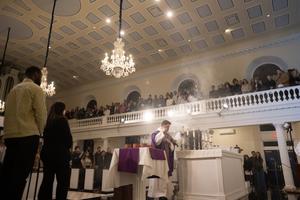
Although the OCIA process does not rise to the level of Church doctrine, its roots developed in the first-century A.D. — a process the Church in all its wisdom has passed down over the centuries for preparing Christians not only to enter the Church but for lifelong worship, evangelization, and service.
During the years leading up to my conversion, I’d grown increasingly weary of the vicissitudes I witnessed in the Protestant faith that seemed to shift with popular opinion. By comparison, Catholicism was a bulwark against time — strong, steady and consistent. The repository of ancient and scriptural truth to which new Catholics are inevitably drawn.
Today, Catholics populate all seven continents with adherents in nearly every country (if not all), down to a tiny chapel in the southernmost part of Antarctica made entirely of ice. During the 20th century, global membership in the Church tripled.
During the downturns in my life, I remind myself of the Church’s staying power, holding fast to my hard-earned faith during periods of doubt. And when I forget, my local bishop’s social-media posts encourage me with his signature hashtag — #rejoiceintheLordalways.
Although it’s not perfect from parish to parish, OCIA and the process of Catholic conversion remains a solid testing ground for the faith. Because once we are officially ushered into the Church, it only gets harder from there.
There’s no coasting on a childhood proclamation of faith or past works for a Catholic. And although the Church doesn’t keep tabs on church attendance or the number of confessions, the Holy Spirit has already taken root within our hearts to become our constant companion and guide. Clearly, despite the propensity of Americans toward impatience, waiting works. Indeed, OCIA boasts a retention rate of 84%.
Catechumens I spoke with who entered the Church during Holy Week this year told me about their many struggles with Church teachings, from those on Mary to same-sex civil marriage, the Communion of Saints, the Eucharist, and contraception and natural family planning. I was already past menopause when I entered the Church, but my once younger very progressive self would have definitely wrestled with teachings on contraception and abortion. As it was, I had lots of questions about the role of the pope, the concept of papal infallibility, and the place of women in the Church.
The Eucharist was a tough one, too, even though Scripture was clear as a bell once I actually studied it. I’d already been excoriated in the press and social media for my writings concerning marriage and attempts to save my own during a protracted divorce. Becoming Catholic would undoubtedly expose me, as a writer, to additional attack. Although both my Protestant parents were deceased when I began OCIA, I feared losing friends, too — and inevitably did. Now, I wouldn’t change a thing.
But that wasn’t always my tune. Six years ago, when my rector asked me to wait on confirmation for what turned out to be another six months, I went home slightly miffed. “How much longer would I have to wait?” I wondered.
I was already at midlife and had been a Christian since age 8. I’d been reading Catholic authors for decades. For more than a decade, I’d been praying the Rosary and attending yearly retreats at Catholic abbeys where I prayed with monks, sometimes getting up at 4 a.m. for vigils.
But I hadn’t been attending Mass every week. Instead, I’d continued to show up at my Episcopal church, hedging my bets I suppose, one foot in Protestantism and the other in the Catholic Church.
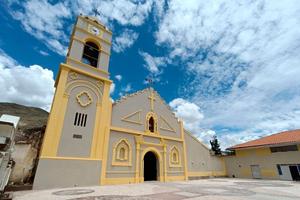
I wasn’t quite ready, and my priest knew it. But I didn’t give up. And I wouldn’t trade for the world my experience in a little Portuguese church where I felt the Holy Spirit descend into my heart, starting when I whispered back, “I want to become Catholic.” By then, I had let go of my own will in order to be filled with God’s.
I saw this microcosm in my own OCIA class — people of all ages, ethnicities, classes, some who had been Christians for decades, others newly born Christians learning about Jesus for the first time.
As St. Paul wrote to the Galatians, “neither Jew nor Greek,” but all one in Christ Jesus united in an otherwise divided world on our journey to the one holy, catholic and apostolic Church.
- Keywords:
- catholic converts
- catholic teaching