A Pause, a Peace, and a ‘Cup of Poison’: How Wars End in Iran
COMMENTARY: The Iran-Israel-United States war that began Feb. 28 is closer to the end than the beginning. But exactly how it ends remains murky.
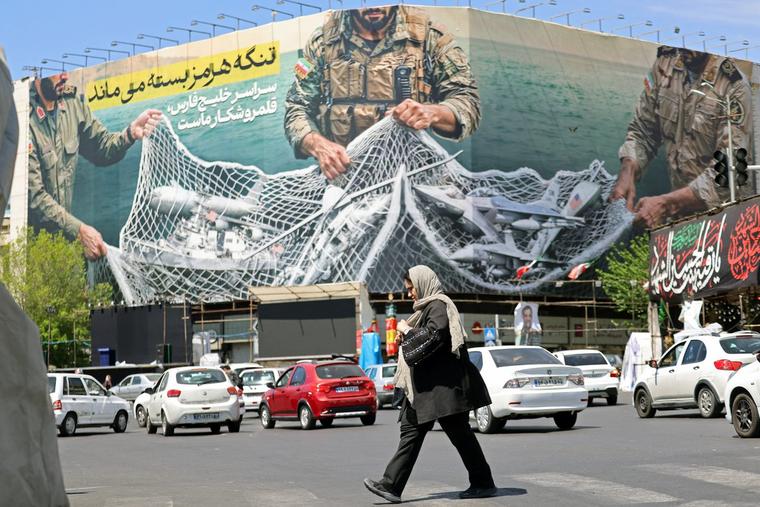
The senior Iranian officials met late at night in an emergency session, speaking their minds freely for eight hours. A chronicler noted that “it was now clear that Iran would be headed for disaster if it obsessively pursued a war that had turned to its disadvantage.” The Iranian leadership decided to end the war, and the president would present the decision to the Supreme Leader for confirmation.
But this was not April 2026 but July 1988, and the end of the brutal Iran-Iraq War, a bloody eight-year conflict with a death toll estimated at between 600,000 and over a million. When President Akbar Hashemi Rafsanjani presented the proposal to end the war to Ayatollah Khomeini, the latter reluctantly agreed, calling the decision “worse than drinking poison.”
The Iraqis didn’t initially trust the Iranian decision, and four days later, Iraqi fighters ambushed Iranian warplanes over Kharg Island. Researcher Pierre Razoux noted in his work on the war that the “shilly-shallying of the mullahs” — they refused to meet the Iraqis directly — led to a high-impact Iraqi ground operation, a week after Iran had announced its acceptance of a ceasefire, that tore open a hole in the Iranian front lines. This defeat, after Iran had initially agreed to a ceasefire, broke the Tehran regime’s reticence. Iran then agreed to meet directly to accept all conditions and end the war.
For Iraq, that victory would lead to Saddam Hussein’s fateful invasion of Kuwait two years later and direct, catastrophic conflict with the United States. The Iranians learned a different lesson and focused on creating a proxy network of regional militias and terror groups so that Iran could attack others indirectly while avoiding attacks on itself in turn. The ceaseless search for ballistic missiles, advanced drones and nuclear weapons can also be seen as an Iranian attempt to secure immunity from direct attack.
It was President Donald Trump, in January 2020, who first broke the barrier of “Iran being hit only through its proxies” when he gave the order to eliminate IRGC Qods Force commander Qassem Soleimani. Soleimani had been the great architect of Iran’s proxy networks, allowing it to wage indirect wars of conquest in the Middle East while presenting itself as at peace.
The recent Islamabad talks between Iran and the United States, led by Vice President JD Vance, were the highest-level talks ever between the Iranian revolutionary regime and the United States, and though they failed to reach a deal, each side made important contacts.
There is no doubt that the current Iran-Israel-United States war that began Feb. 28 is closer to the end than the beginning. But how exactly the war ends remains murky. The current ceasefire may or may not hold until its April 22 expiry date. While negotiations in Islamabad on April 11-12 broke down, the Americans and Iranians are still “talking,” at least indirectly.
President Trump’s naval blockade of Iranian ports is, according to some experts, a powerful weapon that could bring about the economic collapse of the regime. It could prove devastating. Without an outlet for its oil exports, Iran will, in about 13 days, have no capacity to store its oil if it can’t ship it to market. A lack of storage capacity would force Iran to shut down oil wells — a very damaging technical process.
Iran faces an additional problem. The obvious response to the American naval blockade is a return to conflict, but that would mean Iran breaking the ceasefire. Furthermore, Iran’s response so far has been to attack the Arab Gulf states. The Gulf states — deeply disturbed by a potential American deal with Iran — have signaled that if the war resumes, they will not remain passive in the face of Iranian aggression. Thousands of Pakistani troops and advanced aircraft have now arrived in Saudi Arabia to defend the Kingdom against Iran. Gulf Arab sentiment against Iran has hardened so much that, this time, Iran could face not only the Americans and the Israelis but the Arab states and even Pakistan.
Pope Leo was prophetic when he said on April 13 that “too many people are suffering today, too many innocent lives have been lost, and I believe someone must stand up and say there is a better way.” It is not controversial to note that the war has unfolded in ways that neither Iran nor the United States expected.
Despite tremendous propaganda success and continued bluster, the Iranian regime seems poised to survive, but possibly much weakened and impoverished — less capable of lashing out externally but feverishly holding on to power at home. It is trying to turn military defeat into political victory but risks overestimating its clout, which may have peaked during the war.
The Americans are also under pressure to wrap this up sooner rather than later. For the Trump administration, the challenge is a photo negative of the Iranian regime — an overwhelming American victory in a tactical, military sense seemingly threatened by the risk of a strategic political defeat. What the Arabs fear most is that Trump will declare victory and go home, leaving them to face Iran alone.
With the naval blockade, what the Trump administration is trying to do is what Saddam Hussein did in that week in July 1988: force Iran to move from reluctant approval of a ceasefire to grudging acceptance of a peace agreement. They will try to disguise it, but someone will likely give in within the next two weeks and once again “drink the cup of poison” — that is, to do the difficult, painful thing that you would rather not do.