Why Nietzsche’s Ears Were Deaf to the Word of the Cross
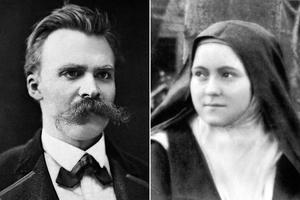
Nietzsche sought strength in the will to power, but the cross proclaims a deeper wisdom he could not hear — a word that reveals the mystery of divine strength in weakness.
Friedrich Nietzsche’s book Thus Spake Zarathustra begins with the protagonist, none other than Zarathustra himself, waking up one morning and realizing that 10 years of meditation have given him a wealth of wisdom. He decides that he will go back down into the city to share his wisdom with the people.
When I first learned about this work, it struck me that there was something of a similarity between Zarathustra and the second person of the Trinity. There are many major differences, of course, but there is a common idea of having a message that must be shared, and some sort of saving act that has to be accomplished. In the story, Zarathustra came down from his cave of solitude; in reality, the Second Person of the Blessed Trinity came to earth from the community of eternal love in heaven.
(By the way, my exposure to this work was first through a lecture on Richard Strauss’ tone poem Thus Spake Zarathustra, which most of us recognized as the famous theme from the film 2001: A Space Odyssey.)
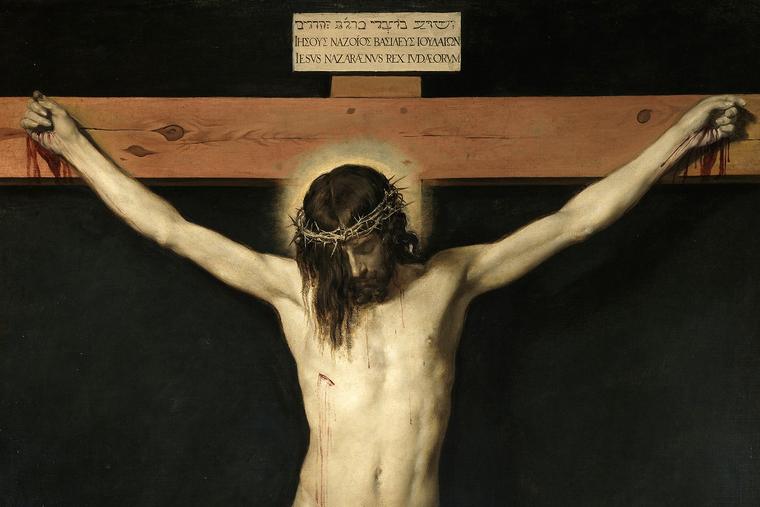
The message of Zarathustra is one of striving for strength, engaging the will, condemning all forms of weakness and declaring that God is dead. I began to reflect on what the message of Christ is. What is the word that Christ spoke when he came? And then I remembered the words of St. Paul: “The word of the cross is foolishness to those that are perishing, but to us who are being saved it is the power of God” (1 Corinthians 1:18). The declaration of Christ is most clearly communicated to us in the cross. The passion of Jesus tells us what the heart of God is like, and it shows us strength in weakness, and that the love of God is beyond our ability to fully comprehend.
I began to read and reflect on Thus Spake Zarathustra, and I imagined what the word of Christ is in response to each of the chapters and the points made by Nietzsche in his work. I also reflected on many other works of literature and how they might be given new meaning when set within the context of the cross. For example, in the novel Don Quixote, the landowner Alonso Quijano reads too many books about knight-errantry and goes insane. He imagines that he is a knight errant himself, and when he sees a windmill, he thinks that it is a giant, and he attacks it. When he sees a flock of sheep, he thinks that it is an invading army, and he attacks them. He does not see the world as we do.
The cross also shows us that God does not see the world the way that we do, and we have to learn how to understand the world by looking through the lens of the cross, the fixed gaze of divine love. The things that we think are harmless, like little vices or white lies or innocuous entertainment, may actually be something perilous. What appears to be a flock of sheep to us may actually be deadly when looked at in God’s economy.
Over time, I put together a series of reflections based on passages of Scripture and literature to communicate these ideas about the world-changing vision of that word Jesus came to communicate to a fallen world, the word of the cross — the word that Christ spoke to definitively communicate his vision of the world and his love to the world.
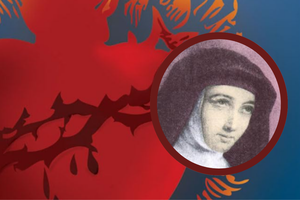
As I continued to work on these meditations, I thought it would be interesting to add some artwork to aid the reader in meditation. So, I reached out to an acquaintance, Dominican Brother John Paul Puschautz, and I asked him if he would be willing to add a piece of artwork to each meditation and then follow it up with a commentary. It turned out that he was at work on a thesis on visio divina, a method of praying with holy images. To my delight, he agreed.
The resulting work has now been published. Our hope is that it provides a kaleidoscopic series of perspectives on the cross in contrast to the words of Zarathustra, all while pulling images and ideas from some of the greatest literature and art. The cross is the center of all human endeavor, and we hope this work will aid people in meditation and prayer.
In Thus Spake Zarathustra, Nietzsche seems to desire a kind of intensity, strength and power of the will. Sadly, he missed the fact that exactly what he was looking for and even more has been incarnated on the cross, where we find true strength, true love, true self-sacrifice and true wisdom. Nietzsche writes that “joys all want deep, profound eternity,” and that the hour of great contempt is the greatest thing he can experience.
Sadly, he did not realize that those two statements are united and fulfilled in a way that we could not possibly have invented: God becoming man, enduring the contempt of the cross so that the joy of his own deep, profound eternity might be shared by us.