Christmas and the Tyranny of the Possible
COMMENTARY: The Incarnation exposes how often ‘realism’ confuses political limits with divine possibility.
The “tyranny of the possible” is a notion advanced by Father John Tanyi Lebui and George Weigel in Lebui’s new book about Holy See diplomacy under Pope St. John Paul II, The Cross and the Flag.
By “tyranny of the possible” they are referring to the tendency, in matters of diplomacy, to narrow one’s expectations of the possible in the name of supposedly “realistic” assumptions. They invoke that idea when discussing the assumptions driving Vatican Ostpolitik under Cardinal Agostino Casaroli during the Paul VI and John Paul II pontificates. Under Montini, Casaroli had free rein; under Wojtyła, he was on a tight leash. Nobody doubted John Paul II’s foreign minister was … John Paul II.
The Ostpolitik “tyranny of the possible” maintained that “realism” meant acknowledging the indefinite and probably permanent division of Europe; that communism always advanced and never retreated; and, therefore, the Church simply had to “survive” in that status quo. The analysis was built on political assumptions about the geopolitical permanence of Yalta.
John Paul, who was hardly an unrealistic sort of guy, refused to consider politics the final determinant of the fate of Europe. Communism itself was built on a plethora of false anthropological assumptions about the human person. Force would not make those false assumptions true. However sturdy communism appeared, it had clay feet. John Paul did not intend to prop them up. He planned on kicking them down.
The “tyranny of the possible” deemed that impossible. Eighteen European nations today are grateful the Pope believed in the impossible.
But the baneful effects of the “tyranny of the possible” as a notion are not limited to diplomacy. It infiltrates many corners of human life. Our tendency to refuse to “think outside of the box” because of our preconceived notions of the “possible” often constricts what we are capable of doing. The “tyranny of the possible” is often less a prudent warning about the limits of action than a retiring excuse for self-limiting action. And that happens in people’s lives across the board, not just in foreign relations.
God never asks us to do what he does not support us in doing. That does not mean it may not be hard; it does mean it’s “possible.” The problem is not God’s failure to give us grace; it’s our refusal to believe it. Peter doesn’t start drowning until he yields to the “tyranny of the possible” instead of what was possible atop the waters of the Sea of Galilee.
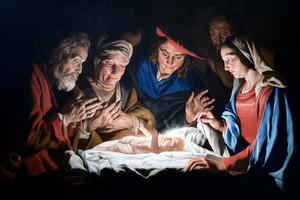
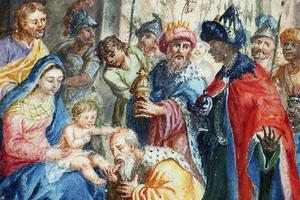
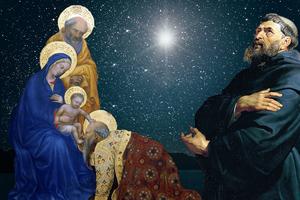
Christmas is the ultimate refutation of the “tyranny of the possible.” To man, the idea that “the Word became flesh and dwelt among us” is an impossible dream. To Satan, the idea of the Incarnation was a scandal. To God, “all things are possible.”
And, as a result, a lot more than 18 countries are free.
- Keywords:
- christmas
- ostpolitik
- pope john paul ii
- communism