Our Catholic Moment
COMMENTARY: People do not convert in meaningful numbers to an institution that has nothing to offer. Something is being offered here — and received.
At a moment when trust in institutions is at historic lows and the public square rewards noise over substance, one question keeps pressing itself forward: What actually produces people of genuine character?
The Catholic Church in America has been working on that question in earnest — not in theory, but in practice, through programs, communities, and vocations quietly built over decades to form men and women capable of contributing to the common good.
The results are becoming visible. There is a surge of adults entering the Church. People do not convert in meaningful numbers to an institution that has nothing to offer. Something is being offered here — and received.
The attention from mainstream media outlets tends toward the performative — Catholicism as aesthetic, as identity marker, as influencer content. It mistakes the most visible expressions for the most consequential ones. The real story is quieter, and it has been building for years.
The Sisters of Life accompany women facing crisis pregnancies with a joy that disarms. The Dominican Sisters of Nashville have grown into one of the largest communities of women religious in the country, attracting young women precisely because they offer a demanding vocation rather than a diluted one. The Dominican Friars are forming men of intellectual seriousness and apostolic purpose. Many dioceses across the nation are experiencing record numbers of young men entering the priesthood. These are not people abandoning the world. They are not scorning it either. They are transforming it.
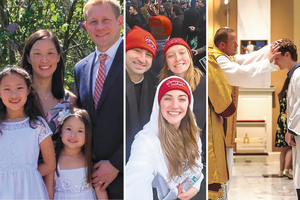
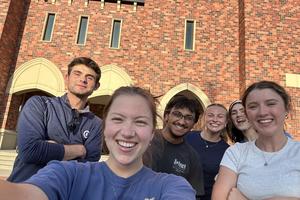
Two programs exemplify the lay dimension of this renewal. The Leonine Forum, begun in Washington with Fellowships now in New York City, Chicago, Los Angeles, Dallas and Denver, cultivates emerging leaders to bring serious moral formation into public and private sectors. The Tepeyac Leadership Initiative, based in Phoenix, forms young Catholic professionals who understand that integrity and excellence reinforce each other. Both rest on a conviction that should resonate well beyond any religious audience: Durable institutions require people of genuine character, and character requires formation — not just ambition.
Meanwhile, a generation of young Catholic professionals is showing up in courtrooms and classrooms, hospital corridors and corporate boardrooms, city councils and think tanks and newsrooms. They are bringing a coherent vision of human dignity and the common good to bear on the actual work of American life. They are not waiting for the culture to become more hospitable. They are engaging it as it is.
This is not a narrow sectarian story. The institutions Catholics have built in America include hospitals, universities, charities and legal organizations that have served others regardless of creed. Ordinary men and women who went to work not for recognition, but for love of God, neighbor, and in fidelity to the Church. That is what is happening again, in Phoenix and Washington, in Arlington and Nashville, in maternity wards and law offices and parish halls across the country.
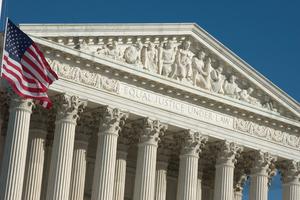
The legal environment has shifted, too. Recent Supreme Court decisions — Our Lady of Guadalupe School v. Morrissey-Berru, Carson v. Makin, Kennedy v. Bremerton and Mahmoud v. Taylor — have substantially restored the ground rules for religious exercise in American public life: churches able to freely direct internal operations, religious schools participating in public programs, individuals free to practice their faith without government reprisal, parents retaining rights over their children’s formation. These are victories for every American who believes a free society requires the freedom to live by one’s deepest convictions.
And then there is Pope Leo XIV — a son of Chicago who spent years as a missionary in Peru. He brings to the Chair of Peter a rare combination: fluency in the American democratic tradition and a pastor’s feel for the spiritual hunger of the Western Hemisphere. He has seen both the promise of the American experiment and its limits. His election did not happen in spite of that formation. It happened because of it. His pontificate is not a footnote.
I like to call this time we are living in “Our Catholic Moment.” The noise in our culture will have its moment. The men and women quietly building, serving, forming the next generation — and the converts who are joining them — will have the century.