A Seminary Renaissance
EDITORIAL: Our latest coverage features examples of how today’s seminaries, through capable stewardship and creative, dynamic orthodoxy, are being rebuilt on firm foundations.

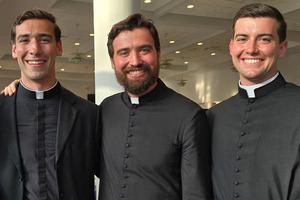
The priest shortage in the United States that we so often hear about is real and worrisome. But that’s not the full story. While the numbers aren’t where they need to be, the high caliber of the men who are studying for the priesthood and being ordained today ought to be a great source of hope for the U.S. Church.
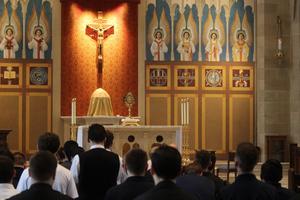
Not all those who the Lord calls to be laborers in his vineyard respond to his invitation, of course. Too often the din and distractions of our hyperactive age drown out his quiet but persistent voice. But those who do hear him and discern a vocation are being well-formed — and well-served — by our seminaries, in the main. In recent decades, these critical institutions have reformed themselves impressively to correct the myriad problems that surfaced during the turbulent period immediately following the Second Vatican Council.
That difficult but necessary process was galvanized, in part, by the apostolic visitation of all U.S. seminaries initiated by Pope Benedict XVI, who made seminary formation a personal and paramount priority from the time his own papacy commenced in 2005. These efforts have clearly borne fruit. According to the most recent available statistics, the U.S. is far and away the leading Western country in terms of new priestly vocations, with more than 400 ordinations expected this year.
Having learned the bitter lessons of the clergy sex-abuse scandal, seminaries are screening candidates for the priesthood far more carefully and selectively than in years past. And they are paying much greater attention to forming the whole man — heart and soul, in addition to mind — among other improvements.
As George Weigel, a distinguished fellow at the Ethics and Public Policy Center and a frequent speaker at American seminaries, sees it, the “considerable majority” of U.S. seminaries “are in the best shape they’ve been for decades, and possibly ever.” Others agree this is a “golden age” for U.S. seminaries, with smaller, more rural dioceses like Bismarck, North Dakota; Wichita, Kansas; and Lincoln, Nebraska, seeing bumper crops of ordinations.
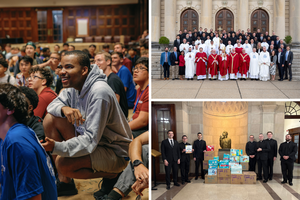
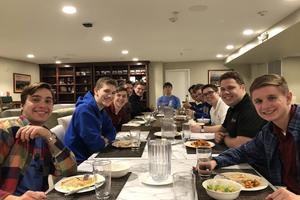
The Register is happy to share this good news. Our latest coverage features examples of how today’s seminaries, through capable stewardship and creative, dynamic orthodoxy, are being rebuilt on firm foundations. The nation’s oldest seminary, St. Mary’s in Baltimore, founded in 1791, for example, is making sure seminarians have ample opportunities to immerse themselves in parish life and are being taught table manners and other practical social skills that will serve them in good stead once they become priests. We also hear from seminarians who recount what a gift it was to go “phone-free” during the first year of their formation. They describe how much easier it was for them to pray, read books and have meaningful conversations with friends and classmates without constantly being pulled into lesser pursuits on their phones. We can all learn from them!
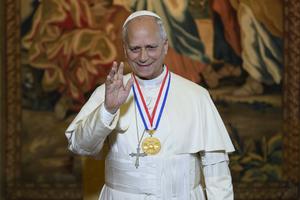
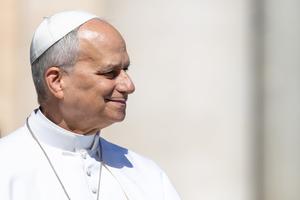
An even greater gift for today’s seminarians is one that none of them saw coming: the election of Leo XIV, the first U.S.-born pope. His vocation was first nurtured here in the 1970s, when he entered the novitiate of the Order of St. Augustine and studied at the Catholic Theological Union in Chicago. Today’s seminarians can surely relate to him, and he to them. It will be fascinating to watch that relationship grow over time.
Will there be a “Leo effect” on vocations in the U.S.? Only time will tell. But if, perhaps inspired by Pope Leo XIV’s missionary zeal and holy witness, there should be a surge in the number of American young men who respond to Christ’s call — and let’s all pray that happens soon — our seminaries will be ready to welcome them.
- Keywords:
- seminarians
- u.s. seminaries
- priestly vocations