4 Lessons for Business Leaders From Pope Leo XIV’s First 100 Days
COMMENTARY: The Holy Father’s early leadership shows how timeless truths can guide modern decision-making — in the Vatican or the boardroom
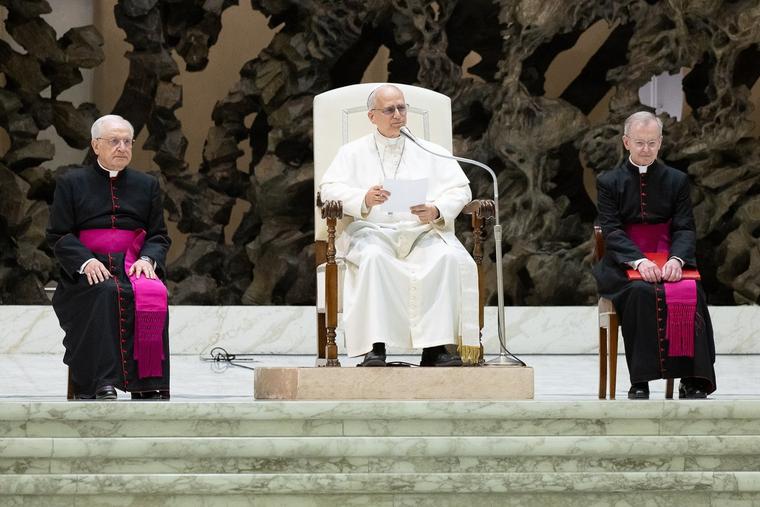
Succession is a term that strikes fear in business and political leaders. Threats to order and stability introduce an element of risk to established institutions.
With the inauguration of Pope Leo XIV on May 8, the Catholic faithful experienced succession — not a transition of political power, but the passing of a torch that showed the world’s oldest institution wasn’t afraid of a little risk.
Since that day, Leo has shown the kind of leadership that business leaders would do well to study. Here are four key lessons.
1. Establish Priorities Clearly and Noticeably
In his first address to the Vatican Diplomatic Corps on May 16, Pope Leo laid the foundation for his pontificate by quoting Rerum Novarum — Pope Leo XIII’s landmark social encyclical — affirming the family as history’s first society and a gift to humanity that preexists all civil institutions.
In that same address, Pope Leo had candid words for world leaders:
It is the responsibility of government leaders to work to build harmonious and peaceful civil societies. This can be achieved above all by investing in the family, founded upon the stable union between a man and a woman.
At the Jubilee of Families on June 1, Pope Leo delivered a homily that offered a blueprint for married couples in the age of no-fault divorce. He said:
With a heart filled with gratitude and hope, I would remind all married couples that marriage is not an ideal, but the measure of true love between a man and a woman: a love that is total, faithful and fruitful.
2. Speak Difficult Truths With Courage — and Sometimes, Use Words
Taking the international stage on June 5, the new American Pope nominated Bishop Joseph Lin Yuntuan, a member of China’s unofficial Catholic Church, as auxiliary bishop of Fuzhou. Installed on June 11, Bishop Yuntuan became the first bishop nominated by a pope to be accepted by the communist Chinese regime.
Pope Leo confronted violence across the globe with holiness and resolve. On June 15, he decried the “terrible massacre” of more than 200 people in the Catholic farming town of Yelwata, Nigeria, by Islamic jihadists. At the Vatican on June 20, he encouraged religious orders to keep serving people suffering religious persecution. On June 22, he made a forceful plea for peace after U.S. air strikes on Iran’s nuclear facilities. On June 24, he sent a message expressing solidarity with the victims of the terrorist bombing of a Greek Orthodox Church in Damascus, Syria. On June 25, he further expressed solidarity with the sufferings of the persecuted Church.
He said, “We entrust the victims to God’s mercy and we offer our prayers for the wounded and their families. I say to the Christians of the Middle East: I am close to you! The whole Church is close to you!”
In the aftermath of the deadly Texas flashfloods on July 6, Pope Leo offered condolences “to all the families who have lost loved ones — in particular their daughters who were at summer camp — in the disaster caused by the flooding of the Guadalupe River in Texas in the United States. We pray for them.”
3. Practice Forgiveness — It Produces Loyalty and Unity
On July 9, Cardinal Raymond Burke posted a letter from Pope Leo congratulating him on 50 years of priestly service. Praising Burke’s pastoral witness, Pope Leo wrote, “He has preached the precepts of the Gospel according to the heart of Christ and has recounted His treasures, diligently offering his devoted service to the Church universal.”
For advocates of the traditional Latin Mass, this was welcome news. In June, Cardinal Burke publicly appealed to Pope Leo to lift the restrictions imposed by the 2021 document Traditionis Custodes.
4. Embrace Simplicity — It’s an Exercise in Self-Sacrifice
Speaking plainly seems to be the habit of this heartland Pope, a tone set in that first press conference with the Vatican press corps, where he affirmed the dignity of the unborn and the elderly. According to Pope Leo, the universal pursuit of peace is threatened by the violence of abortion, where the innocent are sacrificed as part of a callous “throwaway culture.” He pledged to be crystal clear on thorny issues that require unflinching moral direction:
For her part, the Church can never be exempted from speaking the truth about humanity and the world, resorting whenever necessary to blunt language that may initially create misunderstanding.
Past popes have relied on sophistication and nuance to convey simple truths. But in his first 100 days in office, it appears Pope Leo XIV is a shepherd willing to take risks for his flock.