Catholic, Will Write
Fiction about faith and the Church finds its way into the marketplace.
Even as the Catholic publishing world has been struggling, there’s growing interest in fiction among Catholic publishers — and readers.
Author Michelle Buckman’s Rachel’s Contrition has struck a chord with modern readers, becoming an Amazon bestseller.
The novel launched Sophia Institute Press’ women’s fiction line.
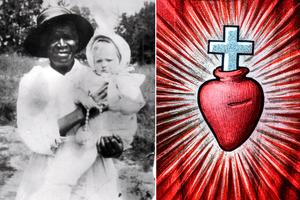
Editor Regina Doman says it’s an impactful read: “It’s about a woman who loses everything when tragedy strikes her infant daughter: Her life begins to turn around when she finds a holy card of St. Thérèse in the parking lot. … It’s a tough, gritty read for adults.”
Buckman, who is also the author of Death Panels (TAN Books/St. Benedict’s Press), a 2010 political thriller about Obamacare, enjoys writing about timely topics.
“I write contemporary issue-oriented novels, so my ideas usually spring from current events,” she said. “Death Panels rose from my concern over our nation losing sight of Christian values, specifically the value of each precious, individual life, as well as from the government trying to usurp the power of parents and infringe on our freedoms.”
The faith element of her stories comes throughout the writing process. “I don’t sit down and plot ways to include faith; I write the story as it comes to me, and my faith flows into my writing as a natural thread of character development,” she said. “Faith impacts my characters’ decisions in the same way it shapes what any of us do and say in our lives.”
New Fiction
Catholic fiction seems to have found its place. But how did that happen?
“This is the moment,” Doman said. “For years we in publishing have been hearing from Catholic readers that they really yearn for Catholic fiction.”
As for the upcoming lineup for Sophia Institute Press, which recently merged with Thomas More and Holy Spirit colleges, “We have the riveting sequel to Bleeder by John Desjarlais: Viper, about a former DEA [Drug Enforcement Administration] agent who discovers that a string of drug-dealer deaths have been predicted by a girl who claims the Blessed Mother is appearing to her,” Doman said. “Also, we have The Spanish Match by Brennan Pursell, which will launch our historical-fiction line, chronicling a little-known episode that could have changed the course of Catholicism in England: when young Prince Charles, a Protestant, made a daring secret journey to Spain to seek the hand of the Spanish Princess Maria. This fiction for adults will transport readers to the magnificence and intrigue of the royal courts of the 1700s.”
That’s not all. “We also are looking at our first literary fiction by author David Athey (known for his groundbreaking novel with Bethany House, Danny Gospel) and more in the fiction and romance and young-adult lines, as well as the new John Paul 2 High book, Book 3, which looks to be our strongest book in the series yet,” said Doman. “In that book, still untitled, a grieving Allie Weaver decides to leave the Catholic Church for her friend’s Protestant church, and the other JP2HS students launch a rescue mission.”
As for Doman’s own work, readers are in for a departure of sorts. Her fifth novel in the Fairy Tale Novel series is Alex O’Donnell and the 40 CyberThieves. Doman says it’s “a change to a lighter tone compared to my last two books. It’s my first cyber-thriller.”
Storytelling
Buckman appreciates having Catholic publishers, because it allows her to openly put Catholicism on the page: “Personally, I am thrilled that I can now let my characters clasp a rosary, mention confession or invoke the intercession of a saint without it being edited out of my story.”
Putting the Catholic in fiction involves “faith: stories that wrestle actively with the truths of the Catholic faith, whether behind the scenes or openly,” said Doman. “At Sophia Institute Press we’ve been putting the accent on ‘openly,’ but in my own new novel, Alex O’Donnell, the faith is more the background the main characters take for granted. Catholic fiction of the type we’re publishing is stories that we know faithful Catholics will enjoy — stories they can escape with, laugh at, cry with; stories that will enrich their lives. And, as always, we try to make stories that anyone can pick up, Catholic or not, and enjoy for their high level of storytelling quality.”
Writers can best engage the culture with their work “by dedicating themselves to the storytelling craft,” Doman added. “Our culture places a very high value on storytelling, and the more that Catholic writers are able to master that craft, the more they can speak to the culture, the more powerful their stories will be.”
Paul McCusker, Catholic convert and writer for Focus on the Family, noted: “What makes Catholic fiction Catholic? Ultimately, in my limited view, I suppose it would be stories that are both faith-challenging — as in putting Catholic faith up against real life — and faith-affirming, as in demonstrating that a true life of faith can go head-to-head with the rigors of life and still thrive.”
Buckman’s advice for aspiring authors? “Read as much as you can, study authors you admire, network with other writers and persevere with great patience.”
And prayer is essential, according to author Michael O’Brien, whose latest novel is Theophilos (Ignatius Press). “The person who aspires to be a Catholic writer must first and foremost be praying to the Holy Spirit as a way of life,” he said. “He should ask God for inspiration for the creation of the work itself, and then for the avenue where it may be published and bring about the greatest possible fruitfulness for others. Writing will be as Catholic as the author is truly Catholic — that is, creating from the heart of his soul, laboring to give birth to works of truth and love — integrated caritas in veritate.
“At the foundation of truly Catholic writing is the dimension of the author’s prayer and sacramental life, including his sacrifices offered for the good of the work itself and for the good of his readers,” O’Brien said. “Even when an author examines the fallen human condition, he must always keep in mind the dignity of human beings. There should never be any glamorization of evil or even a subtler kind of voyeurism regarding the different ways evil is manifested in this world. In a sense, he has a prophetic calling to open the eyes of readers to the immense beauty of existence and the eternal value of all human lives.”
Forthcoming fiction from O’Brien includes retold parables and science fiction: He said his next novel, The Father’s Tale, is a modern retelling of the parables of the Prodigal Son and the Good Shepherd combined. “After 10 years of writing and rewriting this book, I’m happy to say it will be published in October,” he said. “I have also completed the first draft of a science-fiction novel titled The Voyage, set in the 23rd century, the story of a journey to a planet of our nearest neighbor in the heavens, Alpha Centauri.”
O’Brien believes old-fashioned love of literature is here to stay.
As he puts it, “The love of story is universal, common to all peoples of all cultures and times of history. The fiction writer who hopes to write the true story in our times must be prepared to sacrifice much, to live a kind of heroic vocation. If he pours his whole being into the creation of works that grip the imagination and at the same time ennoble mankind and help him find a deeper understanding of his eternal value and destiny, then he will have been a ‘success,’ regardless of how many or how few books he sells.”
Amy Smith is the Register’s associate editor.

Amy Smith Amy Smith is a Register senior editor who edits devotions and features for print and online. Fueled by prayer and coffee, she enjoys writing about everything from Jane Austen to saints for the Register. She is the author of The Plans God Has for You: Hopeful Lessons for Young Women (Emmaus Road Publishing). Her writing has also appeared in various other Catholic publications. She has a master’s degree in journalism and a B.A. in English.