With Pope Leo, ‘Augustinian’ Is the Label That Matters Most
ANALYSIS: A new collection of speeches Robert Prevost gave while he was head of the Augustinians helps unlock the mystery of his priorities as Pope and his Augustinian soul.
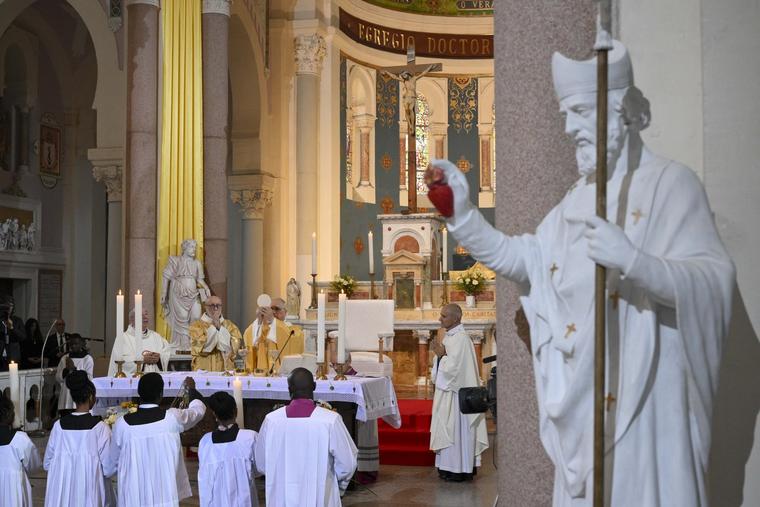
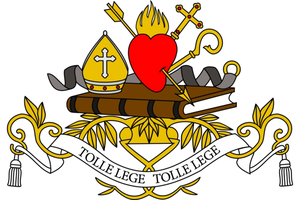
When he first appeared on the central loggia of St. Peter’s Basilica, Pope Leo XIV immediately declared himself “a son of St. Augustine.” It was a statement of identity, powerful and immediate, providing a fundamental lens through which to understand this Pontiff and his pontificate.
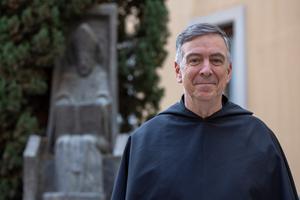
Deep down, Leo XIV remains a friar. He loves community life, from which he seeks to draw as much nourishment as possible. He is a great listener. He views government as a service. He seeks meaning — the divine sense — in the events of the world and in the vicissitudes of life every day.
For all that, Leo XIV remains a mystery to many, even after a year in the papal office.
The Pope has not implemented any revolutions. He has demonstrated great continuity with Pope Francis, but also differences in approach on certain issues. He has reformed some minor matters and even appointed some key figures (the new deputy of the Secretariat of State; his successor as prefect of the Dicastery for Bishops). Beyond this, however, he has neither closed old processes nor initiated new ones.
The synodal process continues on its bumpy path, publishing its working group reports and releasing other statements, and it is anything but clear to what extent Leo XIV appreciates them. In Germany, the more ideological German bishops continue their synodal journey, even going so far as to disregard the Pope’s own declarations. The traditionalist world of the Priestly Society of St. Pius X has already announced that it will ordain new bishops, even without a papal mandate.
In short, the polarizations within the Church, which had intensified in the face of Pope Francis’ personalist and sometimes harsh style of governance, have not yet been resolved.
But Leo XIV’s priorities are different. And they reside precisely in the Augustinian charism.
For that reason, a year after his election, it is not enough to simply take stock of his 365 days at the helm of the Church. Rather, we need to delve into the Pope’s Augustinian soul. A book, published by Libreria Editrice Vaticana, Free Under Grace, collects all the speeches of Robert Francis Prevost, OSA, from his two terms as head of the Augustinians. The book, for now, is only in Italian, so what follows is my English translation of the texts.
The book outlines Leo’s spirituality but also says something about his approach to governing.
Leo XIV deeply felt the meaning of his priestly vocation. In one of his speeches, he spoke about vows. For example, he addressed the topic of the vow of chastity, which has “great significance in today’s world,” he said.
“It does not deny our humanity. It calls us to discover the depth and richness of human love,” he explained. “By freely renouncing the possibility of entering into the exclusive relationship of marriage, we remind ourselves and others that there exists a union of love and self-giving even more profound than that expressed in the intimate bond of marriage.”
In all the texts, the reference to God — and the need to look to him — is central. So, too, is the Church, for Prevost the Augustinian is a profoundly ecclesial man.
“The Church,” Prevost writes in an article, “is contested and even considered a stumbling block. Being authentically Church and thinking with the Church is still a real and necessary challenge today.”
But the then-prior general of the Augustinians also questioned what it means to transmit the faith. He was aware that “young people do not reject theological discourse,” but, rather, they experience “alienation, incomprehension, distance” toward it.
Yet Prevost knows the weight of institutions and symbols. “What religious attire or certain external forms of prayer represented for one generation,” he writes, “no longer holds that meaning for young people today. However, without these signs, it will be difficult to appreciate the meaning of the sacred in our lives.”
Everything, however, begins with personal responsibility. “As religious,” wrote the man who would become Pope, “we are called to evangelize by starting from who we are, rather than from what we do.” Again: “Finding God in the world around us is ideally one of our great challenges.” And finally: “A culture in crisis is necessarily a research culture. Christians are called to be professionals in the search for human meaning.”
These excerpts come from speeches given in various circumstances, parts of the world and occasions. However, they have their own coherence, offering a profile of Robert Francis Prevost the man. He reveals himself to be a connoisseur of the theatrical and musical scene and does not fail to use his familiarity with pop culture in an attempt at inculturation that nevertheless aims to promote faith.
His evolution over the 13-year stretch between 2001 and 2014 is striking. His early speeches are more naive, more direct in his governing style, more practical, and more inclined to the idea that a concrete path must be established. Over time, Prevost becomes less blunt in expressing concepts, more willing to consider the broader context. But this evolution in governance, which is almost a softening due to greater familiarity with the role, goes hand in hand with the changes in the society around him.
Prevost became prior general shortly after Sept. 11, 2001, and his initial speeches spoke of a world that, despite everything, still perceived itself as Christian. But, over time, the language shifted to that of a world in crisis, to which Prevost responded by intensifying his search for meaning, looking back at the history of the Augustinian Order, taking the example of saints and martyrs, and exploring spirituality.
All this gives us today a Pope who has made the centrality of Christ his primary goal of governance.
He is a Pope who understands the weight of symbols and who will therefore use them when necessary. After all, he immediately resumed wearing the red mozzetta that Pope Francis had always rejected and returned to the quiet living quarters in the Vatican Apostolic Palace.
It also gives us a Pope who leads a regular life, seeks balance, and lives as a friar to the extent that he can, convinced of his vocation and eager to celebrate Mass whenever possible.
He has learned to govern as the prior general of a global religious order, who has traveled to different regions of the world and knows their concrete situations. Consequently, he does not make hasty or unjustly harsh decisions but, rather, seeks balance.
This will not lead to sudden, major upheavals. There will be no unexpected appointments in the Curia, but targeted appointments, starting with the five new heads of dicasteries to be chosen this year (the prefects of Laity, Family and Life; Integral Human Development; Divine Worship; Christian Unity; and Causes of Saints are over age 75).
There will be no improvised reforms, but deliberate decisions made after careful consideration. There will be greater episcopal collegiality because his model includes everyone in the decision-making process, recognizing that power is, above all, a service.
And there will be more and more references to the City of God, one of the seminal works of St. Augustine, which is a kind of guiding principle of this pontificate. The City of God asks everyone to strive for the things above because that is where we belong. Indeed, this seems to be the core of Leo XIV’s theory of diplomacy.
Fourteen years of Augustinian leadership changed the man who has become the Pope, and we may surmise — even hope — that he will become more Augustinian as he continues to serve as Pontiff and becomes increasingly familiar with his role as head of the universal Church.
Ultimately, we are not faced with a Pope crystallized in a specific role, but with one who can mature in his governance while continuing to grow in faith.
- Keywords:
- augustinian order
- 'pope leo xiv'