Inside Notre Dame’s Notorious Zahm ‘Zoo’
Former residents of the now-defunct men’s dormitory say its ‘weirdly sexualized’ culture went beyond the alleged sexual abuse of its longtime rector, Father Thomas King.
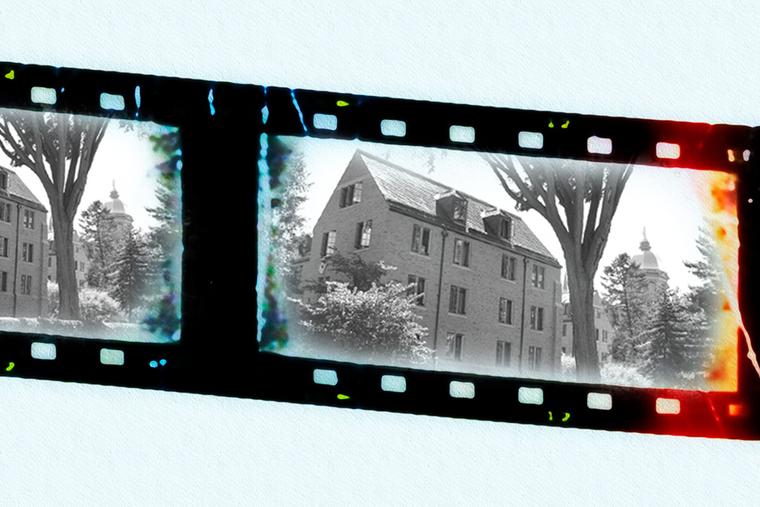
For decades, students at the University of Notre Dame reacted instantly when someone said he lived in Zahm Hall, aware of the dorm’s reputation for disorderly behavior. But in recent months, distaste has turned to outrage and dismay, over allegations that a priest who led the dorm for 17 years sexually abused some of the undergraduates who lived there.
Many former residents say they had no idea what Holy Cross Father Thomas King was reportedly doing to some of their fellow students. But they acknowledge that Zahm’s reputation for debauchery and antiestablishment behavior predated Father King’s leadership of the dorm from 1980 to 1997 and lingered long after him.
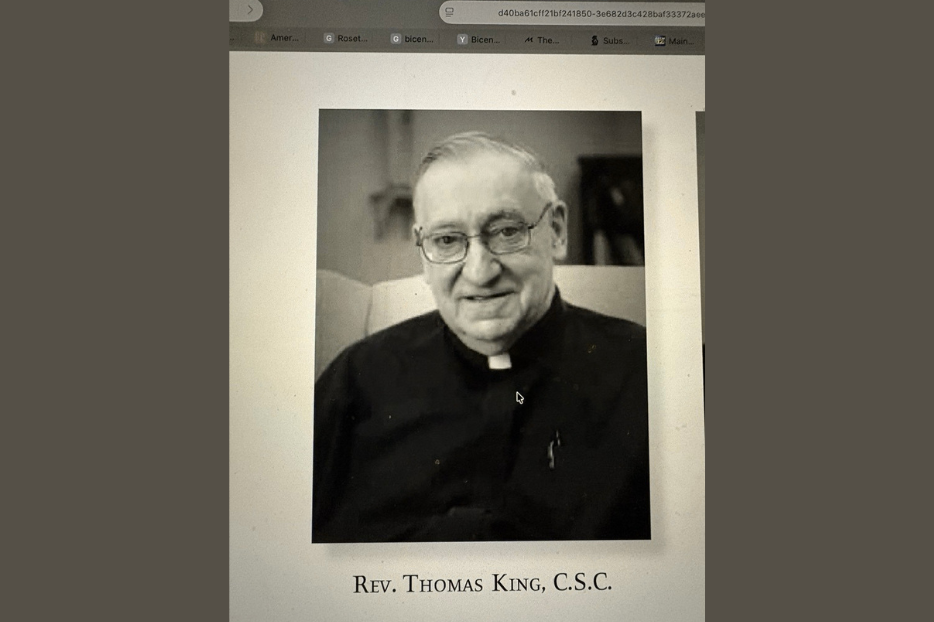
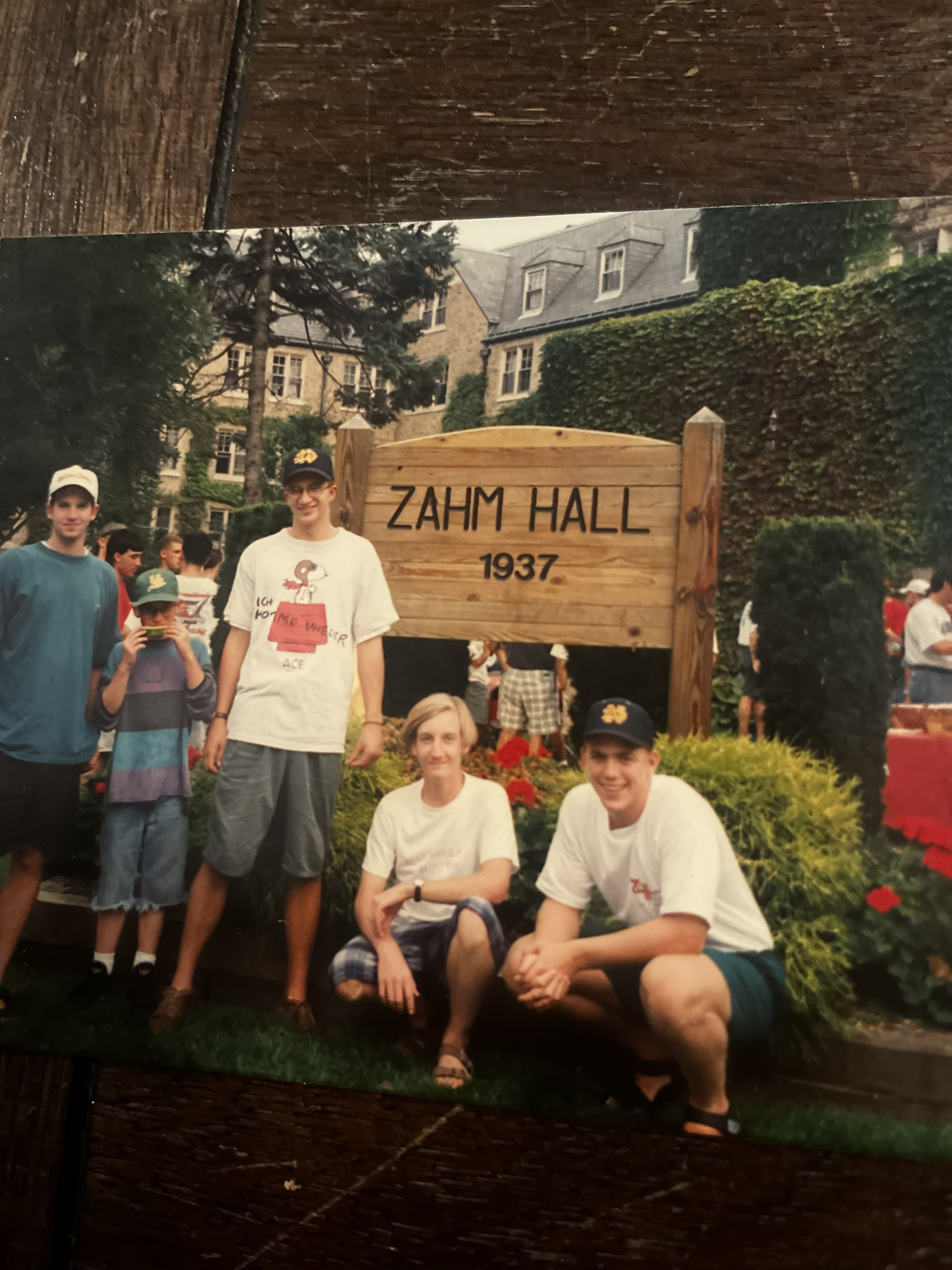
Zahm Hall — “Zahm House” to many of its later alumni; “Zahm Zoo” to many others — lasted almost a quarter century after Father King left, during which it was known (at least by outsiders) for wild parties, naked runs through the campus, vandalism, disrespect for female students and for Notre Dame officials, and churning through a series of rectors who couldn’t control it. The university stopped using it as a traditional residence in 2021, citing its ungovernability.
The decision saddened many Zahm alumni, who cherished its traditions and its tight-knit, us-against-the-world outlook. For those who thought fondly of it, the building sheltered a brotherhood, a place so fondly remembered that alumni would often drop off beer, pizzas or doughnuts for students there after attending a football game on campus. Zahm alumni frequently stopped by with family members to show it off, including daytime-television talk-show host Phil Donahue (1935-2024), who showed up at a Friday night party in a third-floor dorm room in October 1988, at age 52.
But others say that, for a long time, Zahm was much worse than even most of its residents knew — a view supported by a 25-page report Notre Dame released late last month documenting allegations of sexual assault by Father King and by unnamed students who lived there during his tenure.
‘Weirdly Sexualized’ Culture
The report describes witness statements from 15 alumni who say Father King talked them into going with him to a deserted locker room to be weighed naked, or nearly so, on the pretense that they were supposedly underweight, and that some of them “were sexually touched or assaulted by Fr. King, both at Notre Dame and after he left.”
But the priest wasn’t the only threat, according to the report. The report also describes a former Zahm resident saying he was sexually assaulted by older students who ganged up on him, and another former resident said he was “attacked in his room by two or three upperclassmen who attempted to sodomize him with a broomstick or something similar.”
In the aftermath of the report — which Notre Dame released on May 28, the Register spoke with several former Zahm residents, some of whom who asked not to be named in this story because they don’t want to be publicly linked to Zahm Hall in the wake of the allegations of sexual abuse.
Did all that really happen?
Yes, say Zahm’s critics — and if anything, the Notre Dame report at times uses vaguer language to describe some of the incidents than they would.
“The dorm had a culture of weirdly sexualized initiation rites,” said Mark McKenna, a 1997 graduate of Notre Dame who lived in Zahm Hall as an undergraduate.
McKenna told the Register that, during his freshman year, a “roving group of guys” would enter other students’ dorm rooms late at night, and one of them would make unwanted sexual contact with a resident who was asleep.
McKenna said it didn’t happen in his room because his roommate, a large basketball player, let it be known that he wouldn’t put up with it, but others weren’t so fortunate.
“People would complain, and Father King would just say, ‘These are boys being boys,’” said McKenna, 50, now a dean and law professor at UCLA.
“This kind of stuff was very common and was very much part of the culture that was encouraged and perpetuated by Father King,” McKenna told the Register.
Father King, now in his 80s and living in a retirement residence run by the Congregation of Holy Cross, which founded Notre Dame, did not respond to a message left for him there by publication of this story.
‘Zahmbies’
Unusual among American colleges, Notre Dame invites all undergraduates to spend all four years living in one of its 30-plus dormitory buildings, which are segregated by sex. Many of the men’s dorms are overseen by a priest, known as a rector. The relative stability of the population leads to the development of distinct cultures and an institutional memory about them.
Many Zahm residents, calling themselves “Zahmbies,” reveled in the dorm’s bad-boy street cred.
“Were other men’s dorms similarly dangerous or toxic? Probably, at least to some extent. But Zahm as a whole ... leaned into the tension and inflated it,” wrote a 2011 graduate, Dan Masterton, in a blog post in March 2021 about what he called Zahm’s “chip-on-the-shoulder culture.”
Zahm Hall’s final rector — the seventh in nine years — acknowledged that Zahm residents had “a very tight sense of knowing one another” but suggested the dorm’s “underlying culture” was tainted.
“I very much appreciate the way the men here support each other, but I do not agree with them that their friendships are qualitatively different from those in other dorms such that they were entitled to indulge in behaviors they knew to be wrong,” Holy Cross Father Bill Dailey told The Observer, a student newspaper, in April 2021.
From the beginning, Zahm stuck out.
When it was built in 1937, Zahm Hall was the farthest dorm from the center of campus life at the time and thus the least desirable place to live. Zahm lore includes stories passed down about the origins of its incorrigibility, including that it once housed the students with the lowest grade-point averages.
In the 1980s, Zahm was known as the “social” dorm of the campus’ North Quad, according to a 1984 yearbook entry, decorated by “its artistic murals of rock stars and its resident moose, ‘Ignats.’” While the building’s wild reputation preceded Father King’s tenure as rector, alumni who lived there during his time say he reveled in it and promoted it.
For many years, including during Father King’s time, many Zahm residents participated in a fall ritual called “Odin,” named after a Norse god. Freshmen would dress in togas made from white bedsheets, loosely covering their underwear, and then be beaten by a large dead fish, have evil-smelling liquid poured on them that was sometimes said to include urine, and roll around in mud before entering the school’s field house for the pep rally the night before the Notre Dame basketball team’s first game.
Upon returning to Zahm, according to the report, Father King would encourage the students to take off all their clothes and then hose them down before they went inside.
Assignments to dorms in theory were mostly random at Notre Dame, but Father King had a reputation for recruiting. He was particularly interested in getting good athletes for dorm teams in the university’s highly competitive intramural sports program, past residents say, and he coached Zahm’s baseball team himself. Zahm residents thought he had unusual pull on campus.
At raucous weekend parties, one alumnus told the Register, Father King would often be seen dropping by in apparent good humor, as if he approved. Another alum remembers attending a decade-themed dance in the basement where Father King, then in his early 50s, was the DJ, playing a Neil Diamond song (Cracklin’ Rosie).
In his room, Father King smoked (against university rules) heavily and kept a little dog; he also offered his extensive DVD collection on the walls of his room to students who wanted to borrow a movie.
Against university policy, Father King preferred to handle discipline himself, rather than refer cases up the chain of command.
Father King’s Alleged Abuses
Looking back on it, Zahm alumni who spoke with the Register said they suspect Father King liked a loose culture and a buddy-buddy relationship with students so he could pick out some of them as sex objects.
One Zahm alumnus from the 1990s remembers being called to meet with Father King in his office soon after the start of his freshman year for an interview, during which the priest asked probing personal questions, including whether he had a girlfriend. He said he left as soon as possible and kept his distance from Father King after that.
But the priest had a knack for finding students who were vulnerable, the report states.
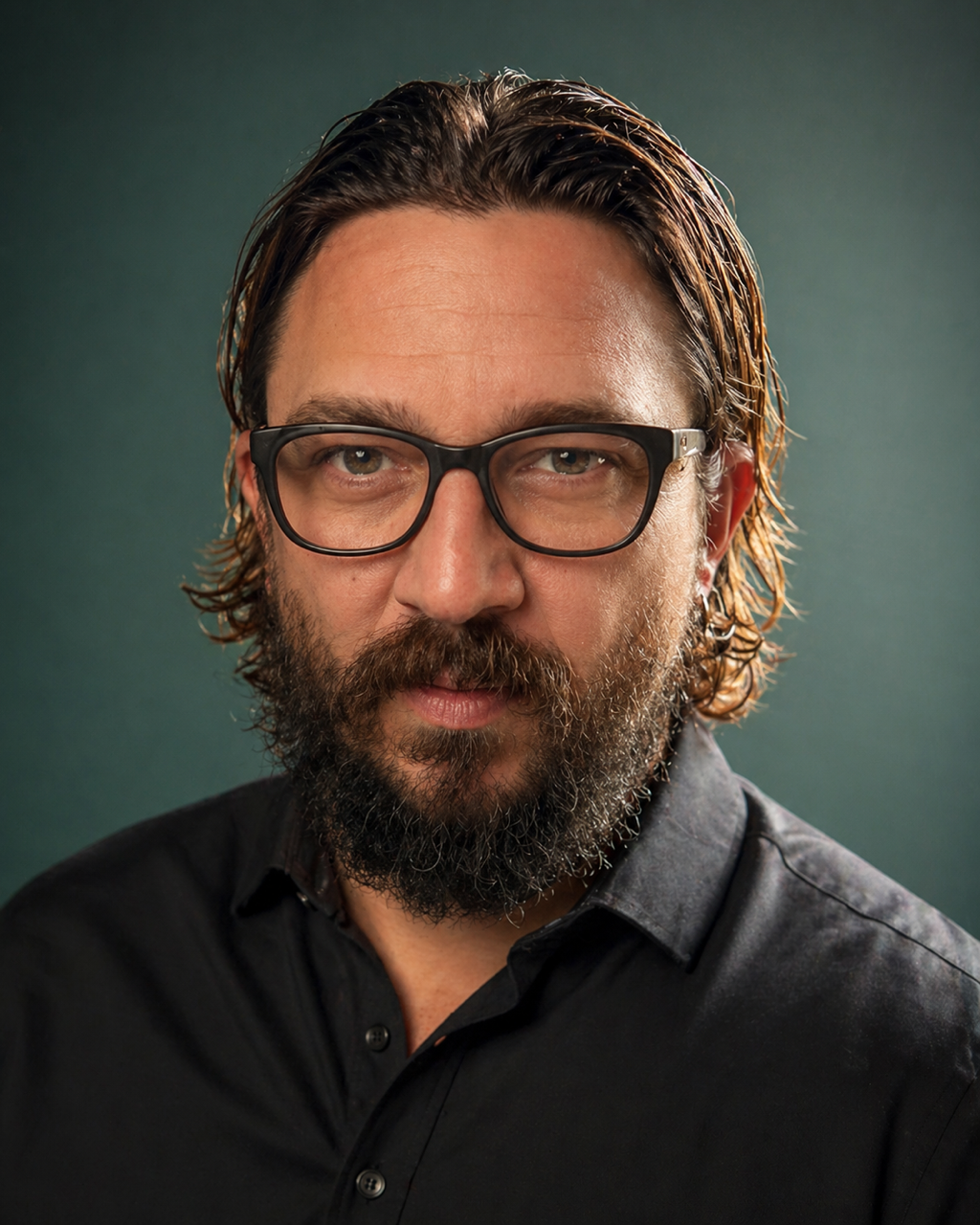
Another Zahm alumnus, David Tybor, 49, who graduated from Notre Dame in 1998, told a television station in Indiana last fall that Father King sexually assaulted him during his freshman year on the night of Oct. 8, 1994, after Notre Dame lost a football game at Boston College. The priest used his weighing excuse to get Tybor into the basement locker room at Rockne Memorial recreational facility and to strip naked.
“And then he raped me, in the shower, from behind,” Tybor told ABC57 in South Bend, Indiana, in November 2025. “And then he told me if I ever told anyone, I would be expelled. I’d have to go home and tell people that I got kicked out of Notre Dame.”
Tybor, who was 18, told the Register that the sexual abuse continued for a time.
In physical pain after the first incident, Tybor went to the university’s infirmary and told a doctor there that he had been raped, he told the Register. Be he said he wasn’t asked who did it and that no one followed up with him.
He said he felt helpless.
“Being in Zahm, you’re already a bit of an outcast on campus. And after the abuse, you become an outcast within the outcasts,” Tybor told the Register by email. “Imagine being on a campus in South Bend in the middle of winter with no car, under the same roof as your abuser.”
Tybor told the Register that he spoke to the lawyer who produced the May 2026 report on sex abuse at Notre Dame, adding that the report appears to include information he provided.
He also told the Register that, in recent years, he contacted Notre Dame to ask for the records of his visit to the infirmary in October 1994 but said that he was told the university has no record of it. He told the Register that Notre Dame told him that the university routinely destroys such records after a certain period.
Victims Pressured Notre Dame
Notre Dame’s report last month is mostly about Father King, but it also documents sexual abuse by three other priests previously identified publicly as abusers: Holy Cross Father James Burtchaell (1934-2015), a theology professor and onetime provost at the university; Holy Cross Father David Porterfield (1942-2025), a rector at one hall and assistant at another; and Father Robert Huneke (1940-2002), a Diocese of Rockville Centre, New York, priest (now on the diocese’s list of credibly accused clergy sex abusers) who also served as a rector and assistant rector.
Critical alumni told the Register they find the university’s report troubling, not just for the behavior of the priest abusers but also for the behavior of school officials who fielded complaints about the priests.
While some accusers say they reported Father King’s behavior during the 1990s, the university’s investigator said Notre Dame officials found no written evidence of it. Referring to more recent interviews with school officials of the time, the report uses the words “did not recall,” “vague recollection,” and “had no memory” when describing the reactions of certain unnamed administrators.
The report also describes complaints in more recent years, starting about 2018, that drew tepid responses from the university.
Several alumni told the Register that Notre Dame’s report in May 2026, while welcome, came about because victims goaded Notre Dame officials into commissioning it.
“This investigation only happened because a handful of brave survivors — and they were really up against it — they refused to give up, and they went to social media, and they went to the alumni networks, and they went with all they got, and they ultimately forced these institutions to open these investigations and to collect and confront the facts that had been hidden for decades,” Tybor said by email.
McKenna told the Register he is disgusted that Notre Dame apparently has no record of the time in the mid-1990s when he went to university officials to report common-knowledge stories about Father King weighing students naked. Instead of looking into what ought to have been a disturbing lead, he said, the officials dismissed him because he hadn’t witnessed the incidents firsthand.
The Register contacted Notre Dame, asking for comment. A spokesman noted that the president of Notre Dame, Holy Cross Father Robert Dowd, apologized to victims during a Mass for healing and reconciliation on campus on June 1, calling the sexual abuse “totally inexcusable.”
“From the bottom of my heart, and on behalf of the entire University, I am sorry,” Father Dowd said, according to a transcript provided by Notre Dame. “I am so sorry for the abuse you experienced and I am so sorry it has taken this long for the truth to come to light. Know of our desire here at Notre Dame to do everything we can to support healing, and to do everything in our power to ensure that the abuse you endured never happens to anyone here on this campus ever again.”
Group Psychology?
McKenna told the Register that while he was not abused while at Notre Dame, he was sexually assaulted by a coach when he was a child (an experience he wrote about in Slate in November 2011), adding that the atmosphere in Zahm during the 1990s made him anxious.
“For me living in Zahm, my nervous system was on overdrive all the time because I was feeling at risk all the time,” McKenna said.
He noted that Notre Dame frequently touted its residential halls for undergraduates, many of them overseen by a priest.
“And for almost 20 years, they delivered kids to a dorm that was a pretty vicious place for lots of people — and the ringleader being the rector,” McKenna said.
“It’s a window into group psychology,” he told the Register. “I have to imagine that many of the guys who did that and participated in that can’t believe they did it. But they somehow got sucked into this cultural force. That’s the kind of place that it was, and that’s the kind of place that he built.”