In Paris, Traditional Liturgy Is Drawing a New Generation to the Church
At Saint-Roch — the ‘Church of the Artists’ that has become a hotspot for the traditional Latin Mass in recent years — 55 adults were baptized this Easter, the highest figure in the city.
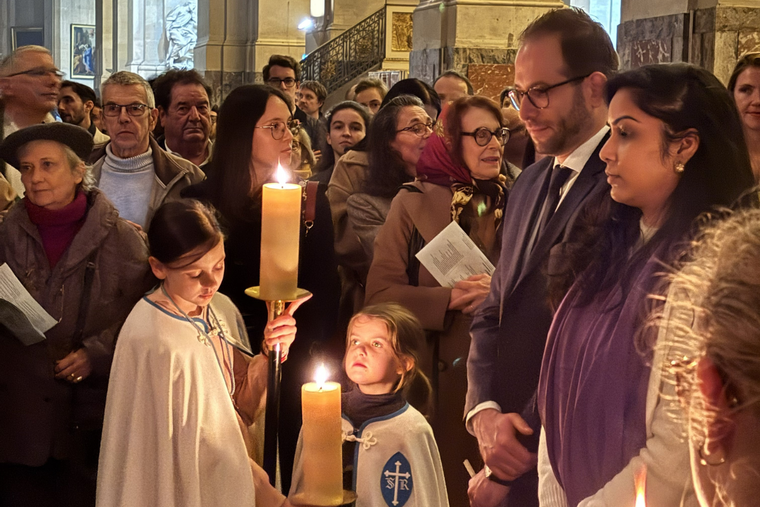
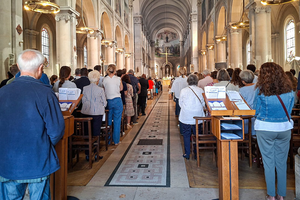
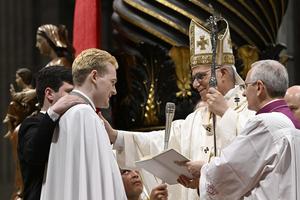
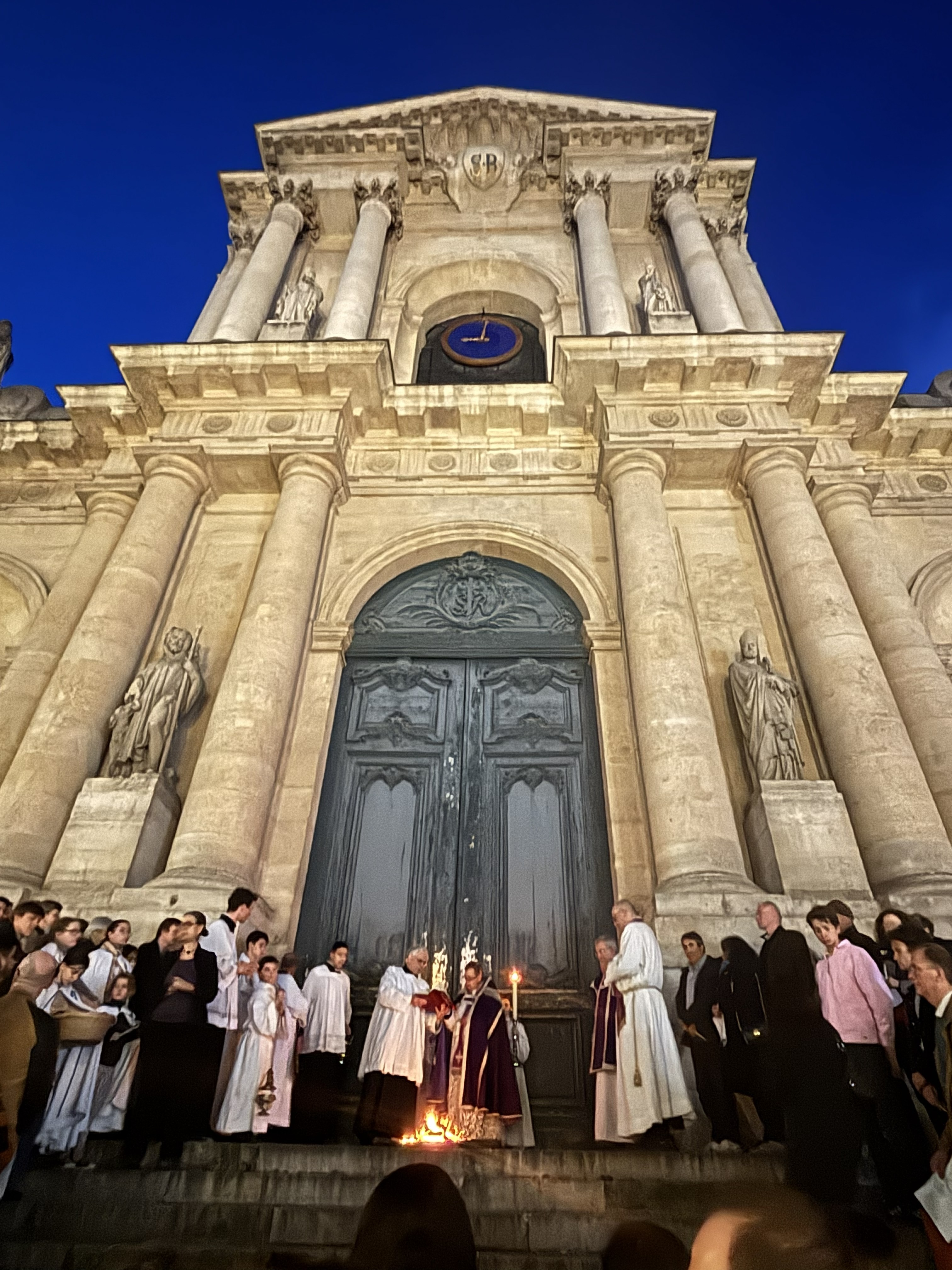
As night fell on the steps of Rue Saint-Honoré in Paris, a large, eclectic crowd gathered in quiet fervor around the newly blessed fire for the Easter vigil. The faithful of all ages — many of them young families — then processed into the Church of Saint-Roch, a baroque landmark known as the “Church of the Artists,” whose high vaults were engulfed in darkness. A low chant rose as light returned, candle by candle, gradually revealing the faces of those who were about to become Catholic.
In total, 55 adults were baptized at the April 4 vigil, the largest number of adult baptisms of any parish in Paris this Easter. Most of those stepping forward were young adults with little or no religious formation. Instead, they had arrived at this pivotal moment after months or years of personal searching, often marked by trials, intellectual curiosity, and a gradual return to fundamental questions about life, death and truth.
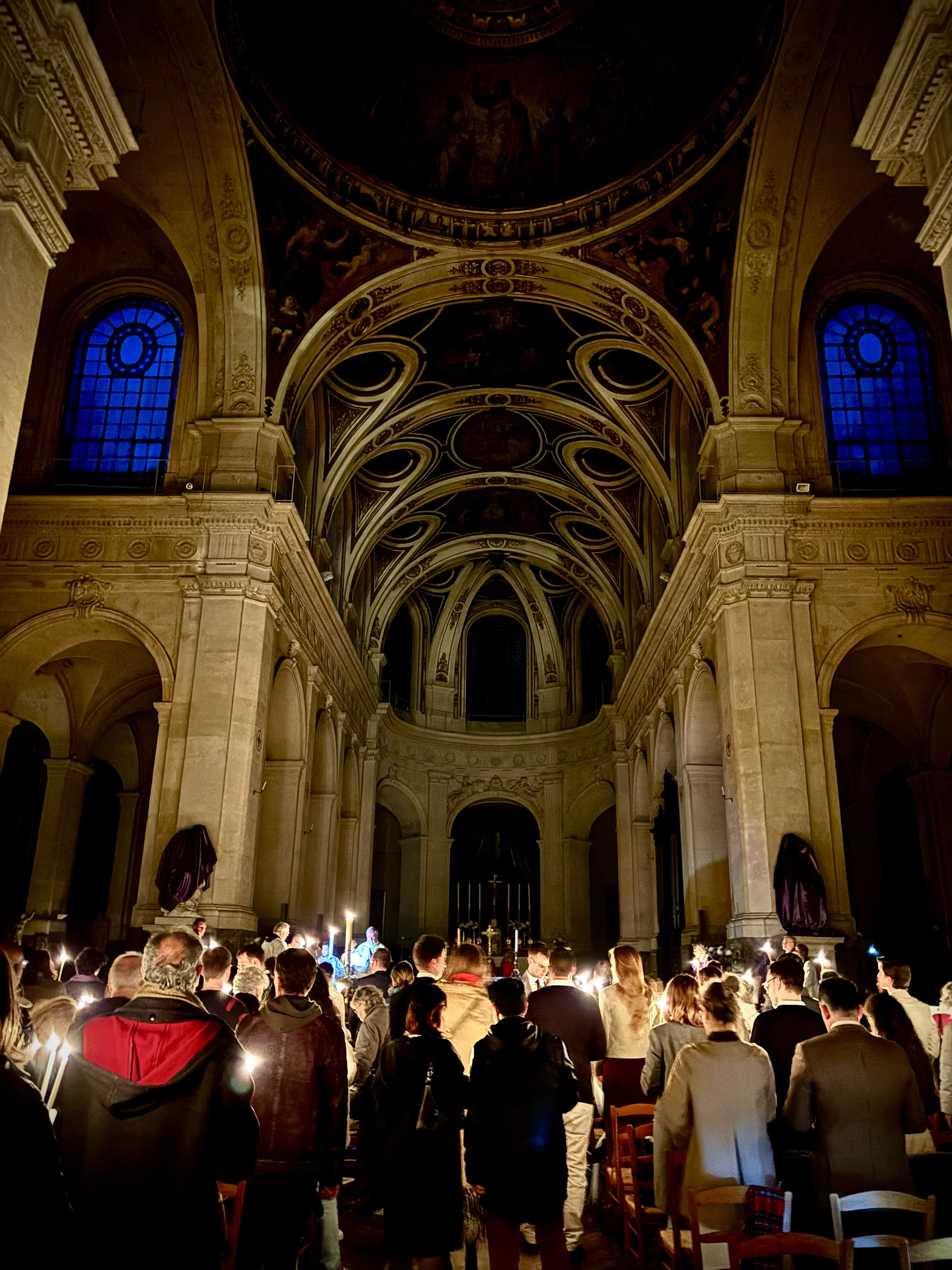
And it’s no coincidence that Paris’ largest group of converts has entered the Church via Saint-Roch. The parish is one of the city’s traditional Latin Mass hotspots, with several converts referencing both the sense of transcendence and communal bonds as draws to the faith. The trend points to an emerging dynamic that could reshape the future of Christianity in France.
Influx of Young Catholics
The surge in adult baptisms across France has been well documented over the past decade. A steady increase has accelerated in recent years, reaching record levels since 2024, with 13,000 such baptisms taking place this year. In Paris alone, 788 adults were baptized this year, many of them from a younger demographic.
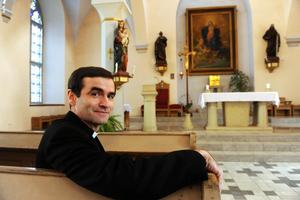
“All our newly baptized, except for a few exceptions, are between 20 and 30 years old,” Father Thierry Laurent, Saint-Roch’s parish priest, told the Register after the celebrations.
The 55 baptized on Holy Saturday are only part of a broader influx. Alongside them, four young adults baptized in other Christian confessions were received into full communion with the Catholic Church, while around 40 others are preparing to receive the sacrament of confirmation in June. In total, nearly 100 individuals of the same age group are entering or deepening their commitment to the Church within this single parish this year.
And Saint-Roch’s response to this influx is deliberately structured. Catechumens are required to follow a demanding weekly formation of an hour and a half, combined with individual accompaniment and progressive immersion in the Church’s sacramental life.
“We thought at first it might be too demanding,” Father Laurent admitted. “But in fact, that is precisely what these young people are looking for.”
A ‘Virgin Land’ and an Intellectual Thirst
If the sociological profile of Saint-Roch converts is relatively consistent — young adults, often with little or no prior religious formation — their paths are very diverse and often marked by an unexpected depth.
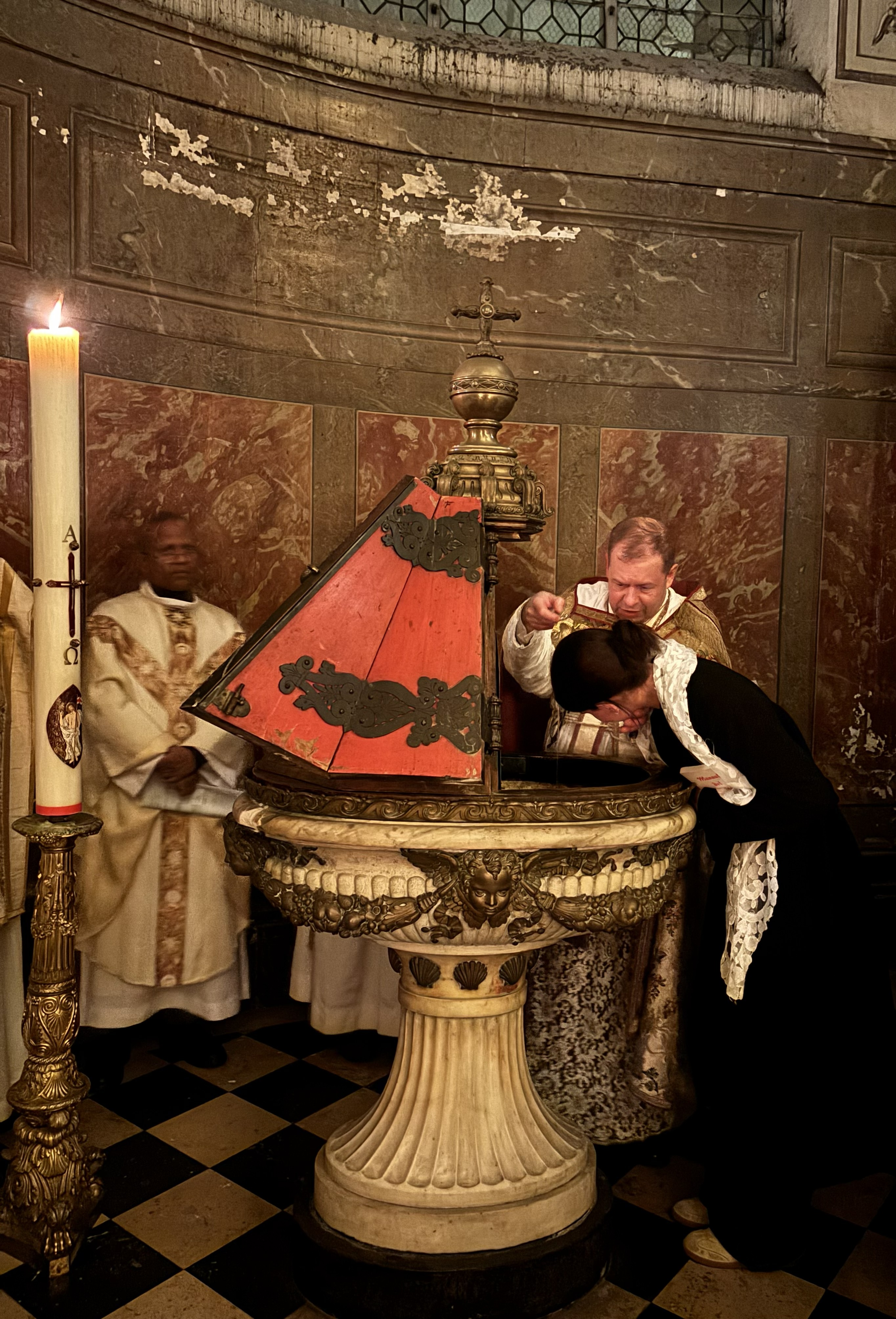
The individuals the Register spoke with are only identified by their first names, in keeping with the policy of the Archdiocese of Paris.
Emmanuel, 36, raised in an atheist environment, decided to join the Catholic Church at the culmination of a long intellectual journey. “I felt that finally my faith had aligned with my reason and logic,” he said.
Over a decade, questions accumulated, accompanied by sustained personal study. “I realized that I was, in a way, already a believer without really knowing it.” For years, he resisted what he perceived as a form of authority. “But faith is like an elastic: The farther you try to pull away from it, the more it propels you back.”
Father Laurent confirmed that most catechumens come from what he calls a “virgin land,” meaning with no prior exposure to religion.
“In the past, they had already received something, even if only through their grandparents,” he said. “Today, most of the time, they come from nothing at all.” Yet many arrive having already built a substantial intellectual framework. “They have read a lot; their journeys are very well-founded.”
Others described more existential turning points. Charlotte, 27, said mourning the loss of a loved one was the catalyst that led her to take the step.
“It became obvious,” she said, describing a desire to reconnect with her family, of whom she was the only unbaptized member.
Throughout the testimonies, the common thread that emerges most clearly is the search for coherence — through doctrine, liturgy and community life — within a framework perceived as orderly and demanding.
The Rise of ‘Tradismatics’
Placed within the broader Paris context, Saint-Roch is not an isolated case but is part of a pattern that gives clues as to what young people are searching for.
Among the parishes receiving the highest number of catechumens this year, according to the Archdiocese of Paris, Saint-Roch is followed by Saint-Eugène–Sainte-Cécile (in Paris’ 9th arrondissement), another church known for its traditional liturgical life.
Other names in the top 10 reflect a broader range of profiles, from parishes in historically Catholic, more bourgeois areas, such as Saint-Germain-des-Prés (6th), to churches rooted in more popular neighborhoods, such as Saint-Pierre de Montrouge in the 14th arrondissement and Notre-Dame de Clignancourt in the 18th. The parish of the Emmanuel Community at Holy Trinity (9th), one of the best-known charismatic movements in France, ranks fourth.
As the rankings suggest, attracting converts is not confined to traditionally oriented parishes. Some of the strongest growth is also observed in charismatic contexts, pointing to a broader pattern that goes beyond any single liturgical form.
For many of these young adults, what seems to matter the most is the encounter with something meaningful that transcends and is lived collectively — whether in more traditional settings or in charismatic communities. This points to the unexpected yet now undeniable convergence that some observers today describe as a “tradismatic” dynamic, at the intersection of tradition and charismatic renewal.
Sense of the Sacred
At Saint-Roch in particular, what appears to draw many of these young adults is a search for a tangible sense of the sacred.
“It is a liturgy where the sacred is clearly manifested,” Father Laurent said. “That may seem paradoxical, because what is perfectly sacred cannot be explained. But it is expressed through a liturgy that may seem more demanding and difficult — and precisely for that reason, it speaks to people’s hearts.”
For Gaël, 25, this dimension proved pivotal. What drew him to the Catholic faith was precisely this encounter with tradition. The sayings of the Desert Fathers, rooted in asceticism, continuity and interior life, opened for him a path that he later found embodied in the liturgy itself. “The liturgy was decisive,” he said.
A similar dynamic appears in the case of Anita, 25, who was raised in a Protestant environment in Taiwan. Although her journey was also shaped by personal circumstances, including her marriage to a French Catholic man, she said she might not have taken the step had she not encountered the particular form of liturgical beauty celebrated at Saint-Roch.
Beyond specific liturgical forms, many converts also point to the pull of community: the experience of belonging to something visibly alive and growing. This sense of momentum, of joining a movement that is expanding, emerges across several testimonies.
It is in this context that Samy, who is hearing-impaired and grew up between a Catholic mother and a Muslim father, decided to take the step — drawn both by conviction and by the desire to belong to a community he saw as growing.
As he told the Register, “I want the community of believers to grow and for there to be more and more Christians!”
This is a reality that seems to be happening especially at the traditional and charismatic parishes of Paris.
- Keywords:
- new catholics
- church in france
- young catholics