Connecticut Homeschoolers Push Back Against New Restrictions
Critics say the legislation would impose new state oversight on homeschooling families while forcing parents to ‘ask the state for permission to educate their own children.’
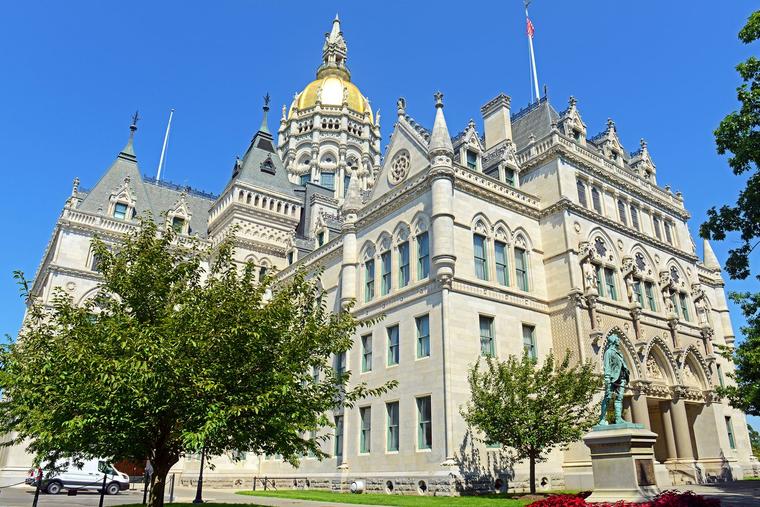
Homeschooling families in Connecticut are urging the governor to withhold his signature from a bill they say would impose burdensome and unfair restrictions on at-home education.
The legislation, passed along party lines in the Democrat-dominated state Legislature on May 4, would go into effect in 2027.
“They are taking something away from the homeschoolers that they have always had in Connecticut,” said Peter Wolfgang of Waterbury, executive director of the Family Institute of Connecticut and a homeschooling father of seven. “We have always had strong freedom to homeschool here.”
The new Connecticut homeschool law, officially titled “An Act Concerning the Provision of Parent-Managed Learning,” would require parents to register their “intent” to homeschool in person with the state Department of Education through the local school principal before they can withdraw a child from public education.
The current bill requires filing notices of intent to educate and checks with a state Department of Children and Families (DCF), including for all those 18 years or older living in the same house as the child, to determine whether any are on the child abuse-neglect registry or currently being investigated.
The entire process is likely to take days, considering the time allowed DCF for the checks, all the while requiring the child to remain in public school.
The legislation has also received criticism from out-of-state groups.
The Home School Legal Defense Association, a national advocacy group, has said the bill “would drastically expand government oversight of homeschooling in Connecticut.” And in an editorial titled “Connecticut Goes After Homeschoolers,” the Wall Street Journal editorial board described the legislation as a “coercive assault on educational choice.”
Scapegoating Homeschoolers?
State lawmakers have defended the bill as a way to prevent abusive adults from using homeschooling status to conceal wrongdoing, which occurred in three tragedies that made headlines in Connecticut over the last year.
In one case, an 11-year-old girl died after her mother and other adults starved and abused her. In another, a 12-year-old girl was sexually abused by her stepfather before later being found dead. And finally, a man who had been locked in a room as a child for 20 years was discovered only after firefighters came to the house.
But homeschool advocates like Lori Murphy of Cheshire said lawmakers are using these recent tragedies in Connecticut to “scapegoat” homeschoolers at large.
“These children fell through the cracks of the DCF, and the public schools did not pay attention to what was going on with those children,” said Murphy, the general coordinator of Adoro Te, an organization of primarily homeschooling families that gather to support each other through spiritual, educational and social activities. “So it really doesn't have anything to do with those families who are homeschooling.”
Wolfgang said that while these tragedies “were terrible things,” they had “nothing to do with homeschooling.”
“In fact, these children were known to DCF,” he said. “They were DCF’s responsibility, and DCF dropped the ball. So what does our state government do? The opposite of what makes sense. They want to put all homeschoolers under the thumb now of DCF, the same group that failed to protect these children that were already their responsibility.”
State vs. Parents
Wolfgang said the law places unfair burdens on homeschoolers, but not on other alternatives to public school. For instance, if a parent pulls children out of public school in order to send them to Catholic school or another private school, they do not need to submit to a DCF check.
“So what this law says is that the state government believes that children are safer in a public school or a private school than they are with their own family,” he said. “It’s substituting the government for the family, and it’s saying that children belong to the state instead of to their own family.”
Present and watching as the Senate voted for the law, Wolfgang said the bill’s supporters “kept referring to the children as ‘our kids,’ as if the kids belong to the state.”
Murphy told the Register that in her mind, this represented “a fundamental difference” in the role of government between the bill’s supporters and its opponents. Supporters, she said, “believe it is their children that they are responsible to raise, where in fact we believe that a child is God's, and God puts them in a home to raise them by parents and in our communities.”
Parents are the primary educators of their children, said Wolfgang, citing Catholic teaching. “Catholic families should not have to ask the state for permission to educate their own children. They have never had to do that before in the history of Connecticut.”
Wolfgang said the law seems inconsistent with the landmark 1925 U.S. Supreme Court ruling in Pierce v. the Society of Sisters, which he called “the Magna Carta” of Catholics’ freedom to educate their children. In that case, the Supreme Court struck down an Oregon statute requiring all children to attend public school, making clear, said Wolfgang, that “a child is not the mere creature of the state.”
Gayle Shanley, a homeschooling mother of five, said the law’s underlying philosophy is incompatible with a Catholic understanding of education and parental responsibility.
“You're talking about Catholics, and we are answerable to God for how we raise our children,” Shanley explained. “It’s a really big responsibility we have. But to instead say that we're answerable to the state for how we raise our children?”
And she worries that the pending legislation may simply be a foothold for those who hope to further restrict homeschooling in Connecticut.
“When you put in place the idea that the state grants this permission or doesn’t grant this permission to homeschool, you have put in place the idea that it’s a privilege that is granted or not granted instead of a right,” she said. Once in place, “[Y]ou can build on this legislation” and add more restrictions.
Targeting Religious Families?
Catholic homeschoolers in Connecticut suggested that the burdens placed on religious families by the legislation are not accidental but part of a broader effort to restrict Christian viewpoints.
A member of Adoro Te, Shanley said most families choose homeschooling so “they can pass on their strong Catholic faith to their children.”
“The reason they’re homeschooling is they don’t want that ability to pass on their faith to be undermined by the public schools,” she said.
Therefore, she sees the pending legislation as “an attack on our faith because that is the heart of why we’re homeschooling and animates our homeschools completely.”
Similarly, Wolfgang believes that legislation “restricting the right to homeschool in Connecticut has nothing to do with homeschooling” itself.
Instead, he sees the push as “an intent to target families in general who do not conform to the new state religion: Catholics and other people of traditional values who maybe don’t want to have the pride flag in their classrooms, maybe don’t want their children taught that a boy can be a girl and a girl can be a boy, and don’t want graphic pornographic books in the school libraries.”
He thinks Catholics and other families that share similar values “do have a big target on our back in this new era of totalitarian wokeness that, despite recent political victories, has not altogether disappeared.”
Murphy added that it was disappointing that legislators do not appear to see homeschooling families as an asset to Connecticut.
She homeschooled her 10 children, most of whom are now adults, and some who left the state came back “largely because homeschooling laws are so friendly in Connecticut. They would like to homeschool their children,” she said. “But when you start to have threatened things like DCF coming into your home, that’s not going to help lure young families back to Connecticut.”
Wolfgang finds it ironic that this legislation comes during a landmark anniversary year for the country.
“When you consider that this is the semiquincentennial of the American Republic, the 250th anniversary of our founding, that is not the American way to treat our rights as if they come from the government. That’s the French Revolution. That’s not the American Revolution.”
He is quick to offer countermeasures: “What we want is more the spirit of 1776 and a recognition that, as our founders recognized in the Declaration of Independence, our rights come from God, not from the government.”
He advises Catholic homeschoolers to be gravely concerned about this infringement of their rights and to go to the Family Institute of Connecticut's website to send an email to Gov. Ned Lamont, a Democrat, asking him to veto the bill. Failing that, a lawsuit is likely to follow.
This story was updated on May 19, 2026, to clarify that the current bill requires filing notices of intent to educate and checks with DCF.
- Keywords:
- connecticut
- homeschooling
- homeschoolers
- Education