Patron Saint of Friendship? How Soon-to-Be-Saint Pier Giorgio Frassati Models True Fraternity
‘That’s the best friend that he modeled: one who cares about your soul,’ says Christine Wohar, author of the book ‘Finding Frassati and Following His Path to Holiness.’

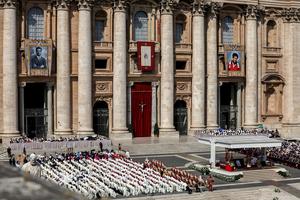
The Vatican announced last week that Blessed Pier Giorgio Frassati will be canonized a saint on Sept. 7, alongside another young Italian, Blessed Carlo Acutis. Frassati had previously been set to be canonized Aug. 3.
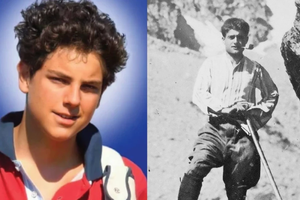
Born to a wealthy and influential Italian family, Frassati, a lover of sports and the outdoors, displayed extraordinary devotion to Christ in the Eucharist and to the poor and is known for leading his friends and loved ones to the Catholic faith through his friendship and infectious joy. He died at the age of 24, on July 4, 1925, after a short but painful bout of polio, and went on to inspire the future St. John Paul II, who beatified him in 1990.
Following the Vatican’s June 13 announcement, the Register spoke with Christine Wohar, executive director of FrassatiUSA, a national apostolate that promotes Frassati’s cause and spirituality, and author of the book Finding Frassati and Following His Path to Holiness, available from EWTN Publishing.
This interview has been condensed for clarity and brevity.
It’s been a bit of a roller coaster the past few months for devotees of Pier Giorgio Frassati and Carlo Acutis. The death of Pope Francis delayed Acutis’ canonization; and then when the new, later date for Carlo was announced, it turned out Frassati’s had been moved back as well. How do you feel about these developments?
I was really happy to hear that they did decide to combine Pier Giorgio and Carlo. [But] I guess my word is “bittersweet.” It’s sweet to think of Frassati’s canonization, but there is this tinge of bitterness: Thousands of people who planned around the Aug. 3 date will not be able to change their plans and [won’t be able to] attend.
People are crushed … but I’ve encouraged people to embrace [Frassati’s] response … He had major disappointments toward the end of his life. And that’s how he approached them: with acceptance, sacrifice and happiness. This situation gives us one more opportunity to unite ourselves with him spiritually.
Can you expand on why you think combining Blessed Pier Giorgio and Blessed Carlo Acutis’ canonizations was the right move?
I think it's just a tremendous gift to the Church to have these two lay saints.
Carlo and Pier Giorgio both had profound love for the Eucharist. Carlo is known for the project that he did cataloging Eucharistic miracles, and Pier Giorgio's life was centered on the Eucharist. He said, “Jesus comes to me every day in Holy Communion, and I repay him in my miserable way by visiting the poor.” So he was driven by the Eucharist each day to his life of service to the poor. Carlo, too, was driven by the Eucharist. They loved the Blessed Mother. They were normal, relatable, happy guys. They lived in the world. They both came from an affluent background, but that wasn’t what their identity was. Anything that they had, they used for the benefit of others.
Carlo died at the young age of 15. He didn’t have the chance to go on to college and face some of the more serious issues that Pier Giorgio faced. I think you could almost overlay them in a certain sense. You could overlay them up until a certain point, and then Pier Giorgio continues as I believe Carlo would have continued to live his life in the same way. And what they show is that you can live in the world, have the nice things, and there’s nothing wrong with that. But how you use them, and how you relate to the things of the world, matters. They didn’t attach themselves to the things — they attached themselves to the Lord.
The Church is rich with wonderful, beautiful models of sanctity. But as laypeople in this world, we need these kinds of examples that show us that holiness is possible in your everyday life in these circumstances. Pier Giorgio’s parents were on the verge of legal separation. A lot of people relate to Pier Giorgio for that reason, because they come from broken homes or homes where there’s a lot of tension.
Between the two of them, they offer such a wide range of experiences that we face as laypeople in the world, particularly young people. Pier Giorgio didn’t deal with technology, but Carlo did. Carlo didn’t deal with politics, but Pier Giorgio did. They really complement each other in so many ways. They’re distinct, definitely, but together, I think they offer us great hope that we can do the difficult things in our lives: to be Catholic, to be holy, to be joyful, and to be good witnesses of the faith.
To have these two together, especially now, I think it’s very powerful. It’s a great gift to the Church.
Blessed Pier Giorgio managed to fit a lot of living into his short life. What lessons do you think we can learn from his focus on using his time well, especially when so many of us today live lives filled with distractions and listlessness?
Pier Giorgio was so active from morning till evening. He was with his friends; he was at Church; he was serving the poor; he was doing all of these things. And think how much we could do if we weren’t tied to our devices. What he accomplished in 24 years would be impossible, I think, with a cellphone in your hand all the time.
Pier Giorgio wrote: “To live without a faith, without a patrimony to defend, without a steady struggle for the truth, is not living but existing. We should never exist but live.” And I think that’s a real message of his, to ask yourself: “Am I living, or existing?” And I think the real reality in today’s culture, where we are tied to our phones — and I’m just as guilty — that’s not living. We have to find a way to balance this because it is our mode of communication and connection to the world. But it’s not living if your best friend is your mobile device.
I’ve turned to him a lot [in prayer] for that very thing. He helped me to do better today managing my time and avoiding those kinds of distractions. … If I spend two hours on my device, those are two hours that I’m not doing something to impact somebody’s life around me or the world in general.
As we mentioned, Blessed Pier Giorgio kept very busy with prayer, service to the poor, and his university studies, but he also made plenty of time for recreation, sports and leisure and was known for being a fun and magnetic personality. What does having fun have to do with being holy?
Pier Giorgio was often referred to as “an explosion of joy.” I think that his joy was a magnet for his friends, and it came from his relationship with the Lord. Because people could see the joy in him, they wanted to be with him and be like him.
I think [being joyful and having fun] has everything to do with holiness, because I think the closer you are to the Lord, even in the hardest situations, if you have true joy, you can rejoice in everything. It changes the way you live your life on a daily basis.
One aspect of Pier Giorgio that is mentioned perhaps less often than his love of sports and the outdoors is his involvement in politics. What can he teach us about the right way to engage with politics as Catholics?
I reflect on his political engagement often; he came by it honestly, because his father was, first of all, the owner of a major newspaper. Then his father became the youngest senator in the kingdom when [Pier Giorgio] was about 16, and then later he becomes ambassador to Germany. So politics were definitely something he was exposed to more heavily than, I think, even a normal young man in those days. But being exposed to it and then actually actively engaging in it is a different thing. He often took positions that were not consistent with his father’s views.
[Pier Giorgio’s] life was built on charity and service to the poor. But he [recognized] that charity is not enough. We have to do things to change the culture and the society that creates this situation where there are many people who are struggling. He was moved to actually change things.
He was a man of action. He educated himself on the topics. He was exposed to it more, yes, but he didn't leave it as something that his father did. It was important to him, and he got involved. He was educated and informed, he read on those matters, and then he practiced — he invested; he was there. If there was a situation where there was somebody hurting, he was there.
It disgusted him, quite frankly, when he saw people who were getting involved in [fascist] parties who were supposed to be these Catholic men. He said that “men will trample on their consciences for worldly honors.” It really disgusted him when he saw what was happening.
Pier Giorgio was known for being a great friend, not only to the poor and downtrodden, but to his peers as well, with whom he would often discuss matters of faith and encourage them in their practice. Can you talk about Pier Giorgio and his amazing capacity for friendship?
I think Pier Giorgio would be great as a patron saint of friendship; he has a lot to teach us.
The way that he lived his life with his friends was, first, he had the joy. He knew his faith, and so he was able to share it at any time. He was a relatable guy. He did normal things with them, and so he drew them to the faith. People never laughed at Pier Giorgio because he was who he was all the time. He was a master of invitation. He would challenge his friends to a game … and if he won, they paid up by doing something spiritual. So even in his opportunities where he won things, they were winning, because they were doing some spiritual activity which he knew would benefit their soul.
He loved his friends. He was grateful for his friends. He relied on the prayers of his friends, and he offered his prayers. He was a great friend in ways that mattered.
Pier Giorgio had started the group the Tipi Loschi [In English, the “suspicious ones” or “shady types” — meant in a good-humored way], in May 1924, about a year before he died. He did it because his friends were starting to get married, graduate, take jobs, and they were growing apart. It was all fun and games, but the goal behind that for him was that they stay united spiritually. That’s the best friend that he modeled: one who cares about your soul. That’s something that we fail in, I think, tremendously in our culture, because we don’t want to offend people. But if you really loved and cared about people, you would say those difficult things like, “Hey, you haven’t been to Mass for a long time.” And that’s what he wanted to do. He wanted to have all his friends, and himself, in heaven together.