The Scriptures Jesus Knew: Stepping Into the World of the Dead Sea Scrolls
In addition to ancient verses, a first-century boat ‘brings the Gospel scenes to life’ at the Museum of the Bible.
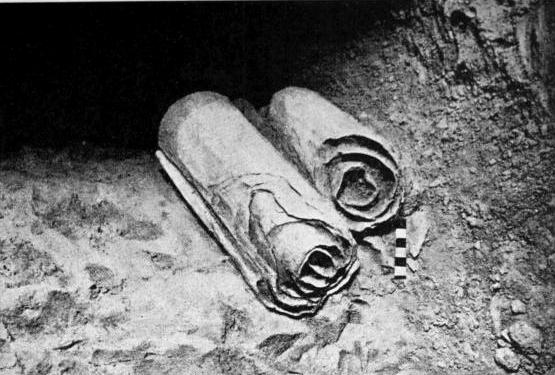
In 1947, a Bedouin shepherd searching for a lost goat threw a stone into a cave near Qumran, on the northwest shore of the Dead Sea. Instead of the sound of rock on rock, he heard pottery shatter. Inside were tall clay jars, some still holding rolled manuscripts.
Over the next decade, archaeologists and local tribes uncovered additional caves. Thousands of fragments emerged, representing more than 900 scrolls dating back from roughly 250 B.C. to A.D. 68. They included biblical manuscripts alongside prayers, hymns, commentaries, and texts reflecting apocalyptic expectations shaped by Roman rule.
These were the Dead Sea Scrolls.
Written on parchment and papyrus, sealed inside clay jars, and hidden away in desert caves, they survived only through dryness, darkness and neglect. That they remain legible more than 2,000 years later and are now on view in Washington, D.C., remains one of archeology’s greatest wonders.
Dead Sea Scrolls: The Exhibition, which opened Nov. 22 at the Museum of the Bible, marks the 75th anniversary of the scrolls’ discovery. The exhibition is part of an international tour organized in collaboration with the Israel Antiquities Authority, whose meticulous care, research and transport of the manuscripts have made such public encounters possible. Presented in three rotating installations to protect the fragile texts, the exhibition brings together ancient manuscripts and objects from daily life in the Second Temple period. Together, they invite visitors to step into the world in which Scripture was written, heard and handed on — a world that shaped Jewish faith and would later form the foundation of Christianity.
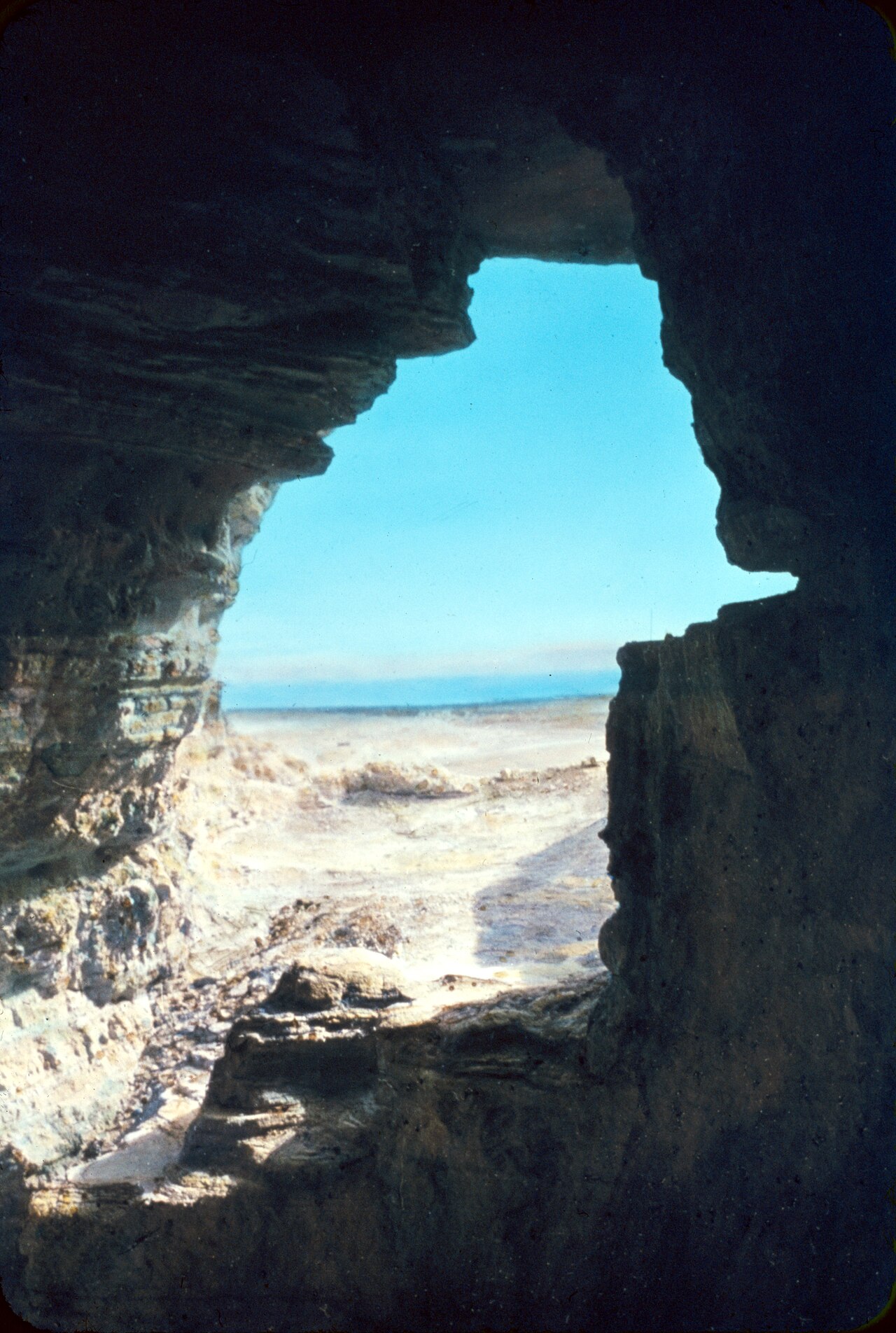
The story of the scrolls’ discovery began far from libraries and laboratories, but their importance is clear to faith and history.
“The Dead Sea Scrolls are the most important manuscript discovery in the history of archeology,” said Robert Duke, the chief curatorial officer and director of the Scholars Initiative at the Museum of the Bible.
Scripture Before the Canon
Before their discovery, the earliest complete Hebrew manuscripts of the Old Testament were the Masoretic Texts, dating to the ninth and 10th centuries A.D. The discovered scrolls pushed the textual history of Scripture back nearly a thousand years into the centuries just before Christ. When scholars compared them with later Hebrew texts, the differences were relatively minor. “They show careful copying of texts for a millennium,” Duke told the Register.
For Catholics, that continuity matters. The Church has long taught that divine Revelation was entrusted to human hands within history. As the Second Vatican Council’s Dei Verbum explains, Scripture was not dictated mechanically nor preserved by chance but faithfully handed on by a community conscious of its responsibility. The Dead Sea Scrolls offer physical evidence of that trust. Long before the biblical canon was formally defined, these texts were copied, guarded and revered as sacred.
The scrolls’ significance reaches far beyond any single religious tradition. For historians and archaeologists, they provide an unprecedented view of Jewish life under Hellenistic and Roman rule. For Jews and Christians alike, the discovery of hundreds of ancient copies of Scripture confirms how central these texts already were to religious life long before later divisions emerged.
The first rotation of the exhibition includes fragments from Genesis, Psalms, Job, Deuteronomy and other biblical books, as well as several non-biblical writings that circulated alongside Scripture. Nearly every book of the Hebrew Bible is represented among the Qumran discoveries, with the notable exceptions of Esther and Nehemiah.
Psalms stands out. Copies of the Book of Psalms make up the largest group of manuscripts found in the Dead Sea Scrolls caves, with 39 surviving copies dated back from about 150 B.C. to A.D. 68. One scroll on display is the most substantial Psalms manuscript ever recovered, preserving more than 50 psalms. Its order differs from modern versions, including several psalms not found in today’s Hebrew Bible. Throughout the scroll, the four-letter name of God is written in paleo-Hebrew (the ancient script of the Israelites).
“The Book of Psalms was the most preserved text,” Duke explained. “We have more copies of Psalms than any other book.”
That abundance reflects the central role the Psalms played in Jewish prayer. Alongside biblical psalms, the exhibition includes hymns composed by the Qumran community itself. One repeats the familiar line, “Bless the Lord, O my soul.” The influence is abundantly clear. “They weren’t shaping the Psalms,” Duke said. “The Psalms shaped them.”
Science Meets a History of Faith
Much of the exhibition’s impact comes from the way Scripture is placed back into daily life. Oil lamps darkened by use, storage jars, bowls worn smooth by handling, fragments of linen, tools, and coins show the setting in which the Psalms were recited and the Law was studied. Scripture was memorized and woven into ordinary routines.
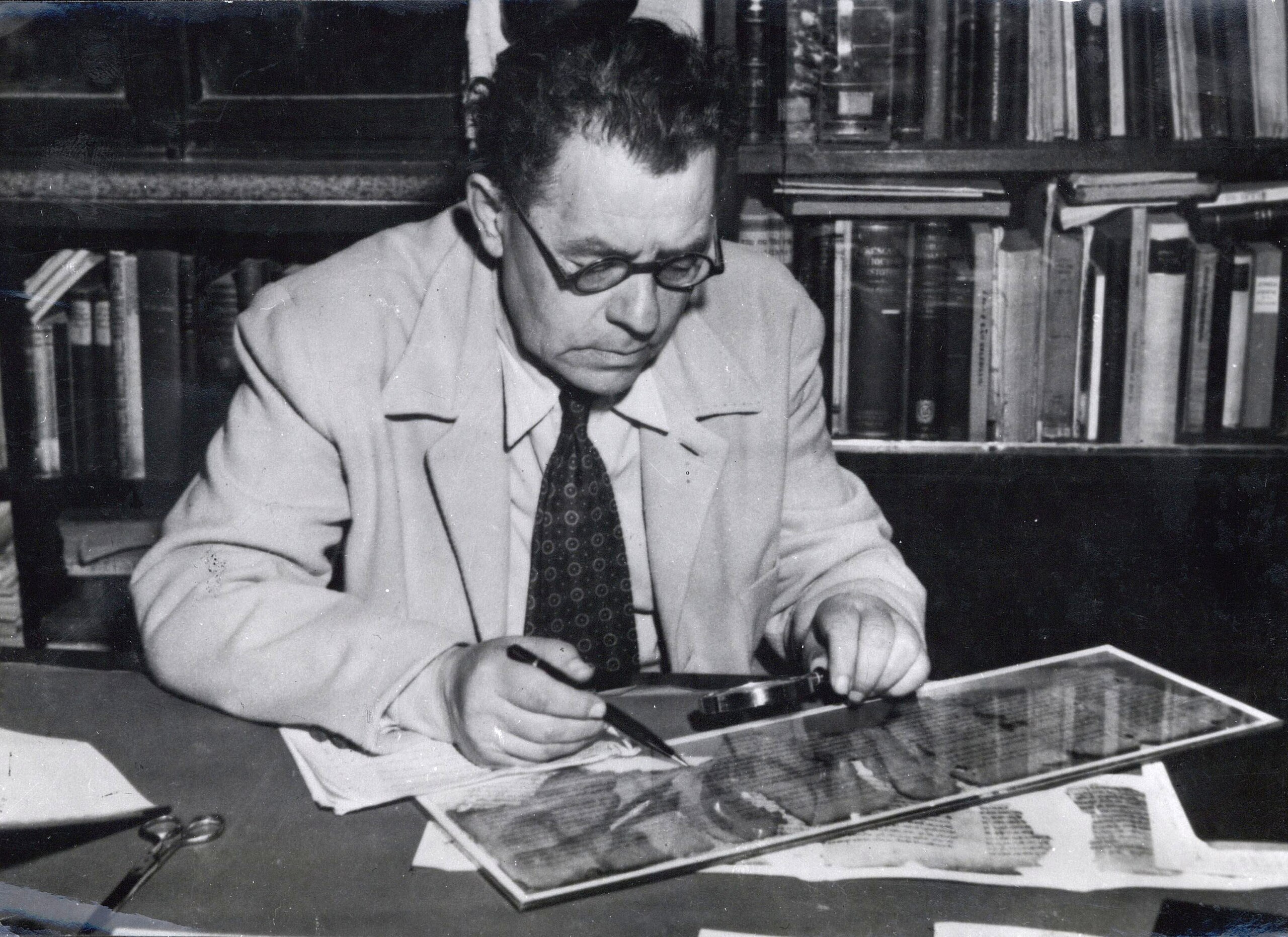
Although the scrolls were discovered more than 75 years ago, the exhibition makes clear how much remains to be learned from them. Early photographs from the 1950s show researchers and priests handling scrolls with bare hands, sometimes with cigarettes lit nearby. Today, the manuscripts are protected by carefully controlled lighting, temperature and humidity.
Microscopic and spectroscopic analysis, carbon-14 dating and DNA testing of parchment help scholars understand how the scrolls were made and where their materials originated. Because the scrolls are extremely fragile, modern technology now assists in their studies. Advanced imaging and artificial intelligence help scholars analyze letter forms, reconstruct damaged sections, and visualize missing portions of text, allowing careful study without risking further damage.
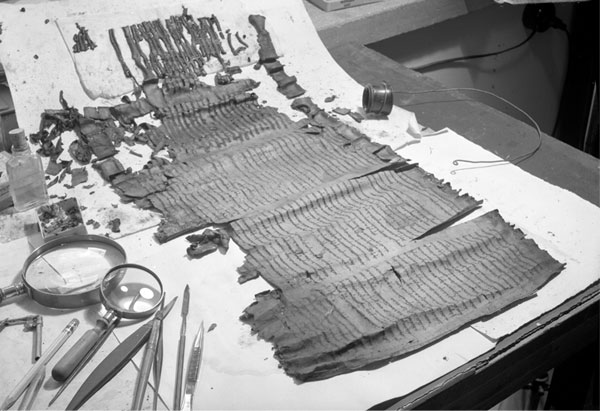
As Duke explained, these tools make it possible to reconstruct what a complete scroll would have looked like based on the surviving material.
Several manuscripts on display demonstrate the precision with which the scrolls were copied. A fragment of the Temple Scroll reveals remarkably uniform lettering, with faint guidelines still visible beneath the ink. “They didn’t rest letters on the line like we do today,” Duke explained. “They actually hung the letters from the line.”
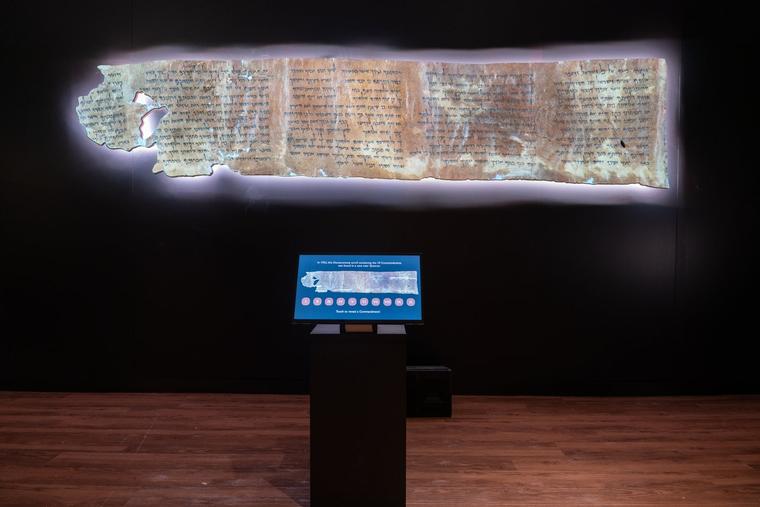
To help visitors imagine how such manuscripts were used, the exhibition includes a facsimile — an exact, full-scale reproduction — of a Deuteronomy scroll containing the Ten Commandments. The original, discovered in Cave No. 4 at Qumran and dating to the late first-century B.C., is too fragile to be displayed in full.
Unlike most biblical scrolls, this manuscript does not preserve an entire book. Rather, it contains selected passages from Deuteronomy, including the Decalogue, or Ten Commandments.
Places of Prayer and Reflection
Scripture is also set within the places where it was proclaimed. Among the most striking artifacts is the Magdala Stone, discovered in 2009 during excavations of a first-century synagogue in Magdala, a fishing town on the western shore of the Sea of Galilee. The carved limestone block likely served as ceremonial furniture on which the Torah and other sacred scrolls were placed and depicts the Jerusalem Temple and its furnishings as well as what many scholars believe is the earliest known synagogue carving of the Temple menorah.
“The Magdala Stone helps us imagine what synagogue life looked like during Jesus’ lifetime,” Duke said. While not named directly in the New Testament, Magdala serves as the hometown of St. Mary Magdalene, one of Jesus’ closest followers and the first witness to the Resurrection. The stone anchors the Gospel world in something solid, reminding visitors that Scripture was proclaimed in real places to real people.
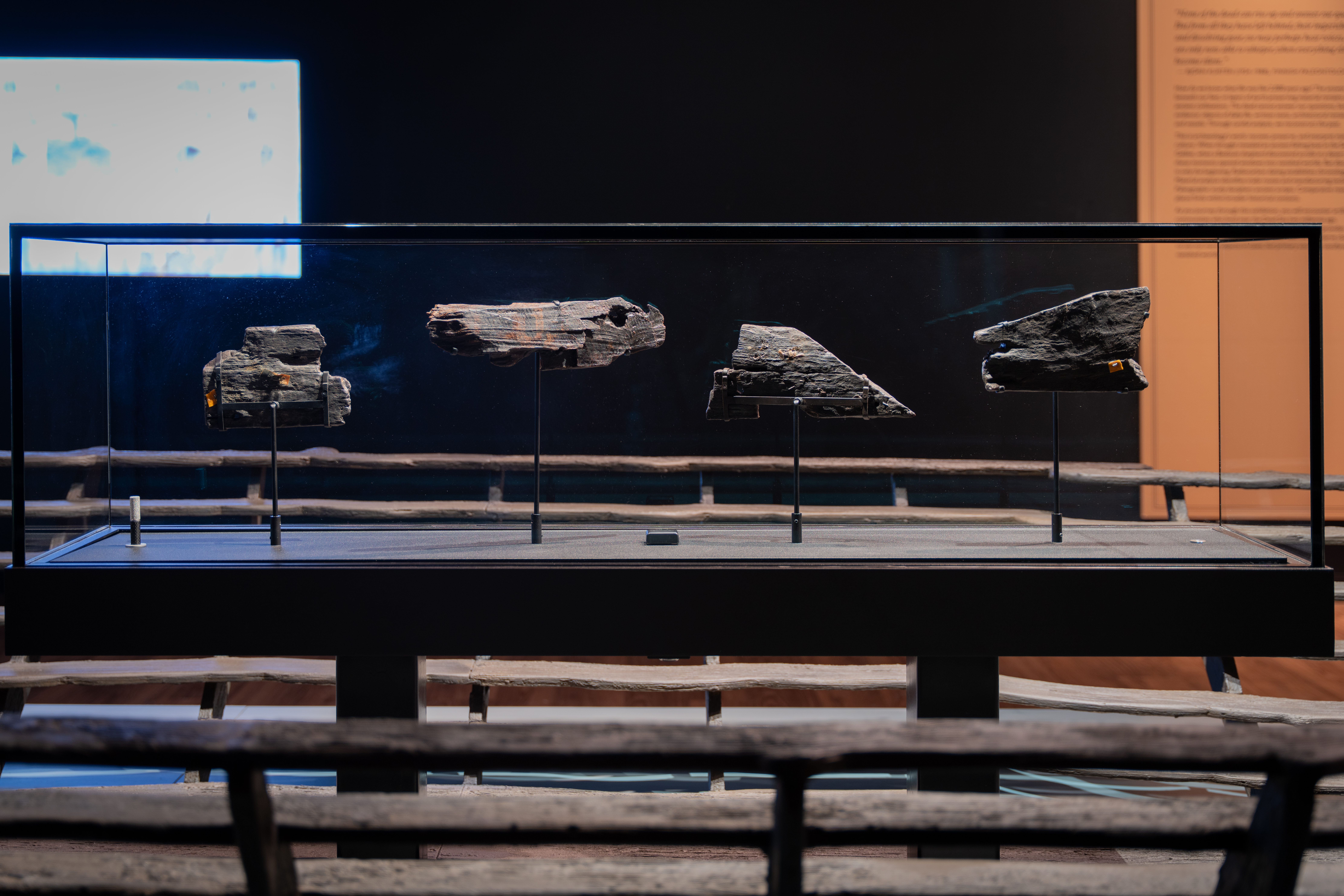
Nearby stands a reconstruction of a first-century fishing vessel commonly known as the Ginosar Boat (or the “Jesus Boat”), based on remains discovered in 1986 when a drought lowered the waters of the Sea of Galilee. Though not directly linked to Jesus, the boat dates to his lifetime and reflects the kind of vessel used by fishermen of the region. Measuring just over 8 meters (27 feet) long, it could carry a small crew but would have felt dangerously exposed in a sudden storm.
In the first century, the Sea of Galilee was a center of activity under Roman rule. While cities such as Tiberias reflected Roman power, traditional Jewish life continued in fishing villages. Many of Jesus’ disciples were fishermen shaped by this demanding work. After centuries preserved in lake mud, the boat required careful excavation and innovative conservation techniques. Built from both local and imported woods, it offers a glimpse into the working world behind the Gospel stories.
Four original wooden fragments from the actual boat accompany the reconstruction. Standing beside it, the scale becomes clear. “When you see the size of the boat,” Duke said, “you can imagine Jesus and the fishermen leaning together over their nets or feeling the tension as a storm blew up unexpectedly. It brings the Gospel scenes to life in a way words alone cannot.”
Visitors also encounter a massive stone, weighing more than 4,000 pounds, that once formed part of the Western Wall complex destroyed by the Romans. Following Jewish custom, visitors are invited to write prayers and place them into its crevices, as they would in Jerusalem. Each Saturday, the prayers are gathered and eventually transported to be placed with those at the Western Wall itself, linking present devotion with ancient practice.
A Shared Heritage Across Time
Future rotations of the exhibition will introduce additional scroll fragments, including passages from Isaiah, Tobit, Jubilees, and the Great Psalms Scroll. Rotating the manuscripts protects them, but it also reflects the fragmented way they come from Israel, dependent on care across generations.
The scrolls survived because they were treasured. They endure because they continue to matter.
For Christians, the Dead Sea Scrolls anchor faith in history. These are the Scriptures Jesus knew. They shaped his prayer, his preaching and his fulfillment of all that came before him.
For visitors of different faith backgrounds, the exhibition offers a chance to step into the world where Scripture was carefully written, handled and heard. Archaeology, curator Duke noted, has an “amazing way of illustrating the Bible,” helping modern readers “understand the background, culture and geography” of the “world of the text.”
In that sense, the scrolls are more than mere artifacts. They are a bridge across time, standing as a witness to the care and continuity that carried the Word through centuries — a reminder of how history and faith intersect in everyday lives.
- Keywords:
- dead sea scrolls
- museum of the bible