Harvesting September Graces
Looking back on Septembers of yore, Joanna Bogle says it’s time to bring back Michaelmas celebrations — and all the English harvest traditions.
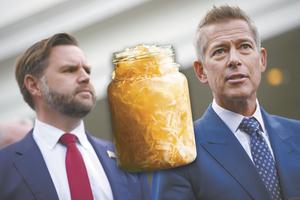
I’m busy with pans of bubbling fruit and careful measurements of sugar. My fingers are stained from picking blackberries.
We’re in the preserving season, and I’m doing things as I was taught long ago. My shelves will have plenty of fruit for the winter, packed in syrup or made into jelly. This gives me a cozy, old-fashioned feeling. And yet this state of mind isn’t as Catholic as I’d like it to be.
In England, if people mention Harvest Festival, you can be pretty sure they are Anglicans. The very words are quintessentially Church of England, suggesting displays of fruits and flowers in beautiful medieval churches, and choirboys with voices like flutes.
But Catholics were thanking God for the harvest long before the Church of England broke away to carve itself a niche in history. In medieval England, the first wheat harvested was used for hosts at a celebratory Mass, the fields having earlier been blessed at Ascensiontide, and things culminated with Michaelmas celebrations in September.
We should reclaim this heritage.
Because of history, the Catholic faith in England, once revived, was predominantly urban. This trend also traveled to America. Irish emigrants were not from cities — they were mostly rural — but they settled in them. When Irish culture began to predominate over other Catholic cultures in the United States, something urban stuck, too.
And yet, still, man’s links with the countryside are practical. Food is grown and raised there, after all. It would be silly to ignore this or to dismiss harvest thanksgiving simply because fields of wheat, or country lanes lined with blackberries, seem remote.
It’s almost a cliché to reiterate that, while we eat well in the developed world, others on earth are hungry. This has become an almost one-dimensional slogan, more political than religious. People have become bored by it. The annual season of fruitfulness and harvesting is an opportunity to reconnect.
There are lovely prayers and hymns announcing our thanks to God for his graciousness and his bounty. Grace before meals — “Bless us, O Lord, and these, thy gifts …” — is beautiful. Blessing food reminds us of the God who provides. It draws us together, creates the sense that a shared meal is about more than just food, sets the scene for hospitality and friendship.
I like passing on old Michaelmas traditions. For example, blackberries are inedibly mush by the end of September because, as an old Irish folk tale has it, Satan cursed and spat on them when St. Michael cast him out of Heaven and straight into a blackberry bramble.
When I preserve fruit by bottling, I’m enjoying another Michaelmas tradition — and a skill in danger of being lost, which seems a pity. A recent report in Britain announced that cookery lessons are to be reintroduced to schools in an effort to combat obesity and teach skills associated with good nutrition. It noted that many children do not know how most foods are cooked, much less where they come from.
Perhaps the harvest season offers us more opportunities to do good than we realize. Happy Harvest Thanksgiving!
Joanna Bogle writes from London.