Dancing the Theology of the Body
Accompanying couples with the teachings of John Paul II, one class at a time.
“My sickness turned out to be a gift.”
When Sharon Boies says this, she does not mean it lightly.
One year ago, the founder of All the Right Moves in Newport Beach, California, was bedridden with RSV that quickly turned to pneumonia. Within days, the veteran dance instructor, whose vocation had become preparing engaged Catholic couples for their first dance as husband and wife, lost her hearing. She could not walk. She could barely see. The woman who had “come out of her mother’s womb dancing,” as she likes to say, wondered whether she would ever return to the studio floor.
Yet suffering has marked turning points in Boies’ life before. Decades earlier, after being diagnosed with rheumatoid arthritis, she discovered that physical limitation forced her to understand the body more deeply.
“When I got rheumatoid arthritis,” she recalled, “I became a better dancer because I had to learn more about the body.”
It was around that same period, more than 20 years ago, that Boies first encountered the teachings of Pope St. John Paul II on the theology of the body while listening to Catholic radio. Between 1979 and 1984, the Polish Pontiff delivered 129 general audiences exploring Scripture’s vision of the human person, masculinity and femininity, and what he called the “nuptial meaning” of the body.
“You will be part of this,” Boies remembers thinking at the time.
She was not a theologian. She was a ballroom instructor, trained in the Arthur Murray system, with years of experience teaching hundreds of couples everything from the waltz to the swing. A Catholic high-school education in New Mexico helped shape her faith, but dance was her professional language.
Gradually, something shifted.
All the Right Moves sits in the shadow of John Wayne Airport, tucked into an unassuming industrial stretch of Newport Beach within the Diocese of Orange. During the COVID shutdowns, when indoor instruction was restricted, Boies moved her lessons outside. Beneath the roar of ascending airplanes, in parking lots and loading bays, engaged couples practiced their first steps as future husbands and wives.
“They were yearning to put their faith into action,” she said.
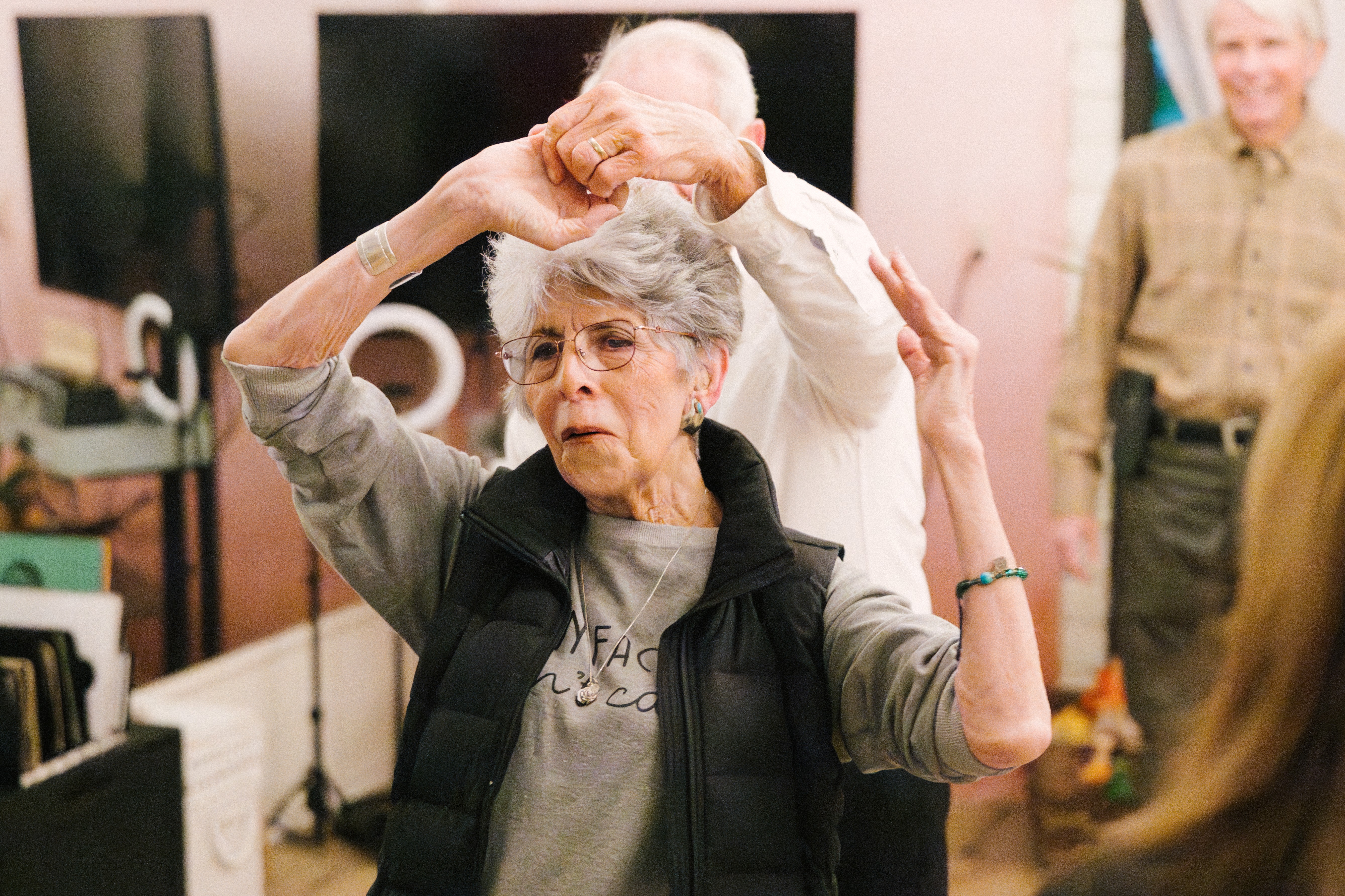
“I met my wife through Sharon’s Wednesday night class, so in a way I owe her my vocation,” recalled Quinn Rickard, a Catholic young-adult professional. “There aren’t many places anymore where someone can meet other young adults in a wholesome social setting, so the community Sharon has created is truly valuable.”
Rickard is not alone in this sentiment. Many of the young Catholics who found their way to the studio had already chosen a countercultural path. They spoke of resisting the coarseness and oversexualization that saturate modern dating. They were not looking for novelty. They were looking for something applied, a way to live out what they professed.
Aileen Tran took Boies’ young-adult class for three years and, with her husband, prepared for her wedding dance. “We learned the beauty of our femininity and masculinity and how we’re called to live that out fully with confidence, dance being an example of how to do that in relationship with one another,” Tran said.
“I was able to learn about the complementarity of men and women in a different way, not just in theory, but physically through dance,” Rickard echoed.
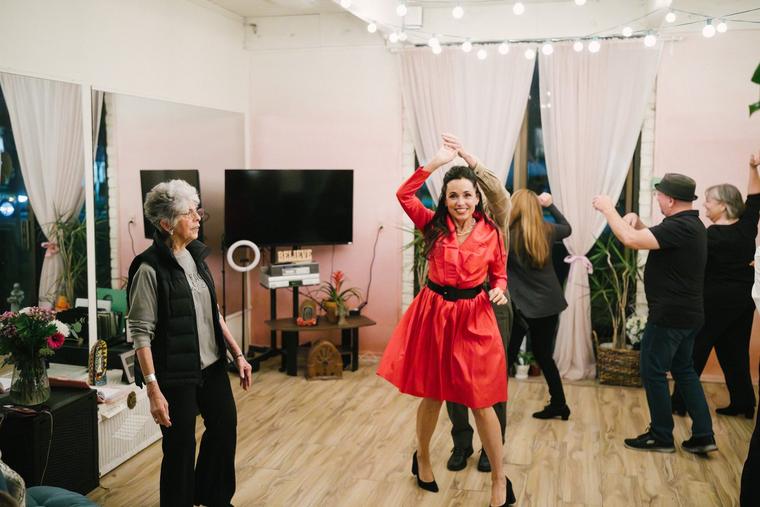
Inside the studio, the intimate atmosphere reflects Boies’ roots. Southwestern artwork and New Mexico-inspired touches line the walls. A tapestry of Our Lady of Guadalupe, Queen of the Americas, watches over the dance floor.
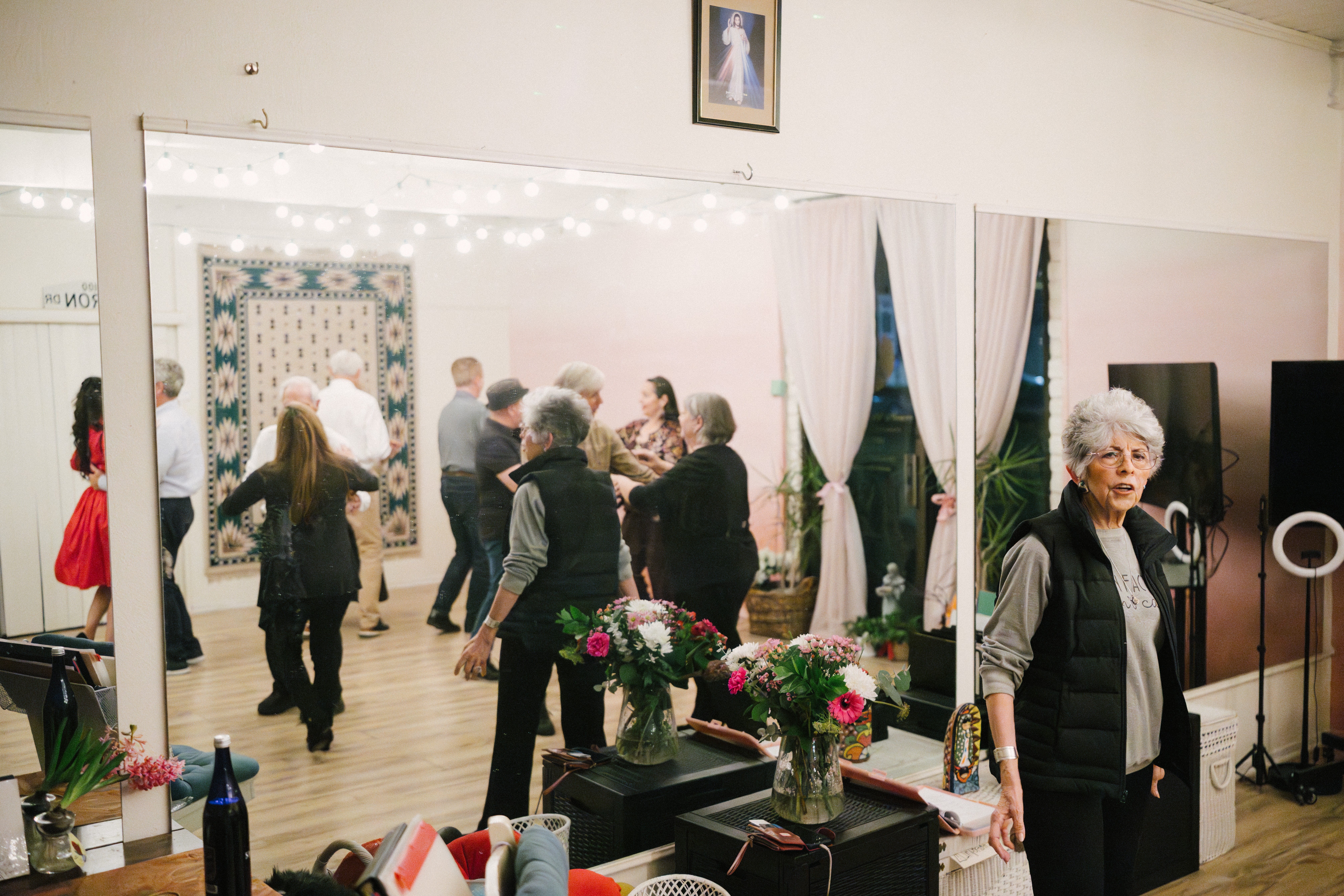
It is not uncommon for a lesson to begin with awkwardness, for the groom-to-be to stand too rigid, unsure how firmly to guide. The bride hesitates, uncertain how much to yield. They are of a generation where such expression of chivalry and honor is not in vogue. Boies intervenes gently.
“Lead with clarity, not force,” she tells the young man, adjusting his posture. “You’re inviting her.”
To the bride: “Receive the lead. Don’t collapse into it — but don’t fight it either.”
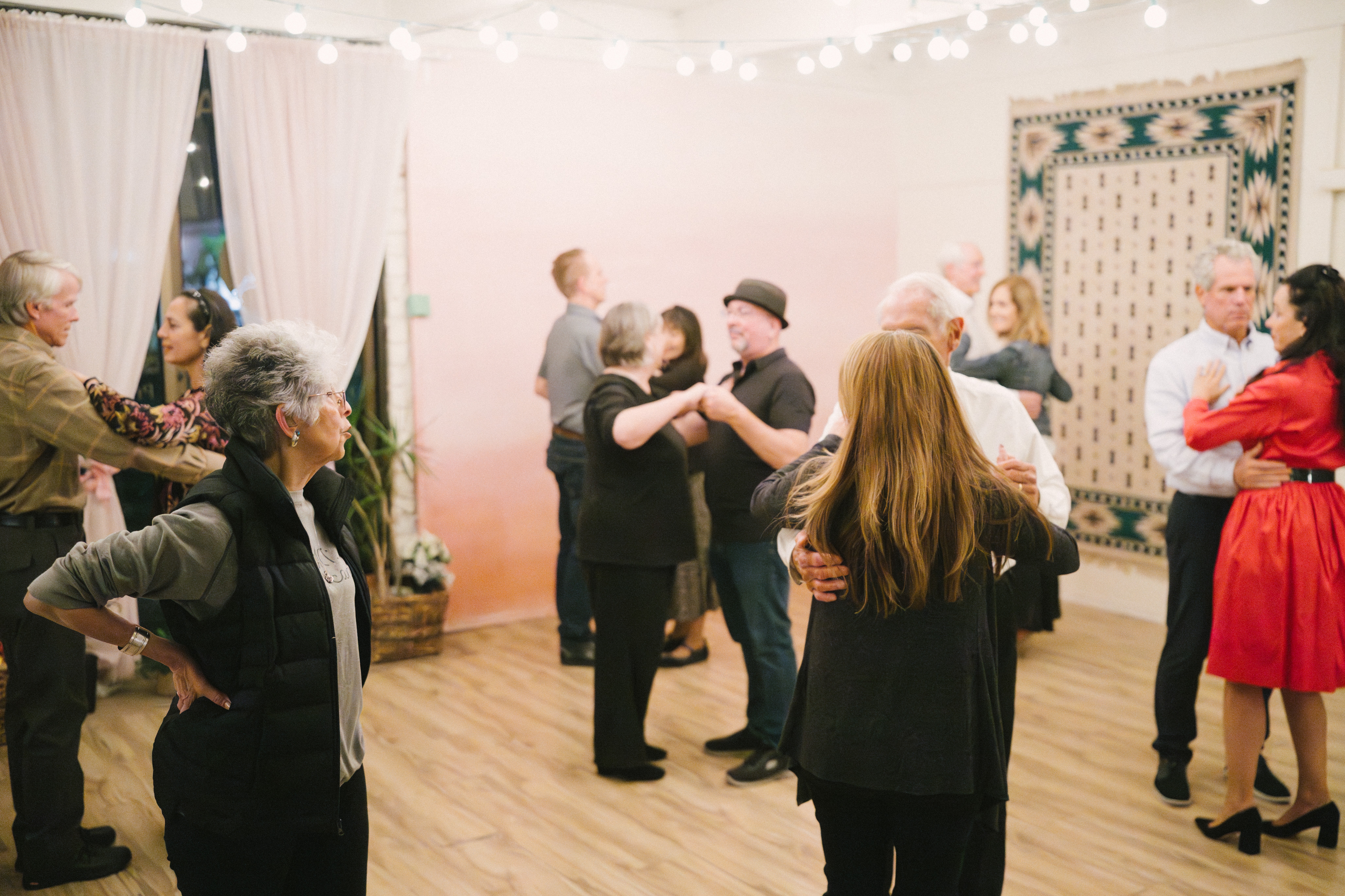
The corrections are technical. But they are also theological.
“In an age of oversexualization, we have to restore dignity,” Boies said. “The body is not something to use. It’s a gift.”
Again and again, past students reflected on not only Boies’ personable teaching style, but how she stretched the art of dancing into the theology of the body. “I discovered how amazing God designed our bodies, the proper way to move with my partner and how important it is to experience joy through music, food, fellowship and, of course, dance,” said Breanna Staniscia, a young Catholic who previously worked for the Napa Institute.
As Boies’ target audience shifted from secular couples to specifically wedding couples preparing for their first dance, so too did her understanding of her vocation.
It dawned on Boies that what was unfolding in her studio mirrored the anthropology articulated by John Paul II. She does not present herself as an expert in the dense theological work of the general audiences. “I’m not a theologian,” she said simply. But she understands something of what the late Pope meant when he described the body as capable of expressing self-giving love.
“John Paul II was an artist,” she said. “He understood that truth has to be embodied.”
In her studio, leading and receiving are not caricatures of dominance and passivity. They are disciplined forms of attentiveness. The man initiates movement; the woman responds with trust. Both must listen — to the music, to each other, to subtle shifts in balance. When done well, neither overwhelms the other. Instead, something shared emerges.
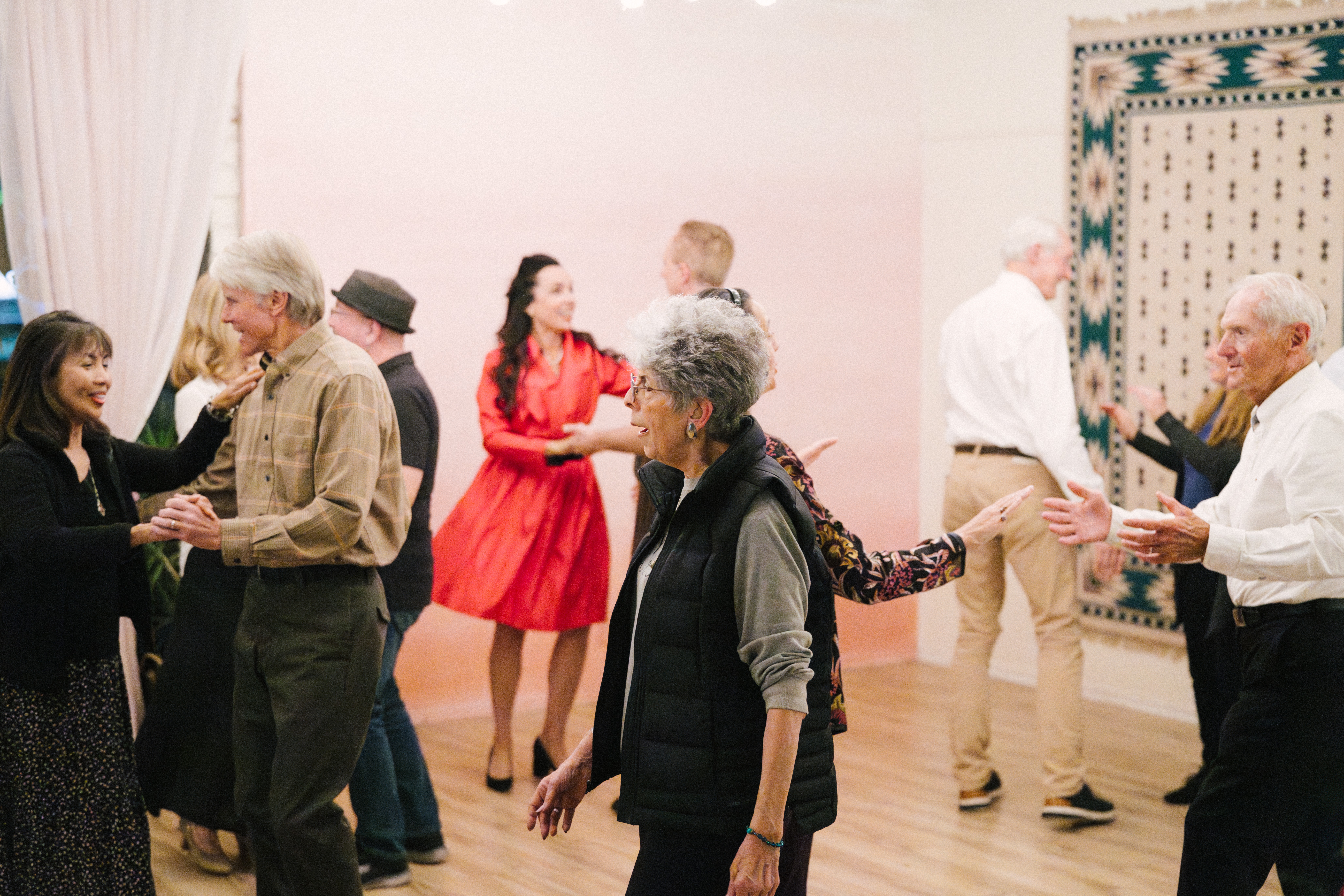
On a recent evening when the Register visited, the schedule unfolded in two movements.
The first hour belonged to older couples. Some had been married for decades. One elderly gentleman, a doctor, was recently widowed. They stepped carefully at first, relearning rhythm, rediscovering attentiveness. Laughter came easily, but so did focus.
The second hour brought younger couples, many already married. They first met at the studio through young-adult gatherings. All came from committed Catholic homes. One couple arrived with their 1-month-old infant, whom Grandma held while the parents stepped onto the floor.
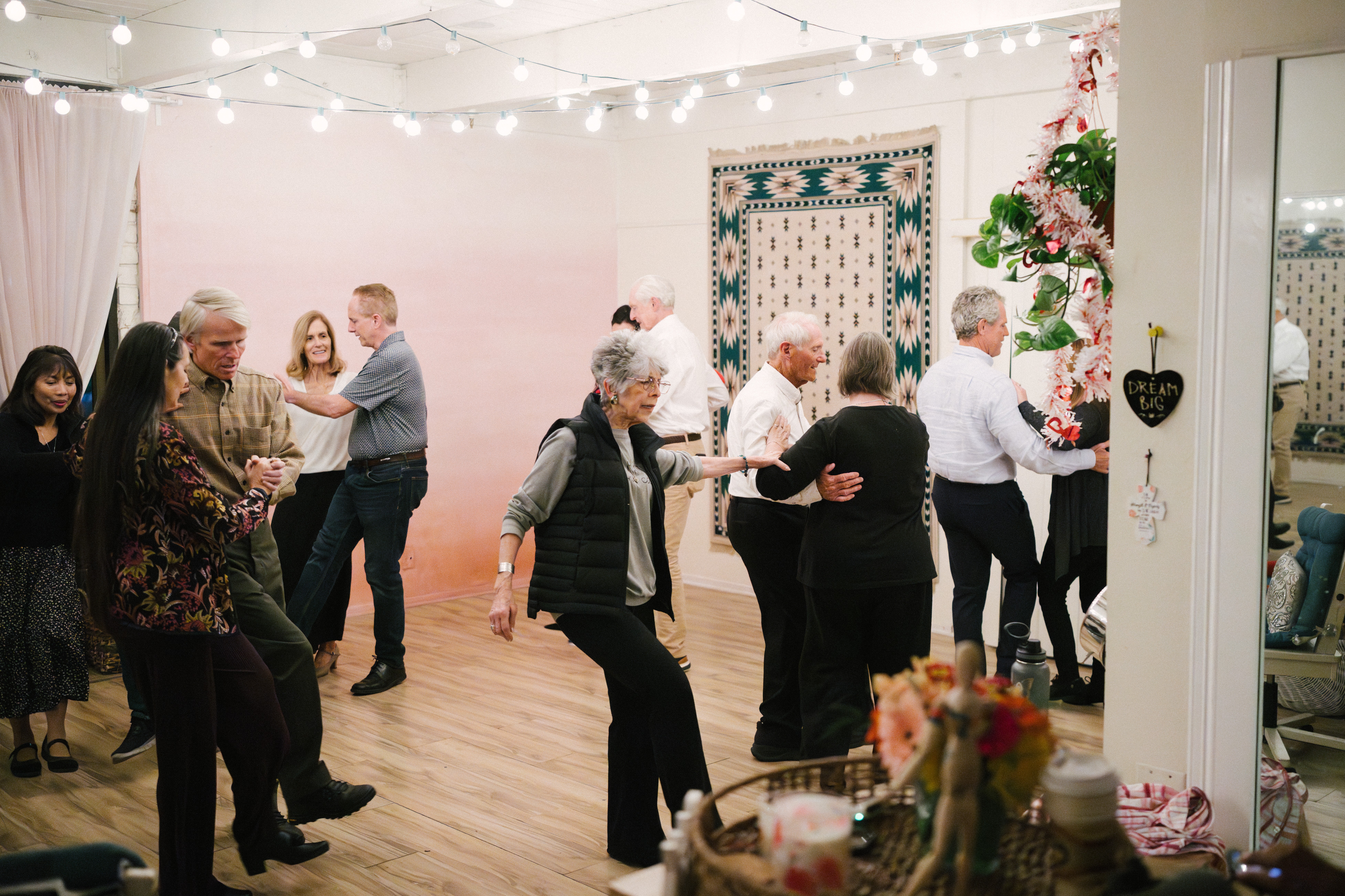
Boies estimates that 15 to 20 marriages have grown out of relationships formed through her classes and events. What began as wedding choreography has become something like an oasis — a place where young adults explore intimacy in a healthy way and older couples return seeking renewal.
“The young adults come in to explore intimacy,” she said. “The older ones come back to revive their relationships.”
In February 2020, members of the studio community hosted what Boies describes as the first young-adult event of its kind on the campus of Christ Cathedral. Held with diocesan approval, the gathering drew young Catholics from Boies’ studio eager for an environment that affirmed both chastity and joy. “They wanted an evening where they could dress up,” Boies said. “The young people don’t have elegant events where they can dress up.”
The young cohort from Boies’ studio was able to hold their event just before COVID shut everything down.
Then came the illness.
On New Year’s Eve 2024, a nurse at Hoag Hospital who attended Boies’ dance class instantly recognized the veteran instructor’s condition: serious RSV. Within days, Boies lost her hearing. For a dance instructor, the silence was devastating.
For months, recovery was slow. The possibility that she might never return to teaching crossed her mind.
Yet in the silence, she sensed again what had marked earlier trials.
“The Lord has always used dance to carry me through certain traumas,” she said.
If the theology of the body insists that the human person is a unity of body and spirit, then suffering, too, passes through the body. So does healing. When Boies eventually returned to the studio after her senses rebounded completely, she listened differently. Not only to melody, but to movement itself. Watching couples steady one another, she saw again what first struck her decades ago: The body speaks.
When teaching, Boies steps back, arms folded. The couples who were present when the Register visited were regulars, returners. There was a palpable joy that only comes from shared faith in God.
“My sickness turned out to be a gift,” she said.
John Paul II was known to emphasize the human person in his teaching. There is a line in the precursor to his theology of the body, Love and Responsibility from 1960, written when he was archbishop of Krakow, that echoes the vocation Sharon Boies has brought to Catholic men and women looking for what was missing in the world around them:
“Love is the unification of persons.”
Sharon Boies might say so is dance.
- Keywords:
- theology of the body
- catholic courtship