In a Gospel That Offers a Beautiful Portrait of Prayer, Jesus Reminds Us to Choose the Better Part
Many people think of prayer as something that is said. But prayer is better understood as paying attention to God.

Sunday, July 20, is the 16th Sunday in Ordinary Time. Mass readings: Genesis 18:1-10a; Psalm 15:2-3, 3-4, 5; Colossians 1:24-28; and Luke 10:38-42.
The Gospel is the familiar one of Martha and Mary. Martha is the anxious worker seeking to please the Lord with a good meal and hospitality; Mary sits quietly at his feet and listens. Here, Jesus underscores the priority of personal prayer.
Jesus entered a village where a woman whose name was Martha welcomed him.
The story begins by showing Martha in a very favorable light. She opens her door (her life, if you will) and welcomes Jesus. This is at the heart of faith: a welcoming of Jesus into the home of our heart and life.
She had a sister named Mary who sat beside the Lord at his feet listening to him speak.
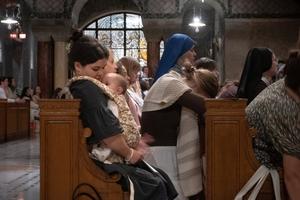
This is a beautiful portrait of prayer: sitting at the Lord’s feet, listening.
Many people think of prayer as something that is said. But prayer is better understood as paying attention to God. It is not just telling God what we want; it is discovering what he wills. We must learn to listen, and we must listen to learn.
Martha, burdened with much serving, came to him and said, “Lord, do you not care that my sister has left me by myself to do the serving? Tell her to help me.”
A lot of people run off to do something they think is a good idea. But often, they never asked God about it. God might have said, “Fine.” But he might have said, “Not now, later.” Or he might have said, “Not you, but someone else.” Or he might have just said, “No.” But instead of asking, we often go and do it, and then when things don’t work out, we will blame God: “Why don’t you help me more?” And so Martha is burdened. First, she blames her sister. Then she presumes that the Lord does not care about what is (to her) an obvious injustice. Then she takes presumption one step further and presumes to tell the Lord what to do: “Tell her to help me.”
“Martha, Martha, you are anxious and worried about many things. There is need of only one thing. Mary has chosen the better part, and it will not be taken from her.”
The Lord observes her and says that she is anxious about many things. Anxiety about many things comes from neglect of the one thing most necessary: sitting at the feet of the Lord and listening to him.
The Lord will surely have things for us to do in our lives, but they need to come from him. This is why prayer is the “one thing” necessary and the better part: because work flows from it and is subordinate to it.
Jesus does not mean that all we are to do is to pray. There are too many other Gospels that summon us to labor in the vineyard to make that conclusion. But what Jesus is very clear about is that prayer and discernment have absolute priority.
- Keywords:
- sunday guide
- mary and martha
- catholic prayer