‘Chalice of Mercy’: Midwest-Based Nonprofit Brings Aid to Ukraine’s Front Lines
Providing spiritual and humanitarian support amid the ongoing Russia-Ukraine conflict.

When the founder of the nonprofit Chalice of Mercy speaks of her native Ukraine, it is from a heart that seeks not only to relieve the suffering of her people through humanitarian aid but to heal the soul of a nation.
Valentyna Pavsyukova has worked tirelessly since 2007 to ship medical and other supplies to Ukraine and oversee their distribution in person, a task that has taken her to the front lines of the country’s current war with Russia. At the same time, she has infused her mission with a spiritual and pro-life message by offering conferences, retreats and pilgrimages to Medjugorje, site of reported Marian apparitions, for doctors, medical students, soldiers, legislators and young people.
Chris Ruff, director of the office of ministries and social concerns for the Diocese of La Crosse in Wisconsin, where Chalice of Mercy is based, said on a practical, material level, the nonprofit is a highly effective relief organization that is getting humanitarian supplies to where they are most needed. But he said it also is deeply Catholic, rooted in the sacraments and in Pavsyukova’s trust in God and his Providence.
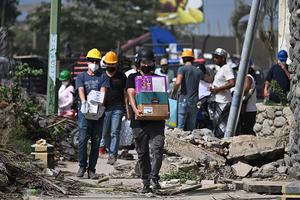
Impelled by that faith, Pavsyukova will don a helmet and bulletproof jacket to enter what she calls the “jaw of fire” to deliver supplies to areas of greatest need.
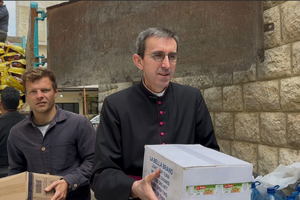
“People in Ukraine have told her she doesn’t have to go there, but she wants to meet the doctors who are risking their lives and wants to show them she is not just offering help from a distance but is there physically helping,” Father Daniel Thelen, who serves as secretary of Chalice of Mercy, told the Register. “She is at every end of the spectrum of the logistics line. That is a unique component of our mission.”
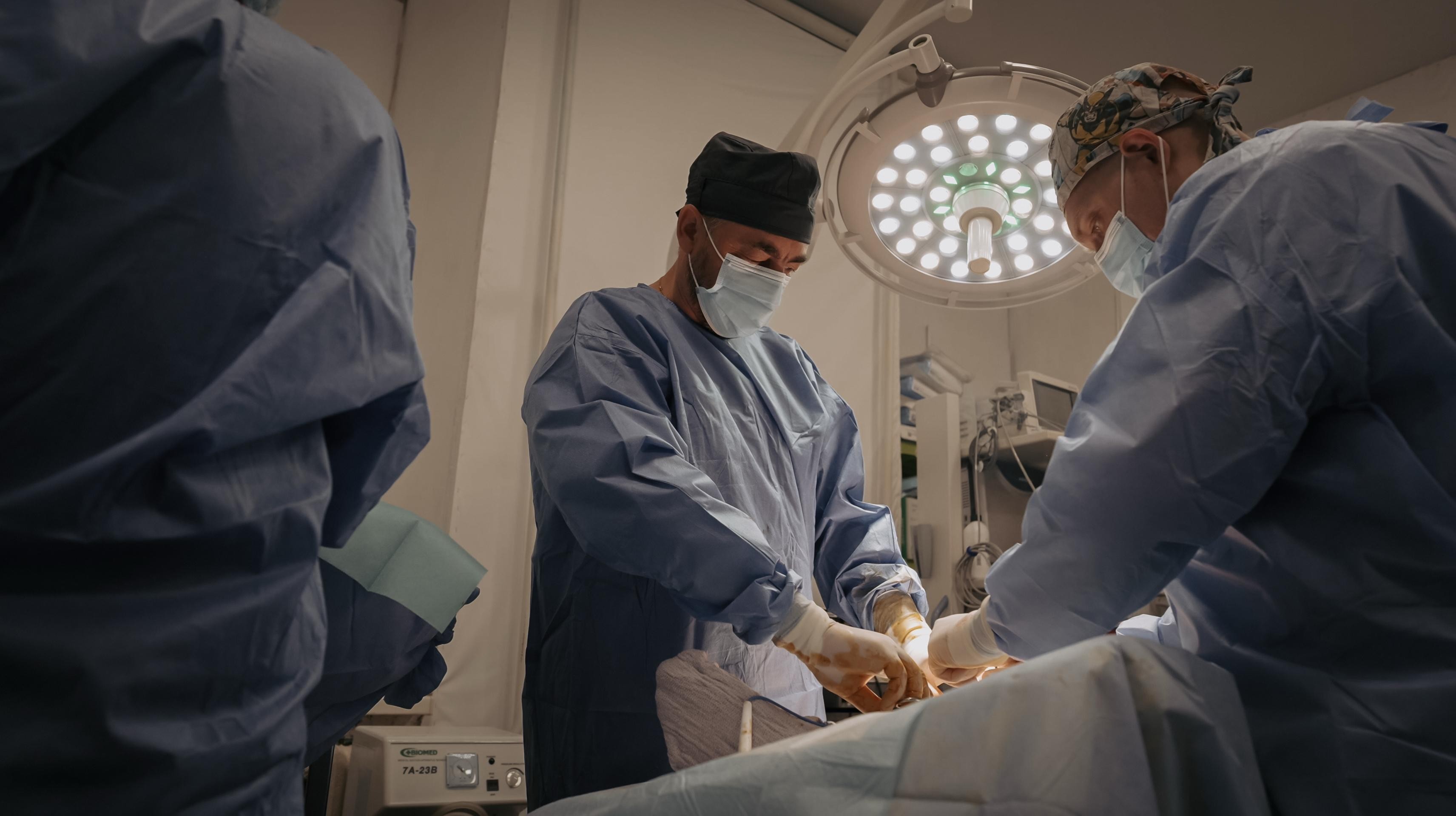
Chalice of Mercy has succeeded, Ruff added, because Pavsyukova views the needs of the human person in a whole way. “She sees first of all the need for love, compassion and for God. She also sees the material needs, and of course she’s responding to all of that, but it’s undergirded by her own experience of being loved by God and her desire that others would have that experience.”
Once she realized what the former Soviet Union had done to the hearts and souls of her people for more than 70 years, Pavsyukova said she was determined to help restore them. “The Soviet Union has deprived them not only of understanding their identity and their dignity,” she said, “but also their faith.”
Faith Found and Shared
Her own experience mirrors that. Although she was baptized in the Russian Orthodox Church as a baby, Pavsyukova, like many of her peers, did not grow up with any religious training. Her grandmother, however, gave her what she considers “the greatest inheritance” by teaching her the “Our Father.”
“Thanks to this prayer,” she said, “God entered into my life as a loving and merciful Father.”
When Pavsyukova was 19, she prayed the prayer during a particularly dark time. She had recently come to the U.S. after her name was drawn in a green-card lottery, and, as she recalled, “I just couldn’t feel anything within me. I felt very empty — just void — as so many people feel right now. When I prayed the ‘Our Father,’ I felt warmth and grace. I felt loved. ... I just really felt the desire to open my heart entirely. I wanted to give my life to God, to dedicate my life to him.”
Soon after, she was drawn to the Catholic Church. “I watched a lot of black-and-white movies because it helped me to study English,” she said. “Usually, in these movies, you will see a Catholic church, a wedding or funeral, nuns or a priest. I just really liked how it looked inside and I thought, ‘If I ever become a person who goes to church, I will be Catholic.’”
While working as a hair stylist, she asked a Catholic co-worker if she could go to church with her. At her first Mass — at Sacred Heart of Jesus Parish in Eau Claire, Wisconsin — Pavsyukova said, “I was mesmerized. I had no idea what was happening at that table and what the priest was doing. I knew nothing about the Catholic Church, just a few scenes in a movie. Whatever that priest was doing, I knew it was the truth. Again, it was just a pure grace ... but God showed me this is where I belong.”
She started going to Mass daily and was confirmed in 2007. That same year, she was about to sign a two-year contract to serve with the Peace Corps in Africa when she read Mother Teresa’s book Come Be My Light. “It changed my life,” Pavsyukova said. “She was saying it’s easy to do mission work in Calcutta or Africa or Indonesia or any other place, but it’s very hard to do mission work in your own country with your own people.”
Pavsyukova knew then that her mission would be to the people of Ukraine, and she founded Chalice of Mercy on Sept. 14, 2007. “I wanted it to be a mission to help people understand that God is their Father, not some spiritual being who was distant or a judge watching and ready to punish them. That’s how my people in Ukraine understand God, so they are afraid of him. It’s God and punishment and death, not mercy, love and fatherhood.”
Defending Life in Every Circumstance
Besides showing her people that God is a merciful Father, Pavsyukova wanted her mission to defend life from conception to natural death.
Ruff said that as she began to address the medical needs of Ukraine — its antiquated hospitals and lack of supplies — she realized that she would have to change attitudes toward abortion, which was widely accepted and practiced. “From the beginning,” Ruff said, “she recognized that as she was sending birthing tables to the country, they could also be used for abortions.” In Ukraine, Pavsyukova explained, abortions are performed primarily in birthing hospitals, not in separate facilities.
Early in her mission, as she was organizing shipments of medical supplies to Ukraine, she was also arranging retreats for doctors with presenters who could speak on pro-life issues. In 2008, after visiting Medjugorje, she began to pray about sending Ukrainians there, especially doctors and young people. Since then, thanks to a benefactor, Pavsyukova has been able to send more than 3,000 young people and more than 1,500 doctors and medical students to Medjugorje.
“She is 100% committed to fostering respect for life from conception to natural death,” Ruff said. “That is at the heart of her convictions. Now, that’s been enhanced by the reality that Ukraine is losing its people. Many have left or fled as refugees, and many, especially soldiers, have been killed. More than ever, she thinks this is the time for the people of Ukraine to see how precious life is and that they need to build families, to be fruitful and multiply.”
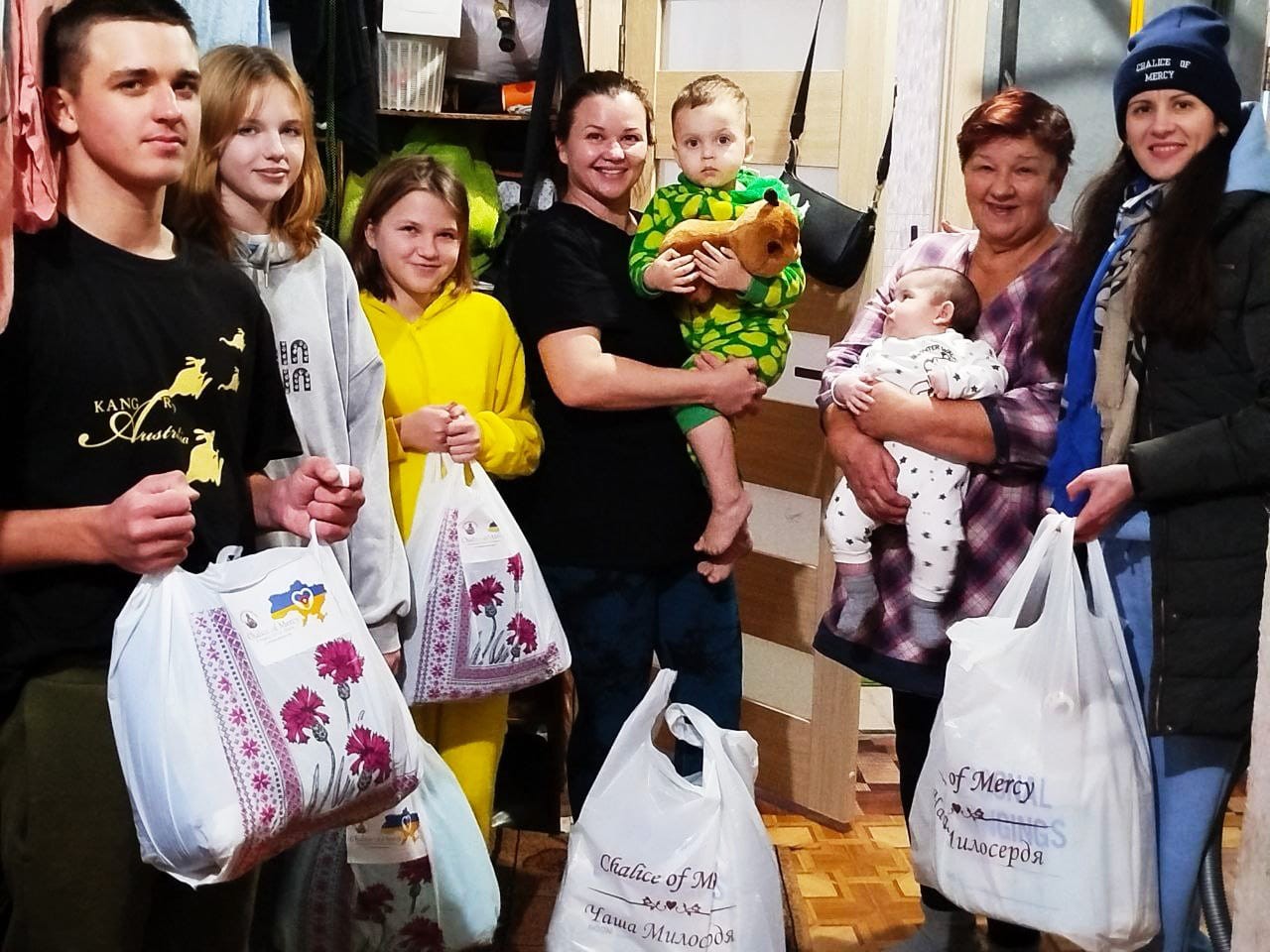
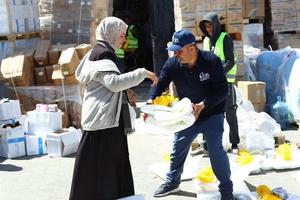
Ever since the full-scale Russian invasion of Ukraine on Feb. 24, 2022, Chalice of Mercy has continued its work, coordinating with nonprofit groups like MAP International and nongovernmental organizations like MATTER that provide medical equipment, supplies and medicines, and then organizing logistics for transportation to Ukraine. Chalice of Mercy also collects socks, batteries, protein bars, baby items, toys, vitamins and over-the-counter drugs to include in its shipments, which are sent by sea to Poland and then by land to Ukraine, where the organization has its own warehouse.
Within two weeks of the invasion, Pavsyukova had organized 74 pallets of medical supplies, food and baby items to be shipped. Since then, she said, Chalice of Mercy has shipped medicine and medical supplies valued at more than $200 million to Ukraine.
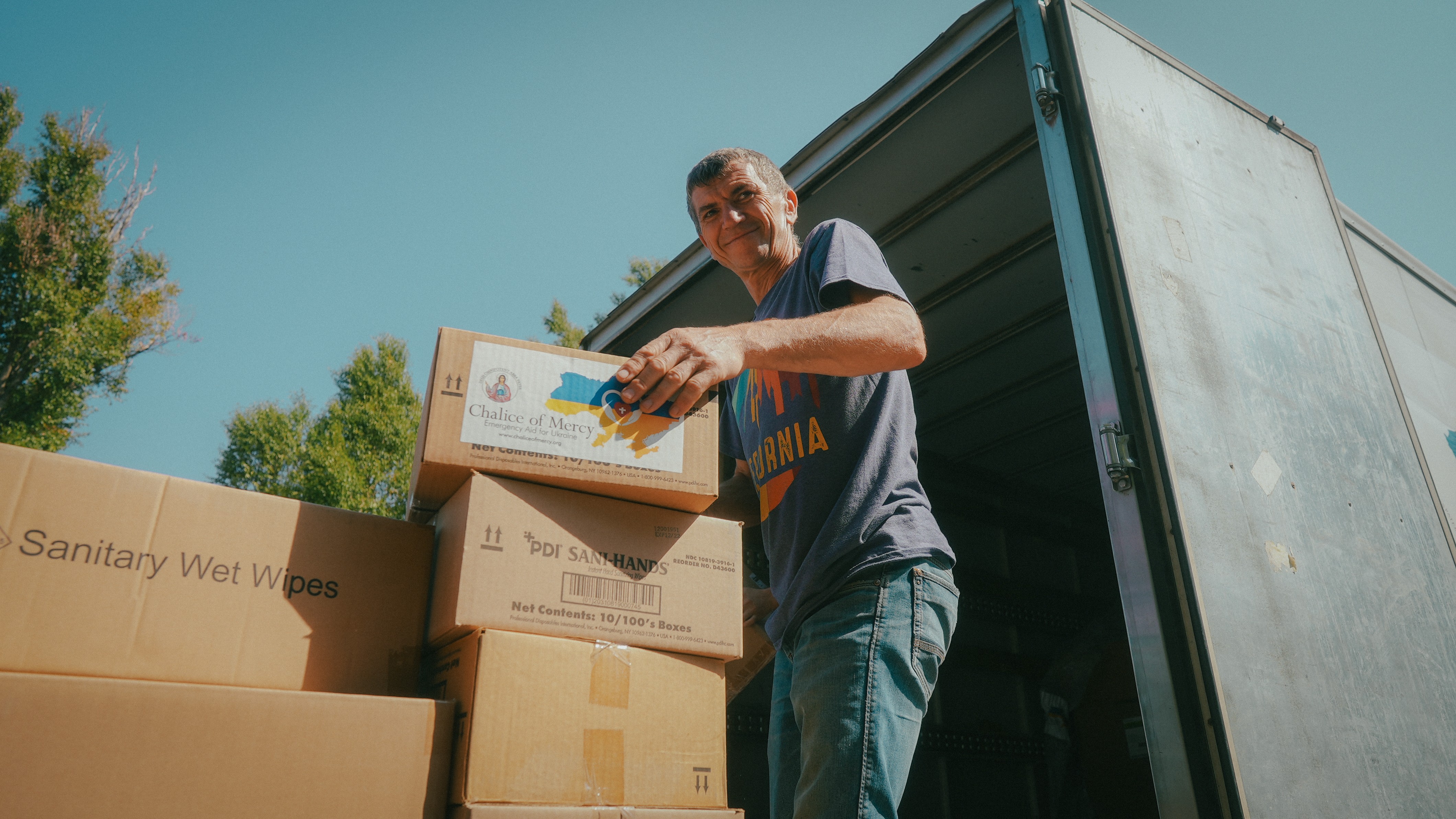
Pavsyukova, who has dual citizenship in the U.S. and Ukraine, divides her time between the two countries, spending winters in the United States and traveling each spring to Ukraine, where she works with a small team to sort shipments and prepare them for transport. If something cannot be shipped, she and her team take it themselves by truck.
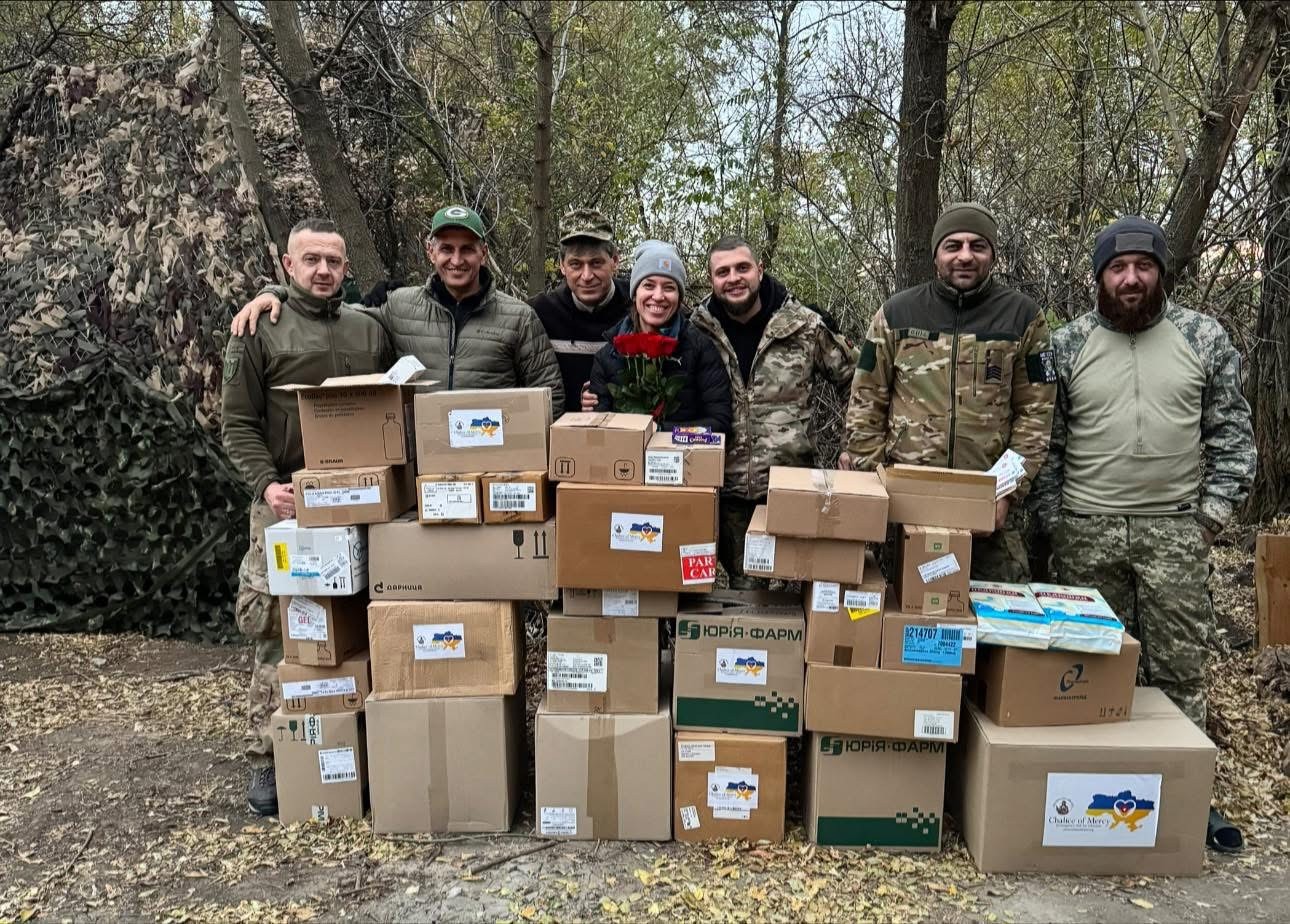
Although Chalice of Mercy received more than $1.2 million in monetary donations in 2022, most years, the organization takes in $500,000 or less. Many of the items shipped to Ukraine are donated, but Father Thelen said the money is used to buy additional medicines, medical items and supplies and to cover some shipping costs. All shipping by land is donated by the carriers, he said, as is some that goes by sea.
In comparison, other charities that provide humanitarian aid to Ukraine have much larger budgets. For example, according to GuideStar, in 2024, United Help Ukraine reported revenue of $10,425,778 and expenses of $12,447,365, and Ukraine Aid showed $1,475,503 in revenue and $1,470,626 in expenses.
Father Thelen said Chalice of Mercy can do what it does because of Pavsyukova’s connections, networking skills and her faith. “People see her authenticity, holiness and drive to do good things, and it builds a lot of trust and connections,” he said.
Pavsyukova said 15% to 20% of Chalice of Mercy’s support comes from people in the Diocese of La Crosse, where a large fundraiser is held annually. Additionally, Ruff said, since the Russian invasion, there have been three donation drives for Chalice of Mercy in the diocese. The most recent, the Warmth of Love Winter Donation Drive for Ukraine, concluded earlier this year. Ruff said the three collections together took in more than 75 tons of coats and blankets, clothing and footwear, toiletries, over-the-counter medications and other essentials.

As she strives to meet the material and spiritual needs of her people through Chalice of Mercy, Pavsyukova’s work is grounded in the hope that one day Ukraine will be a truly free, sovereign country with a free economy, a country that puts God first with a government that serves the human person and the family.
“I do hope to see my country liberated,” she said. “We are not fighting anybody. We are defending ourselves against an enemy 28 times bigger than us. We are the bulletproof jacket for Europe, and I think the world is starting to see this.”
- Keywords:
- humanitarian aid
- aid to ukraine
- catholic living