The New Pope and the 4 Horsemen of Revolution
COMMENTARY: A Church united and at peace with itself is powerful and has proven, time-tested answers to all the questions that will be raised by the sweeping technological, social, economic and political upheaval already underway.

It is a fool’s errand to prognosticate what a new pope will or will not do, although that has not prevented many from launching their hot takes. Some focused on speculation about the Supreme Pontiff’s positions in regards to President Donald Trump, while others expressed “alarm” on Pope Leo’s past remarks on LGBTQ+ issues.
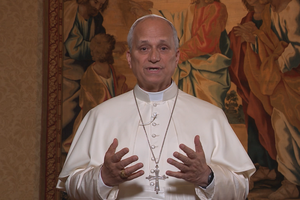
We are on firmer ground when we rely on the Pope’s own words on why he chose his papal name: “There are different reasons for this, but mainly because Pope Leo XIII in his historic encyclical Rerum Novarum addressed the social question in the context of the first great industrial revolution. In our own day, the Church offers to everyone the treasury of her social teaching in response to another industrial revolution and to developments in the field of artificial intelligence that pose new challenges for the defense of human dignity, justice and labor.”
It is good that our Pope is focused on the next revolution because it is coming soon and promises to be even more disruptive and destructive than the industrial revolution that led Pope Leo XIII to write his famous encyclical. One might say that we are on the eve of not one, but four revolutions, or four aspects of the same massive unraveling or shaking: the technological revolution of artificial intelligence explicitly mentioned by the Pope, and the economic, social and political revolutions that follow close by, as four Horsemen of the Apocalypse.
The AI revolution has received the most hype. Some of it may be exaggerated, but the warning signs are there. A 2024 survey of financial chiefs found that “more than half (61%) of large firms plan to use AI with the next year” to automate work done by humans. Some sort of massive job disruption seems likely, but disruption will not be limited to the workplace. In 2023, in Belgium, a (relatively primitive) AI chatbot convinced a young man, after six weeks of conversation, to kill himself for the sake of the environment. Still another byproduct of the new tech revolution is the deterioration of educational standards and even a decline in reading, especially “deep reading” that nurtures critical thinking and introspection.
The related economic revolution will not only be due to job disruption because of tech — something that happened during the past industrial revolution — but to other factors. Massive debt threatens many economies, not just those of America and Europe. Global public debt is expected to approach 100% of GDP within five years. The economy of the near future promises to not only be debt-ridden but will also feature a lack of workers and a lack of buyers, endangering social safety nets and government services. And rather than the old binary talk of a rich West exploiting a poor Global South, we face a much more confusing specter of an increasingly impoverished West in a world where globalization no longer — if it ever did — raises all boats and where exploitation occurs in all directions, as pitiless Chinese corporations replace paternalistic Western ones.
The social revolution, also among us, is connected to both tech and economics. We not only face a global birth dearth on a scale never before seen in human history but the rise of both euthanasia and eugenics with a force never seen before. Not only will families be under intense and unprecedented pressure, but so will be such hallowed subjects as motherhood, human flourishing and even the nature of being human. Just as the old ways are seemingly trashed, many look to living forever, to transcending humanity itself, an ominous echo of that oldest of diabolical refrains, “you shall be as gods.”
If technology and assorted changes will disrupt economies and societies in the coming years, so will political systems face the pressure to evolve into something else. The tech revolution seems to augur the arrival of a managerial elite even more arrogant and entrenched than the one already in power. The old categories of “right” and “left” seem hopelessly antiquated to describe it but it is quite likely that it will be a non-Christian or post-Christian elite. The old liberal dogma of eternal progress and prosperity seems just about exhausted. In its place there may come a permanent bureaucracy aiming to distract and suppress dissent — populism of the right and the left — as the gap between rich and poor increases, not between countries but within them.
This is the challenge that Pope Leo XIV and the universal Church will face in the near future. Too much of the focus right now is on the immediate — on Trump or on migration or sexual ethics, all issues of the here and now — rather than on the proximate — these massive looming crises. Here, Leo XIII in Rerum Novarum provides a guide: “[R]eligion alone … can avail to destroy the evil at its root; all men should rest persuaded that the main thing needful is to re-establish Christian morals, apart from which all the plans and devices of the wisest will prove of little avail.”
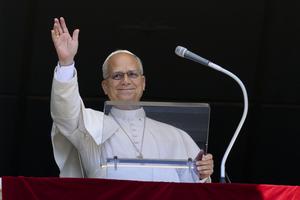
In the face of such a dire scenario, we do have the Good News of Christ, and the words of a new Pope who spoke repeatedly about peace in his first remarks. For me, it was as much about peace within the Church and in the heart as it is about world peace. Because a Church united and at peace with itself is powerful and has proven, time-tested answers to all the questions that will be raised by these multiple new revolutions. This is a Church that has converted pagans before, reformed libertines, inspired the illiterate with her beauty, that provides dignity to the downtrodden and meaning to the lost, that knows that “mystery is an antidote to spectacle.” May Pope Leo be a warrior pope — not in base or earthly terms — but in fighting for the permanent things in a world increasingly built on sinking sand.
- Keywords:
- Pope Leo XIV
- cultural renewal
- papacy
- church teaching