Supreme Court’s Tastries Bakery Case Offers Opportunity to Solidify the Promise of Religious Freedom
COMMENTARY: When the state forces a Christian baker like Cathy Miller to create a wedding cake for a ceremony she cannot in conscience affirm, it’s coercion.
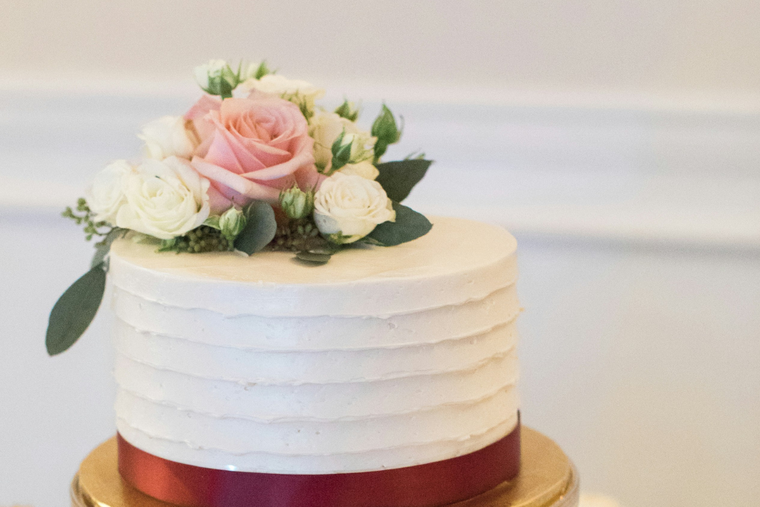
The Supreme Court has once again been asked to consider whether Christians may faithfully live their convictions in public without being penalized by the state. This time, the petition comes from Bakersfield, California, where Cathy Miller, owner of Tastries Bakery, was fined for declining to design a custom wedding cake for a same-sex marriage.
Miller is a grandmother and small-business owner. She offered the couple any pre-made cake in her shop and even referred them to another baker. What she could not do, in good conscience, was use her artistic gifts to create a cake celebrating a union she believes contradicts God’s design for marriage. For that act of fidelity, she has been ensnared in years of litigation by the California Department of Civil Rights.
Represented by the religious liberty firm Becket, Miller has asked the Supreme Court to intervene. The petition invites the court to clarify vital questions at the intersection of conscience, expressive freedom and religious liberty. First, may the government compel a believer to participate in a ceremony — even silently — when her faith informs her that participation constitutes an affirmation of what she cannot endorse? Second, does the Free Exercise Clause require proof of overt official discretion before recognizing unequal treatment, or may religious burden alone suffice? And third, must Employment Division v. Smith continue to limit protections for believers, even when laws — neutral in name — nonetheless coerce them to act against conscience?
We find echoes of this conflict in Masterpiece Cakeshop v. Colorado Civil Rights Commission. There, the court bristled at the state’s hostility toward Jack Phillips’ faith — but sidestepped the constitutional question at the heart of Miller’s case: whether hostility is necessary before religious freedom is violated.
Miller’s ordeal firmly answers that question. No taunt was issued; no open hostility displayed. Yet coercion is no less powerful when executed kindly. She is still compelled to act against her beliefs — and her livelihood is at stake. That is constitutional harm, even when it is “polite.”
The First Amendment does more than protect private beliefs — it safeguards their public expression. A wedding cake is not a neutral good; it carries meaning, crafted with care to honor the covenant. When the state forces a Christian baker to design a cake for a ceremony she believes defies God’s plan, it compels speech.
As to the Smith decision, handed down in 1990, which drastically narrowed the scope of the Free Exercise Clause by holding that “neutral” and “generally applicable” laws do not violate religious freedom — even if they impose substantial burdens on believers — now is the time for the Court to act.
In practice, Smith has meant that as long as the government frames a law as applying to everyone equally, religious objections receive little or no judicial protection. Yet neutrality in form is not neutrality in effect. A law can appear even-handed while still colliding with religious duties at their core.
When the state forces a Christian baker like Miller to create a wedding cake for a ceremony she cannot in conscience affirm, the law’s neutrality does not erase the coercion. That is why the Court should reconsider Smith and require exacting judicial review whenever religious exercise is substantially burdened, even by rules that claim to treat everyone alike.
There is also a real harm in closing the door to Christian artisans unless they abandon conscience. In 303 Creative v. Elenis, the Court affirmed that constitutional liberty protects creative professionals from being conscripted into messaging they cannot endorse. Cathy Miller’s case walks in the same line. Just like there were other website designers in Colorado willing to design websites for same-sex weddings, same-sex couples freely access wedding services — including cakes — in California.
Some compare refusals like Miller’s to racial discrimination, but such comparisons fail. The 1964 Civil Rights Act addressed entrenched, official segregation denying African Americans basic civil belonging. It rendered people as part of a caste based upon immutable biological characteristics.
The definition of marriage is based on conduct rather than status per se, and the traditional definition of marriage is rational, given its relationship to the next generation. Comparing those who embrace this as a sincerely held religious belief to a bigot of the Jim Crow era is insulting. Even Obergefell v. Hodges, which purported to create a constitutional right to same-sex marriage, explicitly acknowledged that many Americans continued to believe, in good conscience, that marriage is between a man and a woman — and that their convictions “must be respected.” Yet in many cases since that decision, respect has given way to coercion.
The Supreme Court now has a chance to reclaim that promise. They should grant review in Cathy Miller’s case and say plainly: Hostility is not the only path to constitutional violation. Compelled speech is unconstitutional, whether enforced with scorn or with a smile; and that an apparently “neutral” and “generally applicable” law must still be subject to exacting judicial scrutiny when religious exercise is infringed.
For Catholics, the stakes are deeper still. The Church does not treat marriage as a contract but as a sacrament, “a covenant by which a man and a woman establish between themselves a partnership of the whole of life,” ordered toward each other, the procreation and education of children, and ordered to both the good of the spouses and the ordering of society. Pope Leo XIV’s call for respect for the rights of conscience echoes deeply into cases like this one.
Religious liberty is not a privilege granted by government; it is a right given by God and protected by the Constitution. Cathy Miller has endured years of litigation for living in harmony with that truth. It’s time for the Supreme Court to affirm, clearly and without hesitation: Americans of faith — bakers, artists and all — need not abandon their conscience at the bakery door.