‘Pope Leo the _____’: Assessing the Leonine Pontificate, One Year In
Six Catholic experts ‘fill in the blank’ on the major themes of Pope Leo so far.
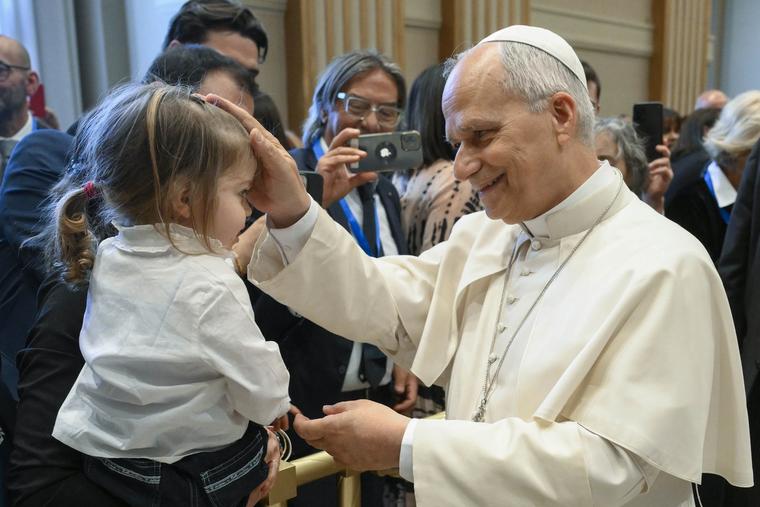
May 8 marks one year since the start of Pope Leo XIV’s pontificate. Given how historic, groundbreaking and memorable his first year has been, how could you pick a single theme to encapsulate it?
We didn’t. Instead, we asked six Catholic leaders and scholars to each “fill in the blank” by expanding upon one aspect or interpretive lens that they believe helps explain the Leonine pontificate, one year in.
Some highlighted how elements of his biography have carried through into his papacy, from his Augustinian-infused magisterium to his uniquely American understanding of Vatican II. Others underscored how Leo has distinguished himself in his various roles, from statesman, to liturgist, to holder of the papal office itself. And, of course, the Pope’s strong emphasis on unity was highlighted — as well as what it might portend for this next year of his pontificate.
Leo the Unifier
Matthew Bunson
Vice president and editorial director of EWTN News
On May 18, 2025, in the homily for the inauguration of his pontificate, Pope Leo XIV declared: “[W]e want to be a small leaven of unity, communion and fraternity within the world. We want to say to the world, with humility and joy: Look to Christ! ... in the one Christ, we are one.”
His homily — echoing his own episcopal and now papal motto, In Illo Uno Unum (“In the One Christ We Are One”) — captured eloquently his aspiration for unity in the Church and a world torn by conflict.
Pope Leo has repeatedly appealed to unity in ecumenical and interreligious dialogue and especially in his diplomatic calls for “authentic unity, dialogue and respect” as paths to lasting peace, but it is a plea above all aimed at Catholics.
The Holy Father inherited a Church troubled by tensions and disagreement, and he has spent the year reminding Catholics that unity is intrinsic to the Church’s mission while confronting direct threats to that unity. The two greatest are the obstinate German Synodal Way, pushing to democratize and recast the Church in its own image, and the potentially explosive decision by the Society of St. Pius X to ordain illicitly their first new bishops since 1988 and so risk even deeper separation.
Thus far, with these and other vexatious issues, such as the restrictions on the traditional Latin Mass by Pope Francis’ 2021 decree Traditiones Custodes, Pope Leo has listened to the perspectives of those who might have felt previously ostracized while deploying prudently the power of persuasion, exhortation and recourse to the ancient unity of faith. The next months will determine whether the Germans, the SSPX and others heed his call and how far the Pontiff will go to preserve that unity entrusted into his care.
Leo the Statesman
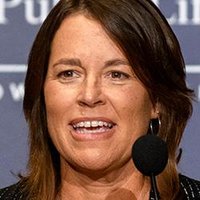
Kim Daniels
Director of the Initiative on Catholic Social Thought and Public Life at Georgetown University
Pope Leo is first and foremost a spiritual leader: He is the Vicar of Christ; the Successor of Peter; the Servant of the Servants of God.
But he is also a statesman.
Cicero held that true leadership requires the virtues of prudence, justice, fortitude and temperance and that the statesman’s task is to serve the common good rather than faction or self-interest. Edmund Burke’s well-known formulation is also worth remembering: “A disposition to preserve, and the ability to improve, taken together, would be my standard of a statesman.”
Pope Leo is a statesman in both of these important senses. He speaks with courage, clarity and care about first principles, grounding us in the words of our Savior: “blessed are the peacemakers,” “blessed are the merciful,” and “whatever you did for one of these least brothers of mine, you did for me.” He brings Catholic principles to the most challenging issues of our time, reminding us of our duty to work for the common good, the rule of law and a just political order. He engages the world rather than retreating from it.
Carrying forward the synodal tradition rooted in the early Church and rekindled by Pope Francis, Pope Leo knows that, in Francis’ words, “fidelity to tradition does not consist in worshiping ashes but in keeping a fire burning.” Amid the many challenges of this moment, from technological disruption to the loss of respect for human life and dignity to the erosion of democratic norms, the world needs a leader who speaks up for those the world overlooks; who works for unity; who “has the courage to go beyond the surface of conflict and to see others in their deepest dignity.”
Pope Leo is such a leader. He is a rare figure on the world stage: a true statesman.
Leo the Augustinian
Father Robert Imbelli
Theologian and priest of the Archdiocese of New York
Pope Leo is the first Augustinian Pope and has referred to himself often as “a spiritual son of St. Augustine.” One year into his papacy, it is clear that Augustine provides the hermeneutical lens through which Leo reads the Scriptures and the sensibility which animates his exercise of the Petrine ministry.
First, Leo is personally sensitive to the “restless heart” Augustine describes in his Confessions as crucial to the Christian faith. This heart seeks the truth concerning itself and its place in the universe, which, as Augustine discovers and Leo attests, is found in the God-man, Jesus Christ. Thus, as Leo insisted aboard his return flight from Africa: “My voyage is best understood as an expression of the desire to announce the Gospel, to proclaim the message of Jesus Christ.”
Second, accepting Jesus as the meaning of life is not merely intellectual, but is deeply experiential and transformative. Leo has learned from Augustine how powerful in human affairs is the libido dominandi, the urge to control and overpower. In the Prayer Vigil for Peace that he led during the Easter Octave, Leo warned against “the delusion of omnipotence,” crying out: “Enough of the idolatry of self and money! Enough of the display of power! Enough of war!” Being transformed in Christ means learning to recognize and renounce the death-dealing idols and to embrace in faith and hope the living God.
Thirdly, the new life of the Christian is characterized by peace and unity. How often has Leo, especially this Eastertide, recalled the Risen Lord’s greeting to his confused and cowardly apostles: “Peace be with you!” The pardoning peace the Risen Lord brings is the very condition for creating and sustaining the unity of the one Body of Christ. In his peace we are one.
Pope Leo concluded his homily at the Easter Vigil by drawing from Augustine’s commentaries on the Psalms, recapitulating his Augustinian inspiration and his Petrine mission. “We should desire to set out tonight from this Basilica to bring to all the good news that Jesus has risen and that having risen with him, through his power, we too can give life to a new world of peace and unity as ‘a multitude of people and yet […] a single person, for although there are many Christians, Christ is one.’”
Leo the Liturgist
Timothy P. O’Malley
Academic director of the Notre Dame Center for Liturgy
The Pope has, at times, had an undue influence on liturgical practice at a local level, especially in a post-television and now-digital era. What strikes me about Pope Leo is that he’s been somewhat careful about the nature of this influence.
On the one hand, he’s embracing liturgical vestments and practices that may seem rather “traditional”: For example, he is now celebrating Holy Thursday once again at the Basilica of St. John Lateran. He’s washing the feet of priests. He’s wearing vestments from Pope Benedict XVI and Francis alike! He’s also deeply human, laughing with delight when he’s asked to bless a lamb on St. Agnes’ Day.
But one must look closer because Leo’s more “traditionally-appearing” liturgical participation is probably less significant than his broader Augustinian approach to the liturgy.
In a famous letter, Augustine wrote to Januarius allowing for the possibility of distinction in liturgical practice if said practice was not contrary to faith and morals. As Pope, I believe, Leo is setting the stage for this kind of Augustinian approach to liturgy: If the practice is allowed, if it doesn’t interfere with faith and morals, perhaps one should allow a bit of liturgical diversity.
His conversation about the liturgy, especially with traditionalists, may be opening a space for this kind of dialogue. As an Augustinian, he holds that our celebration of the liturgy should never rip us apart, leading to disunity. If that happens, it means we have failed to understand the purpose of the Eucharist in the first place.
Pope Leo XIV the liturgist is interested in the reality of liturgical celebration — the unity of the Christian community with one another. This is crucial if our worship is to provide a prophetic witness to a world that will worship anything other than the Triune God.
It should make for an interesting liturgical papacy — one I’m waiting to see unfold!
Leo the Pope
Father Roberto Regoli
Church historian and president of the Joseph Ratzinger-Benedict XVI Vatican Foundation
You are not born a pope; you become a pope. And given that this requires making papal decisions, the transition wasn’t easy for Leo XIV, who began his papacy in the middle of a jubilee year, with a program already decided by others. His pontificate thus truly began only on Jan. 7, 2026. It inevitably started like a diesel-powered car: slow start, long life and high-energy efficiency. This distinctive papal style has become evident in his appointments, governance and diplomacy.
His new appointments to the Curia reflect a preference for non-polarizing figures who are open to dialogue and efficient in their work, ranging from the deputy secretary of state to the prefects of the several dicasteries and the prefect of the Papal Household.
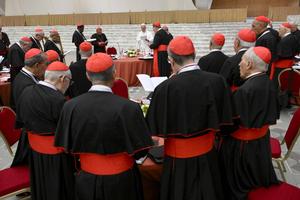
When it comes to the internal governance of the Church, Leo XIV has added a qualification to the concept of synodality: collegiality, emphasizing collaboration with the worldwide episcopacy. The Pope convened an extraordinary consistory of cardinals in January, and another is scheduled for June. During his more than 12 years as Pope, Francis had convened only three such meetings; and, in October, the Pope will lead a global meeting of all the presidents of the national episcopal conferences. These meetings express episcopal and cardinal collegiality. Similarly, Leo has focused his catechesis on the Second Vatican Council, which precisely expressed an ecclesiology of communion based on collegiality.
Compared to Francis’ diplomacy through personal channels, Leo prefers to rely on traditional diplomacy, that is, the Secretariat of State. Within this framework, the Pope is not afraid to take a stand, establishing direct and personal contacts with key figures on the international stage, such as Netanyahu or Putin; speaking clearly about peace, but refusing to be manipulated against Trump’s United States; and deliberately avoiding the China issue (Jimmy Lai). It is a diplomacy of idealism, one that defends human rights, a subject he is able to address more openly in democratic contexts than elsewhere.
Ultimately, Leo began to act like a pope. And that requires both continuity and a break from his predecessor.
Leo the American
Stephen White
Executive director of the Saint John Paul II National Shrine
Much has been made about Pope Leo XIV being the first American Pope. Far less, however, has been said about how this might shape his understanding of Vatican II.
Not every part of the Church experienced the Second Vatican Council the same way. In some places, notably Africa and Asia, the Council ushered in decades of massive growth for the Church. In Europe, not so much. Being an American, Pope Leo experienced those years — both the good and the bad — in a distinctively American way.
A few years after he was born, Leo’s boyhood parish built a new church and school. It was the late 1950s and the Church was booming. By 1989, that school was closed; the parish was eventually merged and sold off. The high-school seminary Leo attended? Long gone. The Catholic high school where Leo’s older brothers went? Closed.
Pope Leo knows, firsthand, such painful parts of the American post-conciliar story. But he knows the good parts, too.
If the past half-century has seen some hard pruning and institutional dieback, today there are real signs of growth and renewal. The Church in the United States, perhaps implausibly given what it has been through, retains a vibrance and vitality that is exceptional among developed nations.
Why is that? Reading Pope Leo’s recent catechesis on the documents of Vatican II (and Lumen Gentium in particular) provides a hint. Leo’s reading of the Council resonates deeply with the mainstream of the American Church. The American Church, and the American Pope, hardly have a monopoly on this reading of the Council. But one would be hard-pressed to find anywhere that embodies that ecclesiology as well as the United States.
More than 60 years after the close of Vatican II, the perspective of the Council and its consequences (good and bad) that Pope Leo brings with him may prove a real blessing — and a distinctively American blessing — to the universal Church.
- Keywords:
- 'pope leo xiv'