Faith and Freedom Get a Boost From New Presidential Commission
COMMENTARY: At its inaugural hearing, the Presidential Commission on Religious Liberty brought together leaders of faith and law to reaffirm the importance of conscience and worship in American life.
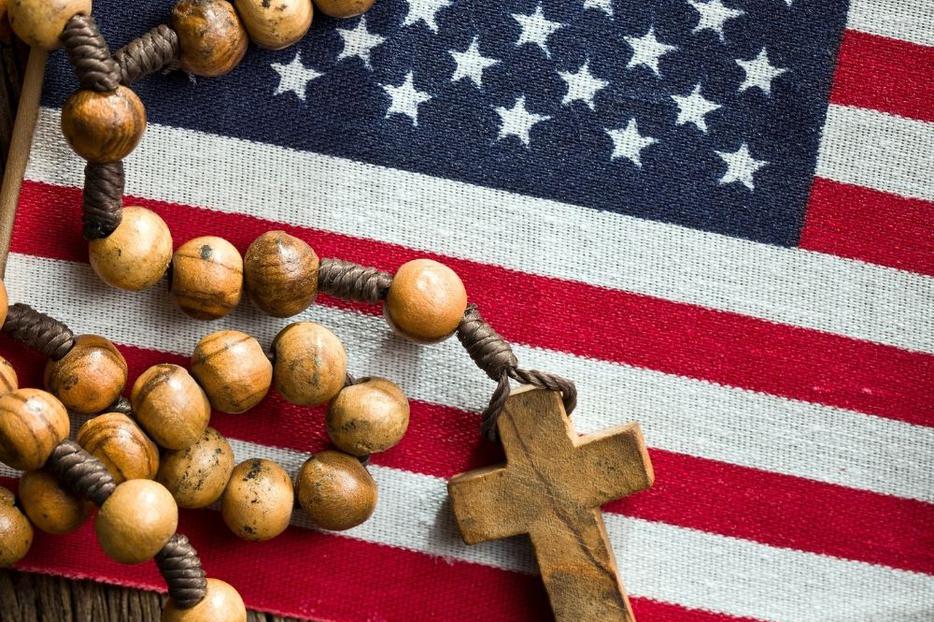
The Presidential Commission on Religious Liberty reflects a big shift in how the federal government thinks about faith and freedom. If its inaugural hearing is any indication, the commission is firmly committed to safeguarding the twin religion clauses of the First Amendment as understood by the Founders. Believers and religious institutions have much to celebrate.
Established by an executive order issued by President Donald Trump on May 1, the 14-member group is charged to “report on the foundations of religious liberty in America, the impact of religious liberty on American society, current threats to domestic religious liberty, strategies to preserve and enhance religious liberty protections for future generations, and programs to increase awareness of and celebrate America’s peaceful religious pluralism.”
The commission is also tasked with recommending “steps to secure domestic religious liberty by executive or legislative actions, as well as identifying opportunities for the White House Faith Office to partner with the ambassador at large for international religious freedom to further the cause of religious liberty around the world.” Members have been appointed to a term ending July 4, 2026, which marks the 250th anniversary of American independence.
Texas Lt. Gov. Dan Patrick and Dr. Ben Carson, former Housing and Urban Development secretary, serve as the commission’s chairman and vice chairman. Other members represent a range of Christian and Jewish faith traditions.
Noted Catholic leaders on the commission include Cardinal Timothy Dolan of New York, Bishop Robert Barron of Winona-Rochester, Minnesota, and Ethics and Public Policy Center President Ryan Anderson. Additional members are television personality and mental health authority “Dr. Phil McGraw,” former Miss California USA Carrie Prejean Boler, CEO of First Liberty Institute Kelly Shackleford, Rabbi Meir Soloveichik, senior adviser to the White House Faith Office Paula White, radio host Eric Metaxas, Protestant pastor Rev. Franklin Graham and attorney Allison Ho.
True to its founding charge, the commission’s inaugural hearing held on Monday at the Museum of the Bible in Washington, D.C., touched upon the role of religion in American life and current threats to our peaceful pluralism. You can watch the hearing here and here.
The presidential commission serves under the Department of Justice. Attorney General Pam Bondi greeted the commissioners and those in attendance by restating the administration’s commitment to safeguarding religious freedom. One of humanity’s “most sacred rights has come under attack,” Bondi observed during her remarks. She added that “faith was built into the foundation of our nation’s founding documents.”
Noting that the federal government under the Biden administration had become one of the greatest threats to religious freedom in America, Bondi highlighted what the current administration has done and will do to secure religious freedom for all Americans using “every legal and constitutional tool available.” The commission, she added, “will be the tip of the spear.”
Poignantly, each commissioner in attendance shared thoughts on the value of freedom of belief. Citing Pope Benedict XVI, Bishop Barron also observed that there is a special battle being waged today against a “dictatorship of relativism,” or what the Minnesota bishop calls the “culture of self-autonomy.” Protecting religious freedom, he explained, is about guarding the legacy of our country.
In a later exchange, he also drew from Catholic teaching, referring specifically to the Second Vatican Council’s declaration on religious freedom, Dignitatis Humanae. Anderson proposed in his opening remarks four considerations to guide the commission’s work: that religion matters because it pertains to our obligations to our Creator; the importance of a robust understanding of religious freedom as going beyond the mere right to worship; the importance of advocating for just laws; and that religious liberty must include allowing religion to enter into the public square.
Catholics testifying Monday similarly brought the Church’s rich intellectual tradition in defense of religious freedom to the conversation. Notre Dame Law School professor emeritus Gerard Bradley, who shared his remarks with the Register, offered a bold proposition: Religion is necessary for the happiness of mankind and good government. Bradley was joined on stage by Mark Rienzi, president of Becket, the religious-freedom powerhouse law firm, and professor at The Catholic University of America Columbus School of Law. Rienzi urged the commission to “make clear that conscience is sacred.” He later urged all public servants to be committed to defending religious freedom.
Regent University professor Mark David Hall, challenging widely held misunderstandings, testified on the historical support for religious freedom from our nation’s founders. As Hall and I explain in a short video in defense of Louisiana’s mandate requiring public-school classrooms to display the Ten Commandments, the metaphor of a wall of separation between Church and state is simply “erroneous history.”
Several other legal experts, including Georgetown Law professor Stephanie Barclay and President and CEO Kristin Waggoner of Alliance Defending Freedom, continued the discussion of the Supreme Court’s religious-freedom jurisprudence and areas of future legal conflicts. Barclay remarked on the challenge of lower courts that have not consistently followed the court’s pro-religion counsel and the likelihood that continued clarity will be needed in cases involving laws that are purportedly “neutral and generally applicable” but that place a burden on religious exercise.
Perhaps most surprising for all in attendance was the testimony offered by Dominican School of Philosophy & Theology professor Barbara Elliott.
“People of faith have given our culture a unique strength,” Elliott explained. Peppering her talk with stories of initiatives helping addicts and the incarcerated, she urged the government to stop silencing the “faith factor” in order to do good work and instead permit faith-based groups to be true to their mission and their calling. “People of faith,” Elliott noted, “are taking their love into communities and lifting them up and making a difference.”
Over the next year, the commission will hold between seven and nine hearings before reporting their recommendations to President Trump by July 4 of next year. Until then, we can be thankful that the conversation about our nation’s rich tradition of religious liberty and the crucial need to stand up for faith and freedom has already begun.
- Keywords:
- trump administration
- religious liberty
- faith and freedom
- religious freedom
- faith and works
- american