European Prelates Bring Hope-Fueled Unity
COMMENTARY: Two cardinals and two bishops denounced the dangers of religious nationalism and of a secular approach to Christian heritage, emphasizing the need for Christ-centerd hope.
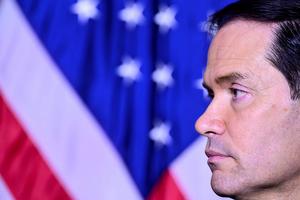
U.S. Secretary of State Marco Rubio took to the stage at the Munich Security Conference Feb. 14 and declared that the United States and Europe are one civilization, based on national sovereignty, with one shared destiny. His words marked a significant shift, compared to the firm rebuke that American Vice President JD Vance had given European allies, from that very same stage, one year earlier.
A few hours before Rubio’s speech, four European bishops had accomplished a similar, if more discreet, and poignant realignment.
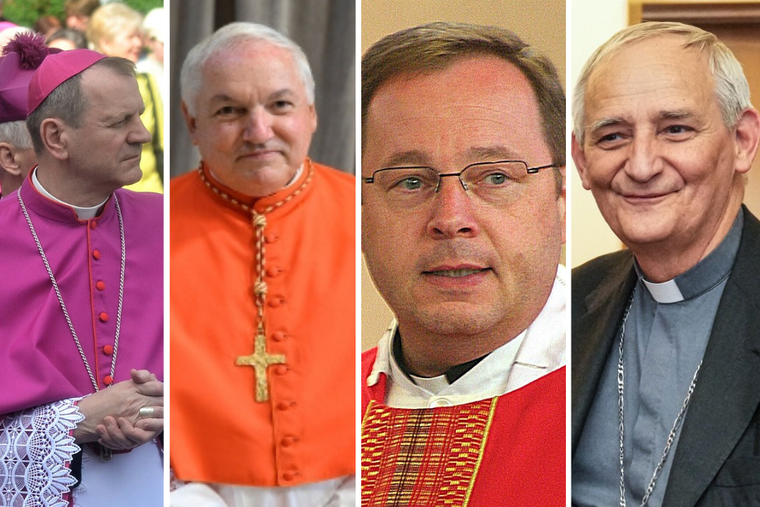
On Feb. 13, Cardinals Jean-Marc Aveline of Marseille, France, and Matteo Zuppi of Bologna, Italy, and Bishops Georg Bätzing of Limburg, Germany and Tadeusz Wojda of Gdansk, Poland, had signed a joint statement titled “Christians for Europe: The Power of Hope,” advancing their own vision of the Continent and its cohesion.
That the heads of four major Episcopal Conferences should issue such a document together was, in itself, a sign of the statement’s importance and intended impact. In 2024, in fact, Bishop Wojda had openly and vigorously criticized the German Synodal Path, of which Bishop Bätzing has been a leading voice, as a dangerous nonpriority for the global Church. What brought them together this time was a shared desire to alert Catholics and, through them, all Europeans, to what they sensed as a threat to Europe’s social cohesion.
The four Church leaders encapsulated that threat in a quote by Italian statesman Alcide De Gasperi (1881-1954), founder of the Christian Democratic Party, whereby “exacerbated nationalism is a form of idolatry: It locates the nation in God’s place and against humanity.” The antidote they suggested, in line with Pope Leo’s remarks at the Jubilee’s closing ceremony, is ‘the hope in universal fraternity.’
The four prelates’ position revealed analytical and spiritual depth. As they evoked the Christian vision of other EU founding fathers such as Konrad Adenauer and Robert Schuman, they lamented the EU’s departure from a vision of European civilization where “Christianity is an essential foundation to our Continent, [which] largely shaped Europe’s outlook as marked by humanism, solidarity, and openness to the world.”
With this, they suggested a subtle but crucial equation. There isn’t, they implicitly argued, a great deal of difference between the attitude whereby EU institutions have come to regard Christianity merely as one of its cultural features and a context to understand heritage — something experts call “culturalization” — and the appeals of many European right-wingers to Christianity as a nation-building feature. Both depend on an agenda where Christianity’s role as a transcendent, Christ-centered source of hope and unity for European peoples is downplayed or outrightly denied. The statement advanced this idea through a quote by Pope St. John Paul II, whereby European Christians, after the tragedies of World War II, “loved humanity and strived to unite it because they loved Christ.”
The reference to John Paul II was also quite telling. The Polish Pope was notorious for his reflections on the difference between nationalism and patriotism, which he understood as the healthy love for one’s homeland and as a natural extension of family attachment. In the statement’s context, it suggested that the four bishops’ ideas were firmly rooted in the Catholic magisterium, and not an act of virtue-signalling or political tactics.
A previous appeal to resisting the allure of nationalism had emerged, although in a more theologically dense context, in Mystici Corporis Christi. In his 1943 encyclical, Pope Pius XII had taught that Christian charity must exceed the boundaries of national identity, and supplies spiritual resources to appreciate unity even, or especially, in the midst of deep strife and violent division. One’s thoughts might even stray as far as to the Middle Ages, when, as historian Ernst Kantorowicz demonstrated, the notion of European unity was predicated on an underlying, sacramental vision. Longing for ultimate unity in heaven is what made Europeans think of themselves as one.
The prelates’ admonition that Christianity has a greater role to European cohesion than being the repository of an old culture isn’t new, either. One need only think of the efforts made by the Catholic hierarchy and by lay voices alike, some 20 years ago, about the European Constitution project and its lack of proper recognition of Europe’s debt to Christianity. Equally, the four bishops emphasized, the fact that now “Christians are fewer” on the Continent constitutes a call to responsible action, along the lines of what Pope Benedict XVI’s magisterium had characterized as the vocation of “creative minorities.”
Cardinals Aveline and Zuppi, and BIshops Bätzing and Wojda felt the urgency to make these important points at a delicate cultural and geopolitical junction, where external conflicts and internal stagnation might bring Christians to believe that splintering is not just easier, but more beneficial. Against that, they offered an admirable synthesis of doctrine and pastoral care, reminding that “Europe cannot be reduced to an economic and financial market; […] Europe is called to seek alliances that may lay the grounds for authentic solidarity among people.” Echoing Pope Leo XIV’s words to the members of the ECR group at the European Parliament, who visited him in early December, the benefits of Christianity and its impact on European civilization are and must be interpreted as universal.
The authenticity, solidarity-producing nature of that impact and those universal benefits are, in turn, contingent upon a kind of hope for unity and a love of Christ that surpasses and heals “isolationism and violence.” In coming together and leaving their differences aside, the four prelates gave a prime example of that attitude; they embodied, as Bishop Mariano Crociata, the president of the Commission of the Bishops’ Conferences of the European Union noted, “a sign that the Spirit is at work and is calling the Church in Europe.”
- Keywords:
- marco rubio
- european bishops council