Full Text: Archbishop Cordileone’s Homily From the Walk for Life West Coast Mass
‘The Love of Friendship on Building a Culture of Life’
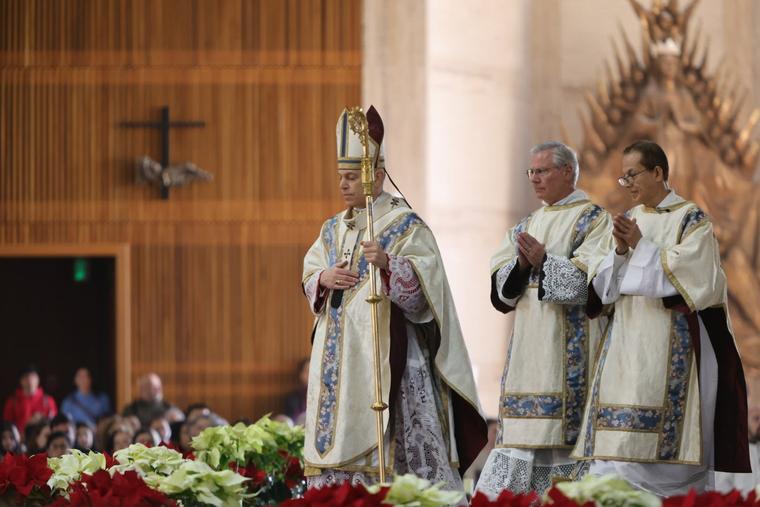
Editor’s Note: Archbishop Salvatore Cordileone celebrated Mass on the memorial of St. Frances de Sales for the Walk for Life West Coast on Jan. 24. 2026. Please find the full transcript of the homily below, edited for clarity.
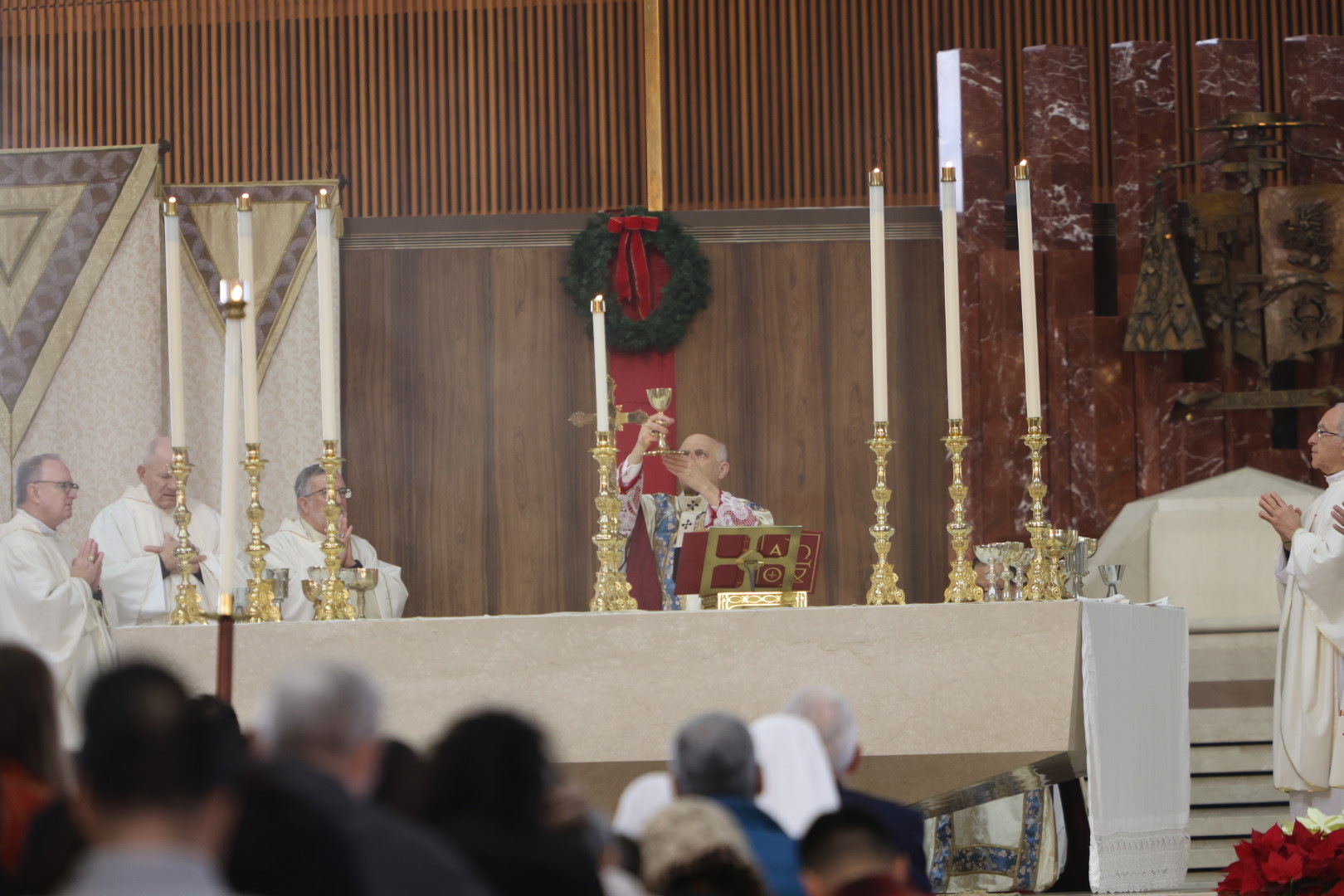
If you knew you were going to die tomorrow, and you were surrounded by your friends, what dying wish would you leave them with? We all would likely have different answers, but we know what Jesus’ answer is to that question from what St. John tells us that Jesus told his friends at that Last Supper the night before he died: “Love one another as I love you.”
Friendship With Christ
Now, in the world in which we live, people might easily misunderstand this as meaning something very superficial, just simple acts of affection and sharing of company. But Jesus goes on to explain what that means: “No one has greater love than this, to lay down one’s life for one’s friends.” Laying down your life, that is, sacrificing everything for the good of the other: This is what makes friendship possible. Is this not what it means to be a true friend, a “best friend forever”?
Think about what this means: This is how Jesus loves us. He laid down his life for us, turning us into his friends because, by doing so, he has revealed to us the love of his Father. But do we want to be his friends? We can accept that friendship and love him in return, or we can reject it and go about living our life in a way that is self-centered. Fortunately, God gives us examples all throughout the history of the Church of what it looks like to be a friend of Jesus.
Example of St. Paul
We hear this from St. Paul in the letter he wrote to his fellow Christians in the ancient city of Ephesus. He refers to himself as “the very least of all the holy ones,” even though he was given the sublime mission from Christ to make the Gospel known to the Gentile nations, that is, to those who until then had not had access to the revelation of God’s love and truth. Think about all of the suffering this caused St. Paul in his life after he gave his life to his Lord. He recounts that for us in his Second Letter to the Corinthians: “Five times at the hands of the Jews I received forty lashes minus one. Three times I was beaten with rods, once I was stoned, three times I was shipwrecked, I passed a night and a day on the deep; on frequent journeys, in dangers from rivers, dangers from robbers, dangers from my own race, dangers from Gentiles, dangers in the city, dangers in the wilderness, dangers at sea, dangers among false brothers; in toil and hardship, through many sleepless nights, through hunger and thirst, through frequent fastings, through cold and exposure. And apart from these things, there is the daily pressure upon me of my anxiety for all the Churches” (2 Corinthians 11:24-28).
To lay down one’s life means to bring oneself low. Think about all that St. Paul had to endure: persecution from enemies and being betrayed by friends, accosted by thieves and thugs, suffering from the natural elements, and the spiritual suffering caused by the state of the Christian communities he was evangelizing. St. Paul knew the need for humility in order to be a friend and servant of Christ. This is perhaps the greatest obstacle to friendship, especially friendship with Our Lord. Too many people are more concerned with their own prestige and making themselves noticed rather than making Christ seen and known to the world.
Example of St. Francis de Sales
Humility and meekness was also the constant teaching and example of the saint whom we celebrate today, St. Francis de Sales. He was a bishop in Switzerland in the 16th century, at a time when Christians were being splintered into more and more competing factions, all fighting with each other for hegemony. Many people in his part of Europe had rejected their Catholic faith and were hostile to those who remained true to it. But as St. Francis used to say, “a spoonful of honey attracts more flies than a barrel of vinegar.” He was humble and long-suffering in all of the persecution to which he was subject, but it eventually paid off. For example, one evening he was attacked by wolves and only escaped by spending the night in a tree. When daylight came, he was found by some peasants in such an exhausted condition that if they hadn’t revived him with food and warmth right there on the spot he would certainly have died. And these were people who had lapsed from their Catholic faith; but being of goodwill they were reconciled back to the Church by Francis’ teaching and charity.
He used his extraordinary intellectual gifts to explain and teach the faith far and wide and often at great expense to himself. He was once attacked by a hostile crowd when he was trying to restore a mountain-top shrine to our Blessed Mother that had been destroyed by the local people. The hostile crowd insulted and beat him, but he calmly persevered in his preaching and teaching. Over time, more and more people were drawn to him, and, eventually, streams of lapsed Catholics came to be reconciled to the Church.
However, he was also not without his critics among those who remained faithful Catholics. Some of them thought that he was too easy on sinners because he always received them with great tenderness. He responded to them by reminding them that there is nothing more excellent that Our Lord asks of us than meekness, for, as Our Lord himself said, “I am meek and humble of heart” (Matthew 11:25).
Lessons for Us Today
Are there not valuable lessons for us from these teachings and examples of such great heroes of our faith? We are living in a world riddled by violence in so many ways, and sometimes even violent tactics are used to promote and celebrate one of the most violent offenses imaginable. Our response is not to return the shouting and screaming and cursing and insulting in kind, but to respond with patience, kindness and real charity towards those who are clearly wounded deep in their soul and have not come to healing and peace. This is simply a little way that we lay down our lives for our friends, praying to Christ for the grace that these, too, can become our friends in the great cause of building a culture of life.
This was Our Lord’s dying wish. It is a wish that we see fulfilled in 2,000 years of saints and martyrs in our Church. Let us take heart and inspiration from them, that we, too, can be friends of Our Lord by laying down our lives for him as we persevere with patience, humility and charity, bearing whatever suffering may come our way for the sake of the gospel of life. Let us never forget that Our Lord teaches us that it is then that we are to rejoice and be glad, for our reward will be great in heaven. May God grant us this grace.
Amen.