In the Drone Warfare Era, This Ancient Military Tactic Is Just as Deadly
COMMENTARY: Sieges in Syria, Sudan and Gaza have had devastating consequences for millions of civilians with nowhere to go.
Much has been made of advances in warfare — smart bombs, drones and the use of artificial intelligence all seem to be the next big things in man’s unceasing quest to kill his fellow man. But today, one of the oldest tactics of war is in sharp relief: siege warfare, affecting millions of people and, depending on the position of the observer, attracting different levels of attention.
Syria
In Syria’s southern Suwayda Governorate, inhabited mostly by members of the esoteric Druze religion, bitter clashes between Sunni Muslim Bedouin tribes — supported by the Islamist Damascus government alongside government troops — and Druze militias have killed several thousand people since July 2025. While the pro-government forces were able to overrun dozens of Druze villages, the Druze were able to counterattack and defend most of their areas. The Druze received some military and humanitarian help from Israel, a country with its own influential Druze minority and longstanding security interests in Southern Syria.
Aside from a few convoys from the Syrian Arab Red Crescent, most humanitarian assistance to the estimated 400,000 mostly Druze population in the Suwayda pocket has been turned back by pro-government fighters. The price of a single bag of bread in Suwayda is 50 times higher than in other Syrian regions. Food, fuel and medical supplies are scarce, and with almost no electricity, many water pumps can’t operate. Despite the blockade, the Druze have doubled down on their defiance, declaring an interim civil and security administration independent of the Damascus authorities.
Sudan
Fifteen hundred miles away in Sudan’s Darfur region, hundreds of thousands of people (at least) are besieged in what once was the region’s largest city and capital, El Fasher. The Sudanese Civil War that began in April 2023 saw the bloody split between rival government security forces: the regular army (SAF) versus the paramilitary Rapid Support Forces (RSF).
In this chaotic situation, RSF succeeded in May 2024 in cutting off a major SAF garrison plus hundreds of thousands of civilians in the El Fasher pocket (El Fasher had a population of over a million people before the war). RSF has been able to squeeze the heavily defended site, but has not yet taken it. SAF has even used shipping containers from humanitarian NGOs as improvised fortified barriers and recruited women as soldiers.
According to the World Food Program (WFP), basic foodstuffs such as sorghum and wheat now cost almost 500% more in El Fasher than in the rest of the conflict-ridden country. Sudan is the world’s worst humanitarian crisis, displacing 13 million people, with 25 million people (half the population) facing extreme levels of hunger.
Civilians who have been able to flee relate being forced to pay bribes to both SAF and RSF at checkpoints. There are many reports of robbery and rape at the hands of RSF fighters. And while RSF has shelled civilian locations inside the pocket, SAF aircraft have bombed civilian markets in RSF-held parts of Darfur. WFP has trucks with humanitarian food assistance standing by, but hasn’t received RSF guarantees of safe passage. The city is both a key part of the region and a major military and political prize for RSF, if they can take it.
Gaza
The third siege is, of course, the longest and most famous one of all, in Gaza. When Hamas invaded Israel on Oct. 7, 2023 — killing more than 1,000 Israelis, kidnapping hundreds of hostages and then retreating with them back into Gaza — it taunted the Israelis that they would meet their deaths in Gaza’s heavily defended dense urban fabric should they dare to enter. Hamas had spent years planning for just such a war and built hundreds of miles of tunnels. (The tunnels were, according to Hamas, for its fighters — not for civilians.)
Since then, Israel has been able to enter the Strip almost at will and inflict tremendous punishment on Gaza and Hamas, eliminating most of the group’s senior leadership. Yet it hasn’t been able to meet any of its core objectives: recovering the hostages, disarming and eliminating Hamas from power, and ensuring that Gaza never again becomes a platform for an attack on Israel. News outlets are reporting that Israel will launch a risky new military offensive on the entire Gaza Strip to finally forcibly remove Hamas from power, and quadruple humanitarian assistance after which the territory is to be handed over to unspecified international rule.
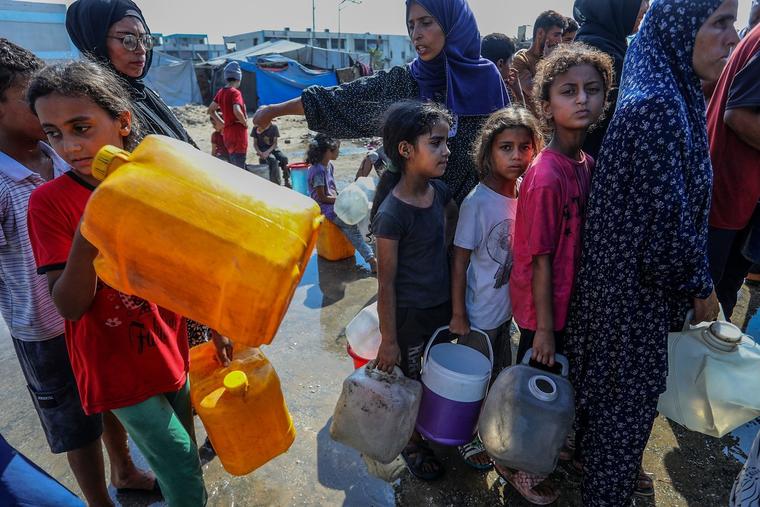
According to Hebrew University’s Geographic Information System Center, at least 70% of Gaza’s buildings have been leveled. Hunger and desperation among Gaza’s civilian population are spiking. Israel, as the besieging power, is usually blamed for the shortages, and is the subject of a concerted pro-Hamas propaganda campaign — although according to the UN Office for Project Services (UNOPS), 87% of the more than 2,000 aid trucks sent in since May 19 failed to reach their final destinations, intercepted “either peacefully by hungry people or forcefully by armed actors.” While Israel has at times turned humanitarian assistance on and off, there is also a thriving food black market in Gaza. Everything is for sale, including food airdropped into the area by various countries.
Ancient Tactic, Modern Misery
The three sieges differ in local political circumstances but share certain similarities. In all three, the narrative has been weaponized, to a greater or lesser extent. There are those who play it up or play it down depending on the circumstances, saying “people aren’t really starving” — and if they are, it is someone else’s fault. The reality is that all three are places of very real human suffering, acute hunger and deprivation. Israel and Gaza get much more attention than Darfur, of course. Unusually, unlike Darfur and even Suwayda, there is an effort by Hamas (and some in the international community) to keep suffering Gazans in place as political leverage.
While the belligerents in all three sieges are not Christians, Christians on the ground are involved. In Suwayda, churches were desecrated and an entire Christian extended family was massacred. In El Fasher, the sole Catholic priest, Father Luka Jomo, was killed by a stray bullet in June 2025. In Gaza, the Holy Family Catholic Church community has been struck more than once, by sniper and Israeli tank fire, and several people have been killed or injured.
While seemingly everyone involved in these sieges plays a political blame game, Catholics need to be open to real solidarity with human suffering everywhere. Certainly, with our Christian brethren, but also to the innocent of every faith — Jewish hostages, Muslim children, Druze families. The hungry, the widow, the orphan.
Indeed, Pope Leo XIV has spoken about the dire situation in Syria, Sudan and Gaza. We, too, should avoid the easy, lazy trap of demonizing others, turning victims into weapons or excuses, and especially, of hardening our hearts as we see this most ancient and cruel type of warfare reappear before our eyes.