Ten Commandments Can Return to Texas Classrooms, 5th Circuit Says
COMMENTARY: The ruling returns Establishment Clause analysis to its proper moorings: the nation’s history and tradition.
The Easter season draws us into contemplation of a God who did not remain aloof from his creation — the Father who inscribed his law on stone tablets at Sinai and, in the fullness of time, sent his only-begotten Son to redeem us from original sin and write that law on human hearts.
It is fitting, then, that this season brings word of a federal appellate court restoring the Ten Commandments to their rightful place in American public life.
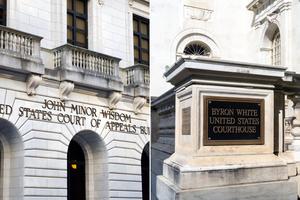
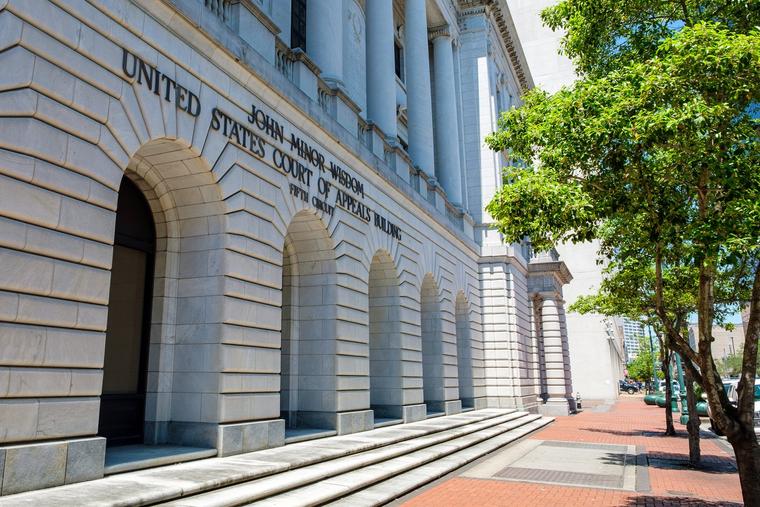
On Tuesday, the 5th Circuit Court of Appeals, sitting en banc in Rabbi Nathan et al v. Alamo Heights Independent School District et al., upheld Texas’ law requiring the passive display of the Ten Commandments in public-school classrooms.
The opinion was authored by Judge Kyle Duncan, a committed Catholic and one of the preeminent legal minds of his generation, with particular expertise on religious liberty. Before joining the bench, Duncan honed his craft at Becket, the powerhouse nonprofit law firm that has defended the freedom of believers of every faith before the nation’s highest courts. His scholarly work on the Blaine Amendments — those 19th-century provisions born of naked anti-Catholic hostility that barred Catholic schools from public funding — equipped him with a uniquely clear understanding of what genuine government hostility to faith actually looks like.
For decades, courts applying the Lemon v. Kurtzman (1971) test used it as a blunt instrument to drive religious expression from public life — a project that fell with especial weight on Catholic institutions and Catholic public witness. Stone v. Graham (1980), which struck down a Kentucky Ten Commandments display law, was Lemon’s direct offspring. In Kennedy v. Bremerton School District (2022), the Supreme Court abrogated Lemon and its progeny, returning Establishment Clause analysis to its proper moorings: the original meaning of the text and the deep history and tradition of this republic. Judge Duncan states it best: “With Lemon extracted, there is nothing left of Stone.”
Duncan’s opinion is characteristically clear-eyed. He asks whether the law resembles a founding-era religious establishment. Applied to the Texas law, the answer is No. The Texas law “does not tell churches or synagogues or mosques what to believe or how to worship or whom to employ as priests, rabbis, or imams. It punishes no one who rejects the Ten Commandments, no matter the reason. It levies no taxes to support any clergy.” And on the coercion argument at the heart of the plaintiffs’ case, Duncan is particularly direct. The sort of coercion characteristic of historical establishments, he noted, consisted of forcing people to attend church or engage in formal religious exercise — “prescribing liturgies and punishing those who skipped them.” “S.B. 10 is far from that. It puts a poster on a classroom wall.”
In dismissing plaintiffs’ Free Exercise claim, Duncan notes that “no case suggests that the mere presence of religious language in a school display is ipso facto religious coercion.”
Critics of these displays — enacted not only in Texas but in Louisiana and Arkansas as well — have argued that the version of the Ten Commandments required by law reflects a distinctively Protestant reading of Scripture. In a commentary piece published in First Things this past January, professor Mark David Hall of Regent University, Rabbi Stuart Halpern of Yeshiva University and I demonstrated through careful textual analysis that the text at issue is nonsectarian. Catholic readers should note in particular: The Douay-Rheims Bible, the 1921 Baltimore Catechism and the current Catechism of the Catholic Church all reflect the substance of every commandment in this text. There is no Catholic tradition being overridden here.
While acknowledging earlier cases where the 8th Circuit recognized this version of the Ten Commandments as nonsectarian and the Supreme Court upheld the identical text on the Texas State Capitol grounds in Van Orden v. Perry, Judge Duncan wisely dispatches plaintiffs’ “denominational discrimination” argument with a sentence that should be posted in every federal courthouse: “Not being a court of ministers, bishops, or rabbis, we have no business opining on these matters and no competence to do so.” Courts, he writes, cannot act as “arbiters of scriptural interpretation” — and accepting the plaintiffs’ invitation to adjudicate the theological credentials of S.B. 10’s text would itself constitute an Establishment Clause violation by presuming to decide a religious question. As Duncan puts it, plaintiffs “have made us an offer we can only refuse.”
As professor Hall and I argued in our amicus brief to the 5th Circuit in support of Louisiana’s law, and developed at length in our law-review article in the William & Mary Bill of Rights Journal, the historical record is unambiguous: From the First Congress appointing and paying chaplains, to President Washington’s Thanksgiving Proclamation, to Thomas Jefferson’s own proposed national seal depicting Moses parting the Red Sea, the founding generation did not understand the Constitution to demand a religion-free public square. The idea that a poster on a classroom wall would have troubled any of them strains credulity beyond the breaking point.
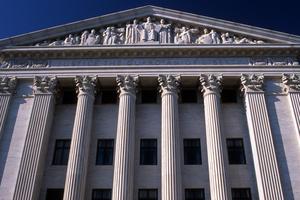
Judge Duncan and his colleagues in the majority underscore this by cataloging the religious language saturating American public life — from “In God We Trust” on the currency to the Ten Commandments displayed at the Supreme Court, the Capitol, the National Archives and the Department of Justice itself. “The fanciful notion,” Duncan writes, “that these uses of public religious language or symbolism have anything to do with a founding-era establishment cannot be taken seriously.”
The case will almost certainly reach the Supreme Court, where the justices will have the opportunity to mark out a clear constitutional path forward. Judge Duncan’s opinion will be an essential guide.
- Keywords:
- fifth circuit court of appeals
- judge kyle duncan
- ten commandments
- becket fund for religious liberty
- religious freedom