A Pope Who’s American — and Everything Else
A new book marks the first anniversary of Leo XIV’s election with a closer look at the papal son of Chicago’s melting pot.
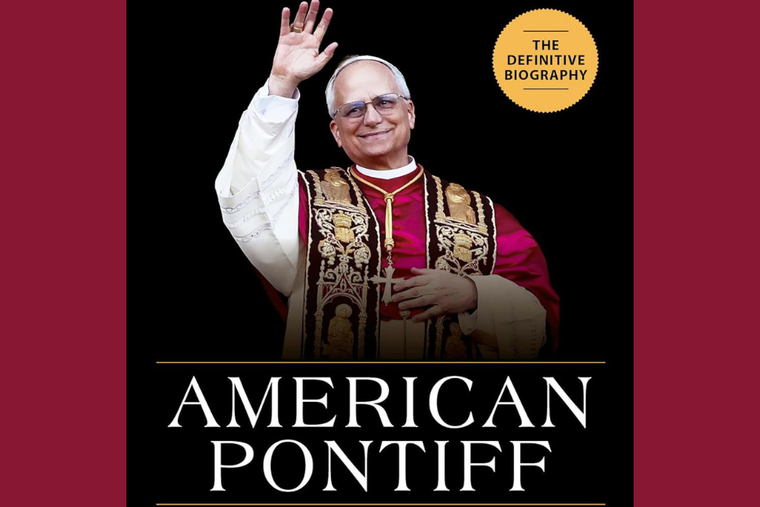
Editor's Note: The following is an excerpt from Paul Kengor’s new book, American Pontiff: Pope Leo XIV and His Plan to Heal the Church.
On the evening of May 8, 2025, Protodeacon Cardinal Dominique Mamberti walked onto the Loggia overlooking St. Peter’s Square and announced those words the faithful had eagerly awaited: “Habemus Papam!” He let the throng cheer and settle before he announced the new pope, stating (in Latin): “The Most Eminent and Most Reverend Lord Robert Francis Cardinal of the Holy Roman Church Prevost who has taken the name Leo XIV.”
There was a sudden hush in the excited crowd. This was not a name they knew. Who was this man?
He was 69-year-old Robert Francis Prevost, an American, more recently of Rome and Peru, but also a native of the Midwest, born in Chicago, and son of the late Mildred Agnes and Louis Marius Prevost of Dolton, Illinois.
The world was stunned, including the Italian people, who were hoping the Bishop of Rome would once again be Italian. For so many centuries, the pope had been one of their native sons. When the first Slavic pope was elected in October 1978, with Karol Wojtyla taking the name John Paul II, the Polish pontiff succeeded an Italian whose papacy had lasted only 33 days. Italians had occupied the Chair of St. Peter for 455 consecutive years.
Though the Italians had high hopes with cardinals like Pietro Parolin, Pierbattista Pizzaballa, and Matteo Zuppi among the papabile, they failed to get the seat back in May 2025. Robert Francis Prevost was now the fourth consecutive non-Italian pope.
Well, sort of. The reality is a bit more complicated.
It is often forgotten that Pope Francis was ethnically Italian. He was born in Buenos Aires, Argentina in December 1936 to Italian immigrant Mario José Bergoglio, an accountant from the Piemonte region in northwest Italy, and Regina María Sívori, a housewife born in Buenos Aires to a family of northern Italian origin. When Bergoglio walked onto the Loggia on March 13, 2013, he spoke fluent Italian, and he thrilled the Italian gathering at St. Peter’s Square by being the first pontiff to choose for his papal name the beloved male patron of Italy: the revered St. Francis of Assisi. When his papal name was announced, the name “Francesco! Francesco!” jubilantly echoed through the crowd.
So, it was not as if Italian lineage had left the papacy without a trace starting with the election of Karol Wojtyla. And indeed, the same can be said, for a smaller, albeit diluted degree, for the new Pope Leo XIV.
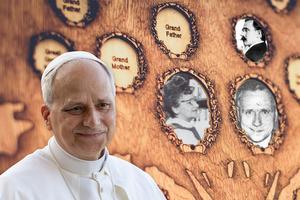
Born September 14, 1955, Robert Francis Prevost is a typical American. He is what so many of us native-born Americans jokingly refer to ourselves as: a “mutt.” Prevost is a prototypical product of the American melting pot, with possibly more varied ethnic DNA than the last five centuries of popes combined. Both his parents were Chicago natives, which as most people who know Chicago realize, does not suggest homogeneity. Chicago is one of America’s and hence the world’s most mixed melting pots, and Prevost’s parents were no exception.
Robert Francis Prevost’s mother, Mildred Agnes Prevost (1911-90), was born Mildred Agnes Martinez, a common Latino surname. She hailed from a mixed-race family of Hispanic and Black Creole origin in New Orleans, Louisiana. Her parents were variously described in U.S. Census documents as black, mulatto, and white, a convoluted diversity not uncommon for the period. Documents list her father as born in Haiti and the Dominican Republic. Prevost’s mother’s and maternal grandparents’ complex backgrounds quickly prompted some black Americans to claim in Leo XIV a black pope. Some went so far as to claim in Leo “the first black pope.” However, the Catholic Church had black popes in the past (or at least men of darker skin complexion), with several popes from northern Africa in the first centuries of the Church. The ethnic identification of every pope is uncertain, as it is with many early notable saints, including Saint Augustine (354-430 A.D.), who had northern African lineage and was possibly partly black. In that sense, it is interesting that in his opening remarks on the Loggia, the Augustinian Robert Francis Prevost proudly referred to himself as “a son of Augustine.” The new pope quotes Augustine more than any figure aside from Christ himself.
There was immediately much focus in the American media on Leo XIV’s familial background. And fine distinctions are not always made over what is considered “black” complexion or a “person of color” versus roots from Africa or another country in which the native people have darker skin. But that said, Prevost inarguably has roots on his mother’s side that would be typically considered black among most black Americans. It is true and an undeniably cool thing that the first American pope does have some black ancestry.
Equally intriguing, Prevost’s complex roots on his mother’s side would suggest a high possibility of slavery in the bloodline. The slaves could have come from the American south or from Haiti and the Dominican Republic. Genealogists immediately went digging into that specific element of his roots.
Leo XIV would not be the first pope with slavery in his background. The Catholic Church has had popes who were slaves, not to mention numerous famous saints (black and white) who had been slaves (a prominent example is St. Patrick, who was white — I did a book on this subject and wrote on it for the Register.) Two particularly inspiring black American slaves are on a path to sainthood, Pierre Toussaint (1766-1853) and Augustus Tolton (1854-97), the latter of whom was a priest near Prevost’s home environs.
This rich record of race hails merely from Pope Leo XIV’s mother’s side, anchored largely in the Western Hemisphere. Going to his father’s side takes us across the Atlantic.
Robert Francis Prevost’s father was Louis Marius Prevost (1920-97). His background was less mixed than his wife’s, though still diverse. Whereas Prevost’s mother’s family hailed from the New World, his father’s family came from Europe, i.e., the Old World.
Louis was of Italian and French descent. His father was Salvatore Giovanni Gaetano Riggitano (1876-1960), a Sicilian immigrant from the village of Milazzo near the city of Messina who immigrated to the United States in 1903. Giovanni became a teacher of Romance languages, namely, Italian, French, and Spanish. The complex circumstances of his relationship with and subsequent marriage to Suzanne Fontaine, a Frenchwoman from Le Havre, France, are unclear and became somewhat of a local scandal in their day. Whatever those details, Giovanni and Suzanne became the parents of Louis Marius Prevost, Pope Leo’s father.
But note Giovanni’s roots in southern Italy. Thus, his grandson, Robert Francis Prevost, is an American who has Italian in his blood.
Notably, when Leo XIV nearly a month into his papacy addressed in Rome the National Italian American Foundation and said, “As you well know, tens of millions of Americans proudly claim their Italian heritage, even if their ancestors arrived in the United States of America generations ago,” he could well have been talking about his own ancestors, or at least his paternal grandfather.
That is not the only Italian connection for the American pope.
Think of the middle name: Robert Francis Prevost. Whereas Jorge Mario Bergoglio chose the papal name “Francis,” Robert Francis Prevost was blessed with the name at birth. The name Francis—again, for the revered Italian St. Francis of Assisi—was bestowed on him by his parents. He could claim the name longer than Pope Francis could.
Like Jorge Mario Bergoglio, Robert Francis Prevost’s ethnic roots and place of birth mean that he has a foot in both the old world and new worlds, in Europe and the Americas. And of course, it must be said that America (as every Italian proudly knows) was discovered by the great Italian explorer from Genoa, Christopher Columbus, and was named for the great Italian explorer from Florence, Amerigo Vespucci, a contemporary of Cristoforo Columbo.
Thus, in truth, the new American pope, Robert Francis Prevost, is closer to the Italians than they initially figured. No, they did not get a full-blooded Italian pope, but they got a pope with some Italian in his bloodline.
We continue to learn more about his ancestry. A recent study by a team of experts led by Harvard historian Henry Louis Gates Jr., host of the PBS documentary program Finding Your Roots, traced the American pope’s lineage back 15 generations into the 16th century, where researchers identified over 100 forebears for Leo. They hailed from France (40 forebears), Italy (24), the United States (22), Spain (21), Cuba (10), Canada (6), Haiti (1), and even the remote southern Caribbean island of Guadeloupe (1). And notably, those forebears include both African slaves as well as slaveholders. Professor Gates called the new Holy Father’s multicultural background “one of the most diverse family trees we have ever created.” As noted by the Register’s Matthew McDonald, “Pope Leo’s family tree has it all.”
It should be further emphasized that Prevost’s footprint in both the old and new worlds applies not only to his familial background but also to his clerical background as a priest, bishop, and cardinal. Because of his time as a priest and bishop in Peru, he is a dual citizen of Peru and America. The new pontiff maintains three passports, one from Peru, one from the United States, and one from Vatican City. He now also becomes a citizen of Italy in his capacity as Bishop of Rome.
In all, in personal ethnicity and priestly service, Robert Francis Prevost genuinely blends—and himself is a blend—of the old and new worlds.
What the whole world (Italians included) should celebrate with this first American pontiff is the striking reality of the most ethnically diverse pope ever—a fitting pedigree for the universal Church. The word “catholic” means “universal.” In his ethnic catholicity, Robert Francis Prevost is surely the most universal Holy Father in the history of the Roman Catholic Church.
An impressive gift to the world from the American melting pot.
- Keywords:
- 'pope leo xiv'