Contemplating Christ’s Wounds on the Cross
BOOK EXCERPT: ‘I realized I could never look upon a crucifix the same way again.’
Editor’s Note: The following are excerpts from God’s Wounds: The Remarkable Truth of Those Who Bore the Signs of Christ’s Passion (Catholic Answers Press) by Register contributor John Clark; the book is available at EWTN Religious Catalogue.
There are various prayerful and penitential ways to honor Jesus’ passion and death. For instance, we Catholics pray the Sorrowful Mysteries, during which we ponder the suffering and crucifixion Jesus endured for us. But we can also honor Jesus’ suffering by uniting it with our own. This point warrants an important point: though we Catholics speak about the value of suffering, we do not generally go around searching for ways to suffer. In a fallen world, suffering finds us, just as it finds the rest of humanity. But when we willingly accept our suffering and unite it with Jesus’ passion, we see the good that can be gained through suffering. …
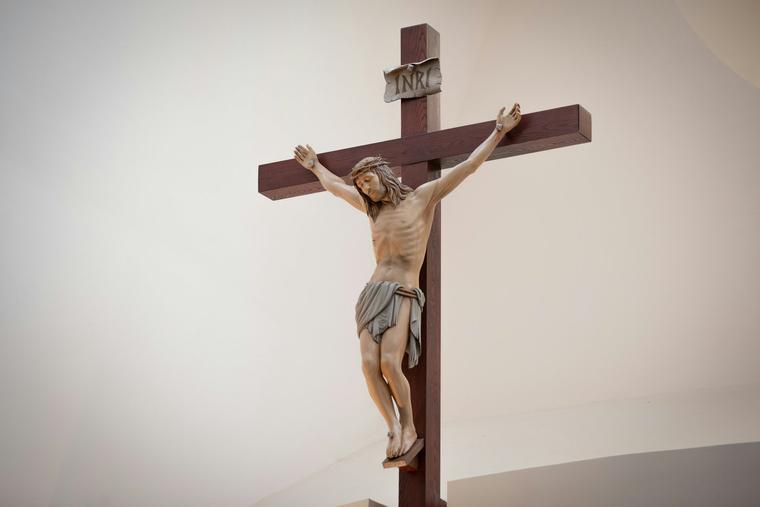
Very early in my research and in writing this book, I realized I could never look upon a crucifix the same way again. The great majority of artists’ renderings of Jesus on the cross are sanitized, albeit for understandable reasons. Yet, that sanitization bothered me, because it failed to tell the whole story.
Ultimately, however, I came to accept these representations; after all, no work of art can do justice to the real passion and crucifixion of Jesus. But that is where the stigmatists come in. The stigmatists give us an intense vision of his passion.
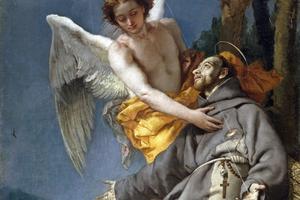
As this book has attempted to illustrate, the stigmatists over the centuries have helped us grow in both understanding and appreciation of the stigmata borne by Christ. When pilgrims went to visit Padre Pio or St. Lutgarde or St. Francis, they saw a living representation of Christ. These saints bore the stigmata, not so that they would be noticed, but that Jesus would be. These stigmatists not only preached the Gospel, but bore it on their bodies and souls. If we tell their stories today, the stigmatists can still bring pilgrims to grace. As I wrote, I felt them spiritually lifting me, and I needed their help. We all do.
The Crucifixion, and what it means for every soul on earth, is not easy to accept. Most Protestants have jettisoned the corpus of Christ, opting instead for a bare cross. But what is the cross without Christ? And if we envision a cross without Christ, where does that leave us? In some ways, I found myself asking that question as I wrote this book. Over the past few years, I have often said a silent prayer throughout the day: “Dear Jesus, please hold me close to your Sacred Heart, and never let me go.” As I wrote this book, I continued to say the prayer, but it made me frightened as I said it while staring at the crucifix. After all, I worried, Jesus is on the cross. Holding me close to his Sacred Heart would put me on the cross.
Precisely.
I must desire to be held so close to Christ that I can feel and hear his Sacred Heart beat with love for me — whether he is in the cradle or on the cross.
The stigmatists showed us that when we unite our sufferings with Christ, we mystically enter into his passion. Simon of Cyrene was the first to help Jesus carry his cross, but he was not the last. St. Clare of Montefalco mystically embraced the cross, but in some sense, all Christians who unite their sufferings with Christ do so. In the garden of Gethsemane, Jesus foresaw all the sins of mankind, but he was certainly consoled by the knowledge that some would love him to the end in final perseverance. Surely, to follow Christ is to suffer for Christ, but it is to suffer with Christ at my side. That is an overwhelming consolation.
The modern world forms a phony dichotomy between suffering and happiness, but the stigmatists provide a biographical correction of that notion. Even in suffering, to know and love Jesus is to know profound happiness, fulfillment, and peace. That is what the stigmatists still teach us. It is not suffering with Jesus that causes misery; rather, it is separation from Jesus. The stigmatists knew suffering; they did not know separation. They lived happy. They died happy.
Precious few of the Catholic faithful are called to bear the wounds of Christ, yet all of us are called to kneel at the foot of the cross. Thus, to understand the meaning of the stigmata most richly, and to incorporate their most valuable lessons in our daily lives, we must turn to Mary, the Mother of God. The Blessed Virgin Mary did not endure the physical stigmata of her divine Son, yet she witnessed his passion and death. Considering her maternal and spiritual proximity to Jesus, her internal sufferings must have exceeded the physical pain of any of the stigmatists. This suffering seems foreshadowed in the prophecy of Simeon, who predicted that a “sword will pierce through” her “soul” (Luke 2:35). We might say that Mary experienced the mystical stigmata of the soul. And although it is quite impossible to fully comprehend, Mary consoled the Second Person of the Trinity in his suffering. We must remember that Mary is our consolation as well.
What is more, she is our mother.
From the cross, Jesus uttered seven statements, and among them was one that applied to the whole world until the end of time — and in eternity: “Behold thy mother.”
- Keywords:
- stigmata
- crucifix
- crucifixion of jesus
- christ's passion