Print Article | Email Article | Write To Us

Daily News

In Bid to Save Catholic Education, a Shift to Regional Schools (4041)

Parishes to yield to boards mostly made up of lay trustees.

04/09/2012 Comments (23)
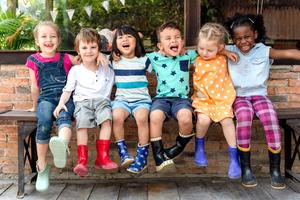
Dmitriy Shironosov/Shutterstock.com

– Dmitriy Shironosov/Shutterstock.com

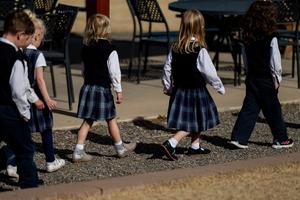
Faced with ballooning deficits and shrinking enrollment, dioceses across the country are regionalizing Catholic schools in an attempt to ensure the long-term viability of Catholic education, officials said.

“It will be a way of life for us,” said Timothy McNiff, superintendent of schools for the Archdiocese of New York, which is in the beginning phase of a three-year plan to shift control of elementary schools from parishes to regional boards mostly comprised of lay trustees.

In Philadelphia, archdiocesan officials plan to regionalize 22 schools in the next academic year, said Mary Rochford, schools superintendent.

“For now, unless something unexpected happens or divine intervention comes in, I think this will be the wave of the future,” Rochford said.

The last two decades have seen dioceses from coast to coast close scores of Catholic schools, as social, cultural and demographic changes undermined the sustainability of traditional Catholic-school governance and funding models.

Brian Gray, a spokesman for the National Catholic Educational Association, said that trend is particularly pronounced in the Northeast, which has seen a population shift in recent years, with people moving to the South and the Southwest in search of jobs and lower living expenses.

“Demographics, the population shift and money are the big factors here,” said Gray, adding that regionalization is happening in “lots of places,” especially in the Midwest and Great Plains.

“New York is not the first place that we’ve been seeing this,” Gray said. “It’s happening in a lot of different places, in different ways. Other dioceses are looking at regionalization in the best ways that work for them. Every diocese has to decide how it will do it. It really has to be a local solution.”

Last year, the Archdiocese of New York closed 32 schools, citing shrinking enrollment, which had plunged by more than 14,500 students since 2006, and a budget deficit that grew to $22 million.

McNiff said the closed schools were not “failing” and were, in fact, some of the best academic-performing schools in the archdiocese, but their long-term sustainability could not be secured.

“Our financial model and our governance model needs to be addressed because it’s antiquated,” McNiff said. “We feel, not all but many, parish elementary schools need a different governance structure because it’s too much for a parish, and particularly a pastor, to assume that responsibility.

“The demographics have changed significantly,” McNiff added. “A lot of kids in the schools, their parents, are not parishioners. The economics have also changed. There isn’t the income that people used to have. And when you look at our pastors, many of them are getting older and are having to run a parish by themselves. It’s overwhelming.”

“We can’t do business as usual. It’s just not working,” said New York Cardinal Timothy Dolan in a videotaped address Nov. 11 to New York Catholics.


Growing Role of Laity

To adjust to the changing realities, the Archdiocese of New York is currently training lay volunteers who will sit on three regional trustee boards this September. The boards, which will be comprised of clergy and laity, will be responsible for the day-to-day operations of Catholic elementary schools in their respective regions. The boards will set policies, including tuition rates, and will take the lead roles in marketing and fundraising.

The archdiocese also plans to curtail its funding for elementary schools, which last year cost around $33 million. Instead, the archdiocese will create a $40-million endowment fund, partly funded through sales and rentals of assets.

The three-year regionalization plan will begin on a pilot basis with the trustee boards set up in three counties, including two boroughs of New York City. If the goals of cost savings and increased efficiency prove to be a reality, the archdiocese will expand the governance model to 10 regional boards by the 2013-2014 academic year.

About 40 parish-based schools have opted out of the regionalization plan.

“We don’t want to throw the baby out with the bathwater in the new plan,” McNiff said. “There are a number of parishes in this archdiocese that are financially able to sustain their school and have great local leadership committed to their school.”

Meanwhile, the regional boards, which will be established as nonprofit corporations, also represent the laity’s growing role in Church affairs as they are asked to take on a more active role in school governance, officials said.

“It’s a significant shift,” McNiff said.

“The laity have been taking on an increasing role in Catholic education for years,” said Gray, of the National Catholic Educational Association.

Almost 97% of faculty and staff in Catholic schools across the country today are laypeople, according to the NCEA. That represents a near-complete reversal from almost a century ago, when around 92% of teachers and staff in Catholic schools were priests and religious, Gray said.

In Philadelphia, the archdiocese is also trying to involve the business and wider Catholic communities in revitalizing Catholic education, said Rochford, the schools superintendent.

“We want Catholic education. We want Catholic schools. But we just can’t sustain every single school we have,” said Rochford, who partly attributed a declining level of support from Philadelphia-area Catholics to the present crisis. Statistics indicate that just about 25% of Catholics in the Philadelphia Archdiocese attend weekly Mass.

“We have to think differently about our schools,” Rochford said.

In 2010, Cardinal Justin Rigali, the archbishop emeritus of Philadelphia, appointed a Blue Ribbon Commission to study the sustainability of Catholic education, and the group determined that seven Delaware County parish grade schools should merge with other nearby schools to form seven regional schools.

However, Philadelphia-area parents opposed the closings, which led to a several-weeks-long appeals process that resulted in Philadelphia’s new leader, Archbishop Charles Chaput, and the commission deciding to keep one school open and to classify another as an independent mission school.


Sailing Into Deep Waters

Meanwhile, two Catholic elementary schools in South Philadelphia cited for closure and mergers with other schools have appealed to the Vatican, according to published reports.

Rochford said the appeals process allowed parents and school communities to present compelling data and information not considered by the Blue Ribbon Commission.

“It didn’t wreck the plan. It woke everybody up,” said Rochford, who added that the commission’s recommendations may not have been as all-encompassing as previously thought.

The Philadelphia schools superintendent reported that the archdiocese will still be able to regionalize a “healthy number” of schools, and suggested that it was a matter of stewardship to regionalize schools in areas where resources are wasted on unsustainable individual schools.

New York archdiocesan officials organized a series of town hall-style meetings to present their regionalization plan and also posted details and videos online.

“Everybody, to a person, has said the status quo cannot be the solution,” McNiff said. “We have to change; we know that. Now that we have enough flesh on the bones of this plan, the vast majority of folks are saying, ‘Yes, this is a little bold; it’s sailing out into deep waters. But it’s something we should get behind and support.’”

Register correspondent Brian Fraga writes from El Paso, Texas.

 

Filed under

Comments

Post a Comment

The only thing that threatens the “viability” of Catholic schools is un-faithful diocesan officials, priests, parents and others that are not faithful to the teachings of the Catholic Church.

“The demographics have changed significantly,” McNiff added. “A lot of kids in the schools, their parents, are not parishioners.

This is EXACTLY the problem. The people putting their kids in Catholic schools do not intend to live a Catholic faith, they just want a better quality academic program because their local government-funded school has dumbed down the curriculum. Now that the laity are running Catholic schools on a region basis, schools will lose their Catholic identity and assume the secular ideas of private non-Catholic schools. The former system isn’t antiquated, it served us well for a century. What changed? Our government did. We no longer have freedom of religion and commerce as we used to. Our country’s constitution is antiquated. We now have a defacto socialist state, so parishes are shrinking to accomodate it.

I hope all will proceed with caution. Nashua, NH regionalized its parish schools many years ago and it failed miserably. When they were returned to their parishes, the schools thrived. Under regionalization there was no sense of ownership by the pastor and therefore no recognized “champion” to garner support from the parish where the school was located. When the pastor again had “ownership” he championed the school not only in his own parish, but in other parishes in the area. He could work with the Principal. Pastors are like other people; they want to see things they are responsible for succeed. They are sensible enough not to invest lots of energy where they can not impact the outcome.

Some other concerns. This is how bureacracy creeps in and things get “bigger” and more distant from the principle of subsidiarity. Schools will start looking like the public schools; top heavy with administrators and rules.

I won’t pretend to have the answer but this trend has some very negative possible outcomes. If it fails, how do you reverse it? How do you avoid lay board power struggles? How do you get the pastors to own the success of regionalized schools? Their leadership (or lack thereof) among Catholics should not be underestimated.

One observation I have made over the years is that the Diocese’s attitude makes a big difference. Does the diocese just “support” catholic education or is it “Committed” to it. Does the Bishop believe that Catholic children must be in Catholic schools for the good of their souls or is it just nice that they are available to some?

Another way to look at this is to respond to the comment from the article: “Statistics indicate that just about 25% of Catholics in the Philadelphia Archdiocese attend weekly Mass.”

I really sympathize with the workload of Pastors and quite frankly do not have any suggestions on how to address that.

ps. Also it would be helpful if pastors told their parishes that Catholic schools are necessary and that it would be a priority for them to get children into Catholic Schools and parents should have the same priority.

Please pray for vocations!  Orders of sisters dedicated to passing on the Church’s teachings to the young.

The fate of Catholic schools in Buffalo, New York has come down to schools watering down their Catholicity in order to attract more students.  The rich can afford the high tuition, doctors and lawyers, the poor can apply for financial aid, but the middle class is being left out.  The strong Catholic families with more than two children are also being left out. Financial aid is offered to students based on diversity and other factors, but the catholicity is not at all important.  Their are many strong Catholic families out their who would love to send their children to a Catholic school but can not because of money. Many schools have eliminated the discount for large families.  Just think of the vocations.  We should not think of Catholic schools as profitable, but as breathing grounds for vocations.  Sure something needs to be done to make these schools viable,  but we should look out of the box.  Catholic education, if done right, could lead to a revival in vocations for both sisters and priests.

No doubt that Catholic elementary schools will change.
——
One thing that does not seem to be on anyone’s radar is that very small schools with multiple grades in each classroom are both financially viable and educationally effective. Witness many rural parochial school and start-up classical Catholic schools.

So True- and unions

The Catholic Church ought to expand its inventiveness by allowing parish school facilities to be used by homeschooling parents.  In addition, parochial schools should offer consultative services for parents who desire instruction in how to home school their children.  Parish schools should be resources for home schooling parents and rather than have to fend for themselves develop a supportive relationship with them.

The drive to better academics is a laudable goal in all schools, but Catholic schools have lost much of their Catholicity as a result: teachers and administrators are not hired (or retained) for their knowledge and practice of being Catholic, but on how well their students score on standardized tests.  Woe to someone whose faith is strong - they are branded “conservative” and ostrasized - this has been going on for years (look at the lesbian-Buddhist art teacher who caused so much trouble last month in D.C. - the Catholic school principal who hired her was quick to proclaim their diversity).
Part of the problem, too, is that many pastors (especially the foreign-born) don’t have any background in Catholic schools.  Some pastors are also frank in their wish not to have a school - it drains their parish finances.
The leadership of schools at the district level tends to be fraught with “favorites” in selecting persons for leadership positions from particular educational backgrounds and educational publisher selections. There is no recourse to these decisions because they turn around and say that the pastor runs the school (but they will be visiting him when he makes a decision they don’t like or they’ll have someone from the upper echelons of the diocese call).

There is a demographic change in that Catholics are leaving areas with existing Catholic school infrastructure (e.g. the inner-city Northeast) and moving to areas where there is none (e.g. the suburban South).

In other words, the fate of Catholic schools in Buffalo, New York is as much tied to the fate of Buffalo, New York than it is any decisions by diocesan officials.

A large number of “Catholic” schools have really just been private schools with a nominally Catholic identity since at least the 1980’s.  This is why so many have fallen away from the Church after 12 years of Catholic school.  This is one among many reasons that many practicing Catholics choose to homeschool.  Although, I have seen an amazing turn around in our local parish school since the new principal came from the Dominican Sisters of St. Cecilia.

The other aspect of this consolidation that is not mentioned in the article is the effect that it has on the parishes that have been stripped of their schools.  Even though the “new consolidated school” uses the school facilities of my childhood parish, the parish is barely allowed to use the gymnasium or cafeteria (or even the bathrooms) anymore, even though the latter two are in the same building as the Church itself.  It really fractured the community between those who have kids in the school and those who don’t, whereas they all used to work to a common purpose in parish fundraisers.  The church can no longer get altar servers for funerals unless they use homeschooled kids.

I think the focus should be on reasserting Catholicity in Catholic schools rather than just keeping this meaningless institution of “Catholic schools” alive at any cost.  It would be better to have fewer, smaller Catholic schools that actually teach Catholic faith and practice rather than more, large Catholic schools that take their kids to Mass once a week, have them take some meaningless academic class called “Religion”, but otherwise accepts and teaches the heretical and immoral values of the secular world.

The teachers unions with the consent of the Democrat Party have successfully lobbied against voucher programs and tax rebates for years. My property taxes subsidize secular schooling for other people’s kids, but I would have to pay for my own kids out of pocket. If Catholics would only vote as a block for Catholic interests, this would change dramatically especially since we already know Catholic schools deliver a better education for less money.

There has been a slow and steady decline in Catholic schools in my area (Southern CA) over the last 10 years.  When the local Catholic school was open, I couldn’t afford the $5000 tuition.  Even with discounts I would have been paying over $15,000 per year for my children to go to the K-8 school.  Plus, my children would have had to use the religion books that our diocese say are okay to us.  They are pretty sad.  We homeschool.  The homeschool community in our parish fills the void that the Catholic school has left.  It would be nice if dioceses could find a way to embrace homeschooling and not see it as some weird thing that parents do to “shield” their children from the world.  There are many ways to help make a school viable just as there are many ways to educate a child, just as we are seeing in the public school world.
There is a book titled, “Designed to Fail” that is a very interesting read about Catholic education in America.  It will make you want to think outside the box about Catholic education in America.

The most obvious and immediate effect of a smaller number of Catholic schools would be that only the children of rich parents would be able to attend. Going to a system of regional school boards, where most of the participants are probably well-to-do, will probably aggravate and hasten this exclusivity. (Just look at the privately-run Catholic high schools.)
So very much depends on leadership of our Catholic schools.  I’ve seen pastors who never visit their schools; principals who don’t know our basic prayers; principals who repeatedly hire teachers who aren’t Catholic; and diocesan staff interfering with principal selection (including losing applications).
Teachers who care about Catholic education, and there are many, suffer through these assaults to their integrity, while being paid 80% or less of their public school counterparts. These are great people and much is owed to them but this situation cannot (and should not) continue.

It would appear to me that the primary cause of success and failure lie squarely on the Catholic Church. The reason I say this is that I’m a retired FDNY Paramedic who is now working on an Ed D and what I’ve learned about the educational system in America can only be called treason. At every level of our secular schooling our nation has fallen further behind the world, specifically Japan and South Korea.
With the destruction of the two family unit, morality went down the tubes. Currently in NYC we have had the destruction of public schools while increasing charter schools. Please get an eye opening by reading The Shock Doctrine: The Rise of Disaster Capitalism by Naomi Klein and read what happened to Chile’s health and for this discussion educational system. Then take what you have read and look at what has been happening across this nation for the last thirty years! In 2,000 the winners of the International Student Assessment (PISA) Japan and Korea were number 1&2 in Math and Science, the United States was no where to be found. In 2006 the United States was an insulting 23rd in Math and 26th in Science.
    This was predicted in the National Commission on Excellence in Education report of 1983! So what is the response from everyone from the President to supposed Educational Administrators? Here in NYC social promotion is one disaster that has been going on for years. Thus over 70% of those who graduate and go on to a two year college require remedial classes in the basics, as reading! It has been reported that in one school in Brooklyn more than 100 languages are spoken! Next, anal and oral sex are being taught in the schools, while religious groups are not allowed to meet in the schools at the end of the day!
  Thus my contention that the problem falls back to the Catholic Church for remaining asleep thus ignoring the warning in 1983 warning of:
1. The dangers of a nationally dysfunctional educational system.
2. Collateral damage threatening our nation’s economy, intellectual, moral and spiritual strength’s.
3. The challenging mandate to adopt a more rigorous and measurable standards, and higher expectations, for academic performance and student conduct.
  So where was the Church? The fact is this country I fought for in Vietnam and Cambodia has turned into a toxic Culture of Death as Pope John Paul II apply named it.  The current Obama administration is attempting to place the final nail in our coffin.
  Both Japan and South Korea have strong family units and are rooted in the morality of Shinto, etc. The United States through the secularistic insanity has the largest number of divorces in the civilized world, and the largest single parent units! Without morality no culture, even America can stand.
  Again, where has the Church, specifically the American Bishops been? Why had they no vision in seeing what was happening and taking action? Why aren’t Roman Catholic Priests out there talking it up?
  There is no excuse, none for a Roman Catholic School to close. The Church needs to forget the ‘political correct’ crap the majority of priests I have met speak and get a fire in their hearts to push their schools. This means taking in those who can’t afford it. By attracting numbers, the initial loss can be made up. For too long the Catholic schools if they had a problem child the child was not returned but was dumped in public school. This can no longer be, the Church has too much to offer, educationally but more, so much more Spiritually.
  The schools must get back to basics, English classes for those new to the nation. Discipline, there is no tolerance for nonsense or disrespect. The basic courses, Reading, Math, Science, Physical Education, and yes fine arts.
  Thus I ask again where have the bishops been for all these years? The Roman Catholic Church is the last bastion of any chance we as a nation have of being pulled back from the brink which President Obama and Mayor Bloomberg are leading us!
  BE PEACE, God bless and pray for Souls in Purgatory as well as the bishops and priests.

As the feminist nuns and gay priests are moved into a comfortable retirement, the “Catholic In Name Only” parents take over. Designed to fail, indeed! This is probably the most effective volunteer opportunity ever! Let’s re-Catholicize the Catholic schools!

First the idea that Catholic education is so much better than public school education needs to be shelved. In Maryland we have very fine public schools and some failing schools. My children left Catholic school and entered public elementary school and they had to be tutored to catch up to the public school standards. Second we get textbook funding for Catholic schools and this amounts to using the same textbooks as my public school kids. AP high school courses standards are set by the State so it is the same course and requirements if you home school, go to private schools or to public schools. There is no great academic advantage. You must pass the same test to get the credits. Secondly the parents in Catholic school only want to keep their children away from the bad public schools and the public school kids. They could care less about Catholic devotions and Catholic education as it should be taught. Why would anyone pay to have their good Catholic kids exposed to bad Catholics day in and day out? My public school kids are only home schooled in the faith and they participate in a dismal CCD program to keep them involved at the parish and they have opportunities in public school for music and arts programs that are not available in Catholic schools. My daughter is the student conductor of a 120 student freshman class symphonic band and is graduating from high school this year as an AP music student. In the parish she is the go to sacristan for any important events or when the bishop comes for Confirmation, of course she plays music (flute) for Mass . She is an extraordinary minister of Holy Communion, teen peer and leader in youth ministry in charge of the Youth Mass and Adoration. Does she know her faith- better than some of the teachers at the school. Is she given a hard time- all the time when parishioners find that a Catholic public school student is such an asset and example for the youth. Apparently you can only be good if you attend 12 years in a Catholic school and I find that so wrong and so uncharitable from adults or I should say the Catholic school parents who constantly complain they pay to have someone teach their kids the faith and yet a public school kid can have such an important role in the parish life. Others in our parish are surprised she is a public school kid but they love her and pray for her always. I should not leave my younger sons out either they are model volunteers and altar servers and following in their sister’s footsteps. Catholic comes from home and the parish family not the school. I believed in Catholic education until I could no longer stand the parents and teachers in Catholic schools. My oldest son attended 12 years of Catholic schools and he is the least adjusted to public life and gets mad when he has to defend his beliefs or why he won’t do something. My public schoolers grew up defending the faith and they know how to be Catholic in the secular world and tolerate Muslims pulling out of class to go pray and the Jewish yamaka etc. If Catholic schools were Catholic and not full of cultural Catholics and secular teachers I would have my kids there but I won’t pay for the secular atmosphere created by these parents and teachers. One parent went out of their way to help my son understand that being a priest was sick and he would need a woman to help him through life not a church. I can get that for free but I have not found that in public schools, in fact the respect shown to one another in public school is great. Don’t get me wrong there is a lot wrong in public schools but they are not producing morons, criminals, druggies, over sexed idiots that don’t know right from wrong…worthless human beings who can’t read or write as some Catholics would have you believe. Also look at the high profile Catholic graduates in politics- need I say more. I think parish or family religious education should be our educational thrust and forget about these schools that are just shadows of what the religious orders gave to us.

Our Lady of Fatima wanted us to pray for the conversion of sinners because without conversion then we will suffer and die.  I read here that people are not attending Mass regularly which is a mortal sin.  Which means most people are dead.  How can our schools live when we are dead?  How can we have vocations when we won’t repent of mortal sins (and their are many).  Our lady says that most souls go to hell for the sins of the flesh (contraception, sterilization, abortion, sex before marriage, pornography, immodest fashions, homosexual activity etc…)  Our Catholic schools and CCD programs are filled with immodesty.  Our Lord is offended by these immodest fashions.  The Holy See says true modesty is when the skirts and dresses are to be BELOW the knee etc….  We must repent so we can live in Christ.  Otherwise we shall continue to see no vocations (which the HOLY nuns ran our Catholic Schools).  We must turn back to God.  Our Lady of Fatima’s messages are the answer.  God love you

Why the focus on Catholic “schools”. Shouldn’t we be concerned more an a Catholic EDUCATION? Unless I am mistaken, homeschool programs like Seton, St. Thomas Aquinas Academy, Mother of Divine Grace, etc, or doing quite nicely.  I like Deacon Ed’s idea of the parish schools offereing consultative services. I send one of my children to a non-demonination school for science because the Catholic school does not offer “a la carte” services. Next, year, the other will go as well.  It seems to me the Church is looking at the school as either a building or a business instead of a real charity/service.

Catholic schools were caught in the crossfire betweend Rs and Ds.
Republicans have been actively passing laws to financially starve all forms of education for decades.
Democrats have done everything they can to exclude reLigious schools, and in fact, all religious institutions from getting federal or state funds.
The combination of the two has been, well, we’re witnessing, the decline of Catholic schools.
Now mix in the comment I read about most students aren’t parishioners and the Catholic middle class base isn’t able to afford a Catholic education. You have a recipe for closing schools and not invigorating the next generation with Catholic knowledge and tradition. A recipe for disaster, really.

It saddens me that this article did not even address the real root of the problem with Catholic schools in the US, and that is just plain lack of true Catholicism across the board.  This line from the article is simply incorrect and honestly makes me angry that people think this way. **“Demographics, the population shift and money are the big factors here,”** ... Not true.  I will go to my grave saying that priorities and way of life are the true root of the problem.  The Diocese of Wichita and its model could use more publicity, because I truly believe the way we do things here (while not perfect) is the most sustainable, most viable way to run a Catholic school system…because it makes the school truly belong to the parents and children through their stewardship as a way of life.  There is no tuition.  People aren’t excluded from schools due to their (lack of) income.  All are welcome.  And our schools are not only successful, they are thriving.  They are growing.  And then the children who go through Catholic schools here while actively involved in stewardship in their parishes grow up…and they enter the seminary and become a priest, or the convent and become a sister, or they get married and start a family, and teach their children the stewardship way of life.  And the cycle continues and flourishes.  Viable.  Sustainable.  Catholic.

This regionalism may be pragmatic, but I am witnessing the erosion of local/parish schools in Omaha Nebraska as a result of a recent “study” by outside consultants. Schools that have no problem with enrollment or budgets are being subjected to closure due to “projected” trends. The schools being most impacted are “working class” city schools and wealthier, elite suburban school are left untouched. The secular trend in our Arch-diocese has in recent years to hire principals and faculty that are former Omaha Public Schools personnel and they often bring secular/progressive philosophies with them, further contaminating an already ailing system.

Lisa has it right. 

It all hinges on Catholic Faith and, in our day, that means re-evangelization.  There are multitudes that either forgot the Faith or were never taught it properly.  People in dioceses must stand up, do things, and begin the task of getting this ship turned around. 

Post a Comment

By submitting this form, you give The National Catholic Register permission to publish this comment. Comments will be published at our discretion, and may be edited for clarity and length. For best formatting, please limit your response to one paragraph and don't hit "enter" to force line breaks.

Name:

Email:

Write your comment:

Please enter the word you see in the image below:


Notify me of follow-up comments.