Pakistan’s ‘Blasphemy Business’ Leaves Christian Families Shattered
Recent reports and investigations point to a coordinated network that lures victims online and uses blasphemy laws to extort and entrap — with devastating human consequences.
LAHORE, Pakistan — It has been a year since Komal Mushtaq last took her two young daughters to see their father inside the high walls of District Jail Lahore.
Their visits stopped when her eldest child, now 7, began failing monthly tests. The girl had confided in a teacher during a counseling session about the trauma of prison visits. The advice was blunt: Stop taking them.
“Their grades were falling. They are growing up. They miss their baba,” Mushtaq, a Catholic mother, told the Register, her voice breaking. The last time the girls saw their father was during the Easter holidays of 2025.
She still remembers how they clung to him during court hearings. “We used to bribe policemen just to allow a few minutes together,” she said. “They cried, holding his hands. They wanted him to carry them, to embrace them.”
Her husband, 35-year-old Imran Rehman, was arrested by Pakistan’s Federal Investigation Agency (FIA) at a bank in Lahore in September 2022. According to the First Information Report (FIR), he allegedly shared blasphemous material in a WhatsApp group.
He was charged under Pakistan’s blasphemy statutes, the Prevention of Electronic Crimes Act, and anti-terrorism provisions — offenses that can carry heavy fines, life imprisonment, or even the death penalty.
For decades, Church leaders have warned that blasphemy laws are often weaponized to settle personal disputes or seize property, sometimes sparking mob violence before investigations even begin. But recent disclosures suggest something more organized.
Investigations by police officials, human rights monitors, and court records point to what activists describe as a “blasphemy business” — an alleged syndicate that uses social media to lure mostly young, lower-middle-class Muslims into private online conversations, often through women posing under false identities.
The exchanges are then allegedly used to accuse the men of blasphemy, enabling blackmail, extortion or coercion.
The scandal first came to light in 2019, when an FIA officer warned colleagues of internal misconduct and suspicious complainants. A January 2024 leaked report by Punjab Police Special Branch described a coordinated network systematically luring and framing victims.
In October 2024, the National Commission for Human Rights issued a report calling on the government to scrutinize FIA procedures and ensure transparency. The commission documented 767 blasphemy-related arrests across Pakistan between October 2023 and July 2024, most in Punjab.
Five detainees — including a 22-year-old woman — died in custody. At least 10 of those arrested were Christians.
According to District Jail Lahore records, seven Christians remain imprisoned there on blasphemy charges, three of them arrested by the FIA.
Pakistan’s Catholic bishops, through the National Commission for Justice and Peace, collaborated with the human rights commission on the report.
“The biggest problem is that victims remain unheard,” said NCJP Executive Director Naeem Yousaf Gill. “Often the accused becomes a missing person. They are picked up from workplaces, not homes. Families keep circling police stations for days, even months.”
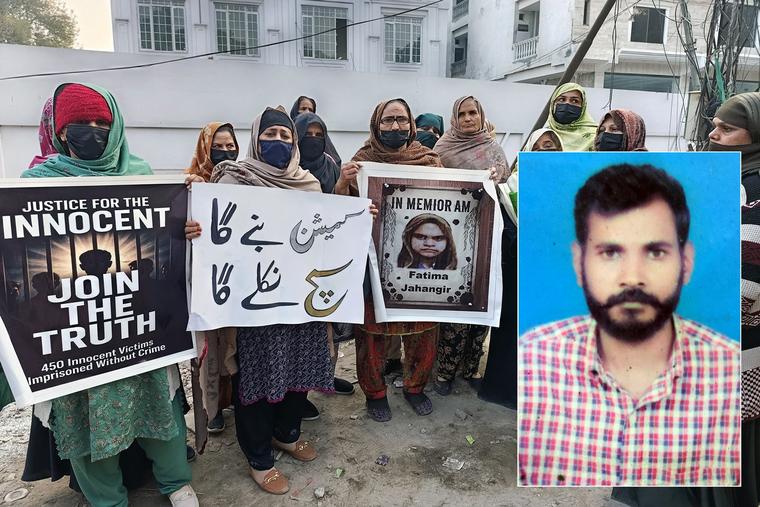
Exhausted by prolonged trials, at least 101 families filed a petition in the Islamabad High Court, challenging what they say is a criminal network that, in collusion with the FIA, has arrested 450 people on fabricated charges. Their hopes were dashed in July last year, when an appellate bench of the Islamabad High Court stayed a previous verdict directing the government to form a commission to probe the alleged blasphemy network.
The NCJP has maintained a cautious distance from street protests.
“We have to keep a low profile,” Gill said. “It is extremely difficult to challenge a syndicate that appears to draw strength from both religious groups and federal law enforcement. Trials in lower courts are often one-sided.”
The political climate remains volatile. The Islamist party Tehreek-e-Labbaik Pakistan was banned in April 2021 after nationwide violent protests over blasphemy issues, only for the ban to be lifted later that year following negotiations with the government.
Despite being banned again in October last year, the party’s ideology retains significant street influence.
Pressure has intensified on lawyers and activists defending the accused. In January, attorney Imaan Zainab Mazari-Hazir and her husband were sentenced in a separate case involving alleged anti-state online posts.
Cleric Muhammad Ali Mirza, who began advocating for families after securing bail in December in his own blasphemy case, survived an attack at his academy in Punjab on Feb. 15.
At least eight lawyers and journalists say they have received notices under the Prevention of Electronic Crimes Act from the National Cyber Crimes Investigation Agency following complaints linked to blasphemy-related advocacy.
Mushtaq says the pressure has reached her doorstep. FIA officials, she alleges, questioned and threatened her elder brother for visiting Rehman in prison.
“They told him they would check his phone and arrest him too,” she said.
At night, sleep comes in fragments. During Lent, she fasts for her husband’s freedom. Yet as another Easter approaches, she braces herself for a longer wait.
“My daughters ask when their father will come home,” she said, wiping away tears. “I tell them to pray and hope for justice. That is all we have left.”
- Keywords:
- pakistan
- islam
- catholics in pakistan
- blasphemy laws