Council of Trent at 480: A Blueprint for Catholic Renewal
COMMENTARY: The 16th-century ecumenical council shows us how the Church can come together and bring about authentic reform.
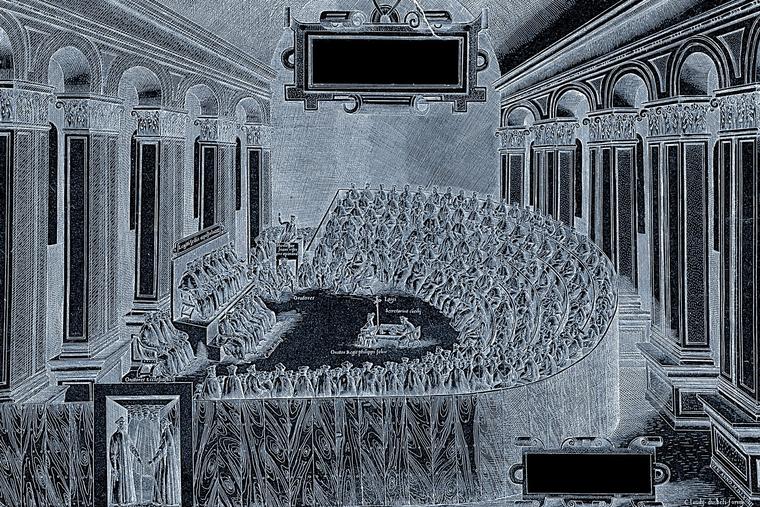
This December marks the 480th anniversary of an event that has done much to shape modern Catholic identity: the Council of Trent.
This ecumenical council, beginning on Dec. 13, 1545, through stops and starts over the next 18 years, would go on to address many key themes affecting the Church’s doctrine and life.
The council, as in the case of many councils, began with a crisis. On one hand, there was the turmoil caused within Christianity by Martin Luther’s attempts at reform and his subsequent rupture with the Catholic Church. However, the German theologian was just one of many voices, going back at least a century before, who had called for change. The abuse of Church offices as a source of income, the trafficking in indulgences, and lax morals among clergy had already been rallying points for reformers.
The late historian John O’Malley, in his illuminating history of the council, notes that the situation of the Church was more complex than the negative stereotypes that are still present in the popular imagination. Attempts at reform had been underway for some time previous to Luther’s efforts. Nonetheless, shortly after the German monk’s excommunication in 1521, both Catholics and Protestants began calling for an ecumenical council as a means for addressing the serious problems facing the Church.
Even with the staunch support of the Holy Roman Emperor Charles V, who saw Trent as a means of bringing unity to his empire, the complex political and ecclesiastical circumstances would prevent the idea from taking shape for more than two decades.
Shortly after his election in 1534, Pope Paul III sought to convoke a council and eventually accepted Charles’ suggestion to hold the council in Trent. This city, just south of the Alps, was within the Holy Roman Empire and could be considered as German territory, in keeping with the Lutherans’ demands.
In 1544, a peace agreement between Charles and the King of France finally cleared the way for a council, and on Dec. 13, 1545, the ecumenical assembly had its solemn opening with 31 bishops and 48 theologians and canon law experts present to assist them.
After a procession through the streets of Trent, the participants gathered at the Cathedral of St. Vigilius, the primary meeting place for the council. The assembly accepted a set of interrelated goals that included addressing the Protestant Reformation, seeking reform within the “clergy and Christian people,” and strengthening Christianity against the enemies from the outside, especially the expanding Ottoman Empire.
Trent would be able to find the strength to work toward such ambitious goals with the supernatural conviction that the Holy Spirit is the protagonist of each council. In his 1542 bull of convocation for the Council of Trent, Paul III expressed his hope that God would enlighten the council with “the light of his wisdom and truth.” The council’s very first substantial decree was an earnest exhortation to the faithful of the city of Trent as well as to the participants in the council to live a Christian spirit of prayer, sacramental life and austerity so that the Church might abundantly receive the gift of divine help.
This spirit of prayer was accompanied by an attitude of pastoral charity and serious study. Early on in the council, Pope Paul III indicated that Trent was to condemn errors but not to specifically censure the reformers themselves. The council would carry out the meticulous work of examining the theological and pastoral issues at stake.
With regard to the theological questions, “particular congregations” were held at which theologians would express various views on specific points while the bishops listened in silence. Later, in “general congregations,” the bishops would meet to discuss the topics themselves, so as to come to an agreement. Then a draft decree would be composed by a small group of bishops and theologians, revised by further general congregations, and finally approved in a formal public session.
The council decided that each of these doctrinal decrees would be accompanied by a reform decree giving specific guidelines regarding the Church’s law and life. These were prepared by the papal legates or canon law experts, and then discussed in the general congregations.
In spite of two long interruptions, from 1547-1551 and 1552-1563, caused by an outbreak of the plague and various political tensions, as well as intense disagreements within the assembly itself, the council succeeded in reaching agreement on a broad set of issues. More than 30 doctrinal and reform decrees were proclaimed in 17 public sessions.
As one would expect, the doctrinal documents of Trent address many key points of Catholic teaching challenged by the reformers, such as the canon of Sacred Scripture, the manner of man’s justification by God in Christ, the sacraments, and the nature of the priesthood. Nonetheless, the council did not simply refute Protestant teachings, but rather sought to positively present the Church’s doctrine and, in doing so, avoided overly technical language. Each doctrinal statement was followed by a list of “canons,” which formally condemn specific propositions contrary to the teaching just defined.
The landmark decree on justification is a prime example of the power of the council’s teaching style. The text was the result of seven months of work, which included 44 particular congregations and 61 general congregations. The document presents a rich picture of the process by which the person receives salvation in Christ, through a grace that is received without any merit on man’s part, but which at the same time involves his free assent and cooperation.
Trent’s elaboration of various points of Catholic teaching was accompanied by a no less significant work to seek practical reform in the life of the Church. The council fathers were well aware, for all their differences in perspective, that a holier life on the part of the Church’s members would be one of the best ways to resolve the division brought about by the Protestant Reformation. To this end, Trent instituted for the first time the figure of the seminary for the training of future priests, meant to be a seminarium or “seedbed” for the Church’s ministers. Various indications were made to ensure that bishops would be genuine shepherds to their flocks and to stamp out the abuse of using ecclesiastical office for financial gain, for example, in the reform decree that accompanied the decree on justification.
Such notable achievements were made possible by the patient work of the more than 250 bishops and superiors of religious orders who were voting members of the council at one time or another, the nearly 50 theologians and other experts in canon law present, as well as a number of leading figures — especially Pope Pius IV’s legate to the council, Cardinal Giovanni Morone — whose diplomatic skills were crucial in moving the assembly forward.
Hence, the Council of Trent, for all the many obstacles it encountered, would provide a basis for genuine renewal in the Church in subsequent years. This milestone in the Church’s history manifests the way the People of God can come together to rediscover the fundamental elements of its life: the Word of God, the Eucharist and the other sacraments, and the pastoral ministry through which Christ is made present to his people in a privileged way.
Following such a path, the Catholic Church can respond effectively to the myriad crises it faces within itself, in the Church’s relationship with her separated brethren, and in the world at large.
- Keywords:
- council of trent

Father Joseph Thomas Opus Dei Father Joseph Thomas, based in Princeton, New Jersey, is dedicated to ministry that focuses on college students. He writes regularly on theological topics and is the author of The Theology of Divine Grace (Scepter, 2023). He also serves as the U.S. representative for the Pontifical University of the Holy Cross in Rome.