Combatting Feminism: A History
'Like Oz’s wizard, the glitter of feminism has promised much but is proving to be not only empty but dangerous.'
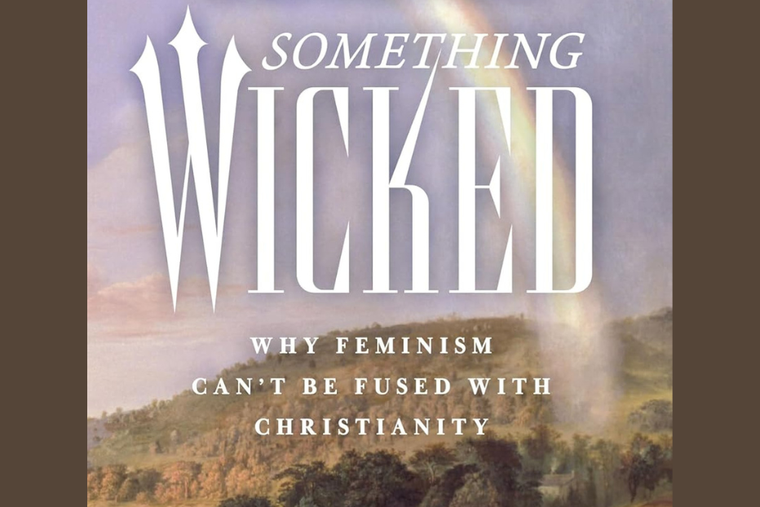
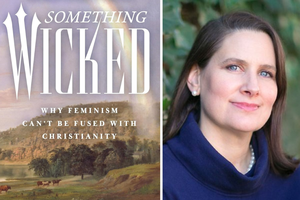
Editor’s Note: The following excerpt from Something Wicked: Why Feminism Can't Be Fused with Christianity (Sophia Institute Press), is published with the permission of author Carrie Gress and Sophia Institute Press. Please find an interview with the author and her new book here.
Gress told the Register about the title choice:
“Choosing a title is always a challenge. I wanted a name that would convey something quickly, perhaps connected with a phrase people already knew. The Shakespearean phrase ‘Something Wicked this way comes ...’ came to mind, and it all came together. It also communicates something quickly: that feminism is negative, which is hard to do in a culture driven by sound bites. I really think, more than anything, it was the Holy Spirit. The same could be said of the cover; when I realized that I could use an image from Robert Duncanson, the 19th-century Black artist featured in the book, it all came together beautifully.”
In the 1940s, Pope Pius XII asked then — Fr. Fulton Sheen, who later became Archbishop Fulton Sheen — to do a deep study on Marxism and communism. The deadly ideology had already destroyed millions of people in the Soviet Union and Europe and was on the march to consume much more of the world. Fr. Sheen, who was then a professor at The Catholic University of America, in Washington, D.C., studied the philosophical roots of Marxism.
In his final report presented to Pope Pius, Sheen offered a thorough vision of the problems and pitfalls facing the Church. For decades, Fr. Sheen’s work served as a kind of inoculation against the communist vision and protected many from its cold, vengeful grasp. Nothing like this has yet been done concerning feminism, either in the Catholic Church or among a wider Protestant audience.
The closest thing to a large-scale rebuke of feminism came from Phyllis Schlafly’s Eagle Forum, founded in 1972. Motivated by the quickly ratifying Equal Rights Amendment, Schlafly mobilized millions of women to become actively engaged in fighting it, stopping it from being ratified as a constitutional amendment. Certainly, many of those women were faithful Christians, including Schlafly, who was Catholic. However, in more recent years, Christian organizations have been reticent to speak out against the anti-Christian roots of organized feminism.
Efforts to combat some of feminism’s advances may be found in the work of Pope John Paul II, including various encyclicals and general addresses such as Mulieris Dignitatem (On the Dignity of Woman) and his expansive theological work on the nature of male and female that became the Theology of The Body. The chaotic demands to ordain women as priests, which peaked in the 1980s and ’90s, have generally quieted down among Catholics. They have quieted too among Protestants, albeit for different reasons, as many Protestant churches have acquiesced and bought into the feminist lie of male and female interchangeability.
Recent years, however, have not shown any kind of a flagging of what many Catholic and Protestant influencers believe to be feminism’s virtues. New efforts to integrate, define, and implement feminist ideals into Christianity can be found easily at universities, news sites, blogs, podcasts, and in teaching or catechetical materials. There remains a general belief that feminism is simply malleable enough to fit in with even the most ardent adherents of the Christian faith. This belief, however, is proving to be incredibly misleading to millions of faithful, unsuspecting Christians.
The fruits have not been pretty. There is little difference between Christian women and their secular peers when it comes to occult practices or seeking out abortion. Catholic women use birth control at a rate nearly identical to the general population, despite the Church’s never-wavering teaching against it. Meanwhile, marriage rates are the lowest in history, birth rates are plummeting, and it isn’t uncommon to hear Christians, right along with secular women, state that they are just too selfish to have children. The feminist ideology has managed to sweep all of us into its orbit in one way or another.
The damage has redounded through the culture. Men and boys are suffering from the absence of appreciation for their gifts and God-given purposes because of the overemphasis on female empowerment. Marriage has become a luxury item unavailable to poor women, leaving many “married” to the government for the care and financial support of their children. Meanwhile, women of all classes who want to be married often remain single. Others looking for relationships must endure the expected humiliations of the hookup culture as a hoped-for entry point to a mate with a future. The blurring of the lines between the gospel message given to us by Jesus and a seemingly equally strong appeal to empower women has left behind many of the people whom it was supposed to help, particularly the poor, the weak, and the vulnerable.
Like Oz’s wizard, the glitter of feminism has promised much but is proving to be not only empty but dangerous. Feminism has been presented as just a “women’s rights” movement, serving a good purpose in general by providing women with jobs, education, opportunity, and empowerment. But as we dare to pull back its curtain to expose its philosophical roots, we see a much more sinister reality.
Literature professor Janice Fiamengo, who for years had been a devoted feminist, after researching the dark roots of feminism suggests that “everyone thinks they know something about feminism, and that little that they think they know is almost completely wrong.”
Those trying to connect feminism with contemporary Christianity tend to put a benign face on the movement, with a simple definition such as “feminism is about helping women.” Others are more specific, like John G. Stackhouse: “Feminism only means we champion the dignity, rights, responsibilities, and glories of woman as equal in importance — not greater than, but certainly not less than — to those of men, and we refuse discrimination against women.” This all sounds appealing, but things get complicated very quickly when we consider the specifics, such as men and women having different responsibilities, or how physical embodiment conveys an equal but mutually exclusive dignity.
But perhaps most importantly, these kinds of definitions aren’t what the feminists (of any wave) meant by feminism. And yet this ambiguity is what has given feminism free rein to influence, sway, and confuse the masses. The movement has become an intellectual behemoth by simply failing to define itself beyond a few empty tropes, like “feminism is the belief that women are people, too” or “feminism is equal rights for women.” Under the guise of something very good, almost all of Western culture has been unwittingly caught up in something very bad.
- Keywords:
- catholic feminism
- radical feminism
- carrie gress