There Is Only One Human Nature
COMMENTARY: What we want is not the same as who we are.
“I couldn’t help seducing my best friend’s wife. It’s just my nature.”
“I’m a hothead. I admit it. I was born that way. Deal with it.”
“You say I’m a liar, but I say you’re a loser. I’m good at lying, and I play the game with whatever nature gave me.”
“I’m a woman in a man’s body. Stop denying my reality.”
Popular culture drums into us the theme that each person’s nature is different. So far, we are oddly selective. For example, the idea of a promiscuous nature is greeted much more warmly than the idea of an adulterous one. Still, if we can have different natures, then how can we be measured by the same natural law?
People are different. From the fact that their personalities are different, though, it doesn’t follow that their natures are different. The virtues are good for all human beings; the vices are bad for all of them. If, for example, I have stronger inclinations to philandering, bad temper or drunkenness than you do, that doesn’t show that I have a different nature or a different virtue than you do, but that I have a character defect. If so, then truly “affirming” me wouldn’t mean encouraging my disordered desires, but encouraging me to keep them in check.
When it comes to drunkenness, most people get this. We don’t say I have a “drunk nature” so that I should get smashed every day; instead we encourage sobriety. Unfortunately, when it comes to certain other areas of life, we don’t get it. To mention just one of them: We call it mean and “judgmental” to encourage sexual purity, because “each person has a different nature.” You may be a one-woman man, but for all you know I’m a 64-woman man. Don’t judge me, bro.
The problem with that line of reasoning is that not all judgments are “judgmental.” It isn’t “judgmental” to judge that I should come in out of the rain, it isn’t “judgmental” to judge that I shouldn’t lay my hand on a hot stove, and it isn’t “judgmental” to judge that do-what-you-want, make-it-up-as-you-go-along sexuality damages our prospects for joyful and humane relationships. Did you know, for example, that people who cohabit before marriage are more likely to cheat on their spouses, and more likely to get divorced?
This is how we are made. Doing what we want doesn’t work well for us. We aren’t designed for it. And let’s not fool ourselves by saying “Yes, but we have a committed relationship.” The whole point of cohabitation is to avoid that commitment. People call it practice for marriage; it would be more accurate to call it practice for divorce.
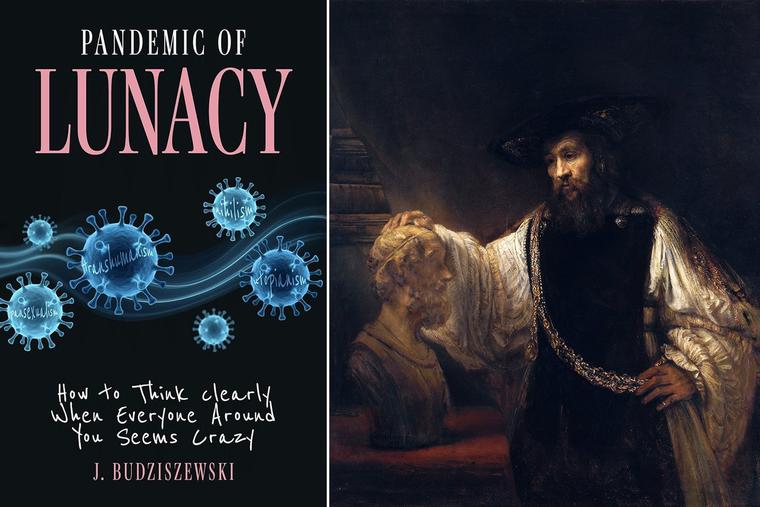
So far, I have been writing as though whenever people say, “I was born this way,” they are never mistaken — they were always born the way they think they were. But depending on which traits we have in mind, the claim may be false. As I explain in my new book, Pandemic of Lunacy: How to Think Clearly When Everyone Around You Seems Crazy, alcoholism seems to run in families, and the National Institutes of Health maintains that genetics seems to account for about half the risk of becoming alcoholic. However, according to a study by scholars at Harvard and MIT that studied the genetic makeup of nearly half a million people, the environment in which a person grows and develops has about twice as much influence on same-sex attraction as genetics has. A number of genes might have small effects, but the “gay gene” of popular legend is imaginary.
But suppose I really was “born this way.” Even when they do come from birth, individual characteristics aren’t fates. If I say, “Since I’m a born drunk, you should let me have another drink,” I am treating myself as less than I am, picturing myself as a primitive organism running on hard-wired, blind, unmodifiable instincts. Shouldn’t we have more respect for ourselves than that? Even when we suffer unwanted desires, we are rational beings capable of choice, beings who can learn from experience and reflect on the purposes embedded in the human design in order to steer ourselves appropriately.
Isn’t this a bit harsh? you might ask. No one has complete control over his thoughts and desires! True. But this objection forgets two things.
In the first place, we don’t have to do as our thoughts and desires bid us. When he began an affair with his live-in girlfriend’s adopted daughter, Woody Allen notoriously remarked, “The heart wants what it wants. … You fall in love and that’s that.” But that’s not that. Even if my heart wants something perverse, it can’t compel me to give it what is wrong. The old-fashioned name for wanting something I shouldn’t want is “temptation” — something to be resisted.
And in the second place, it is hardly compassionate to tell people they have no control over their thoughts and desires, because actually they have a good deal. Perhaps I can’t just turn off an unwanted thought, but if I ignore it instead of fondling it, it will eventually fade away. Perhaps I can’t just stop having an unwished-for desire, but I can get out of the situation that provokes it, or even stay out of it in the first place.
That helps a lot.
J. Budziszewski is a professor of government, philosophy and civic leadership at the University of Texas at Austin, and author of a new book, Pandemic of Lunacy: How to Think Clearly When Everyone Around You Seems Crazy (Creed & Culture).