Bonhoeffer Warned Us: ‘Stupidity’ Undermines the Human Person
COMMENTARY: Dietrich Bonhoeffer’s reflection on stupidity helps explain how false ideas about freedom and the human person can spread even in highly educated societies.
There are moments in history when the deepest danger to a culture is not ignorance but the loss of the capacity to live in the truth.
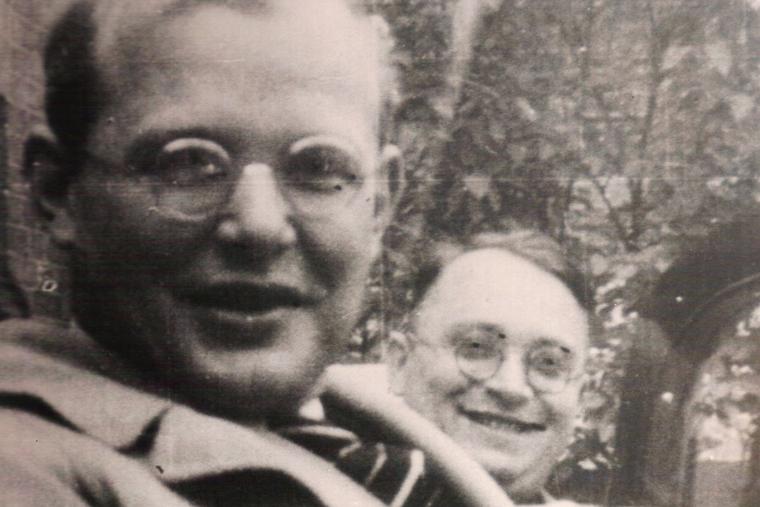
In the midst of the 20th century’s upheavals, the Lutheran pastor and theologian Dietrich Bonhoeffer offered a striking insight into this danger.
Writing from prison during the Nazi regime, he observed that the greatest ally of evil is not hatred or cruelty, but what he called “stupidity.” By this, he did not mean a lack of intelligence, but a loss of the human person’s freedom to stand before reality, to judge rightly and to act responsibly.
Bonhoeffer expressed this with characteristic force. He asserted that stupidity is a more dangerous enemy of the good than malice. In his experience, malice can be resisted and exposed. Stupidity, however, renders a person closed to truth itself. The stupid person, he wrote, is not simply uninformed; he has become “an instrument,” carried along by the spirit of the age, no longer able to hear, judge or respond freely.
That insight speaks with particular relevance in our own time.
We live in an age rich in information yet often poor in wisdom. We have unprecedented access to knowledge, and yet confusion persists about the most basic truths of human existence. Among the clearest examples of this confusion is the contemporary claim that human identity is not rooted in the bodily reality of being male or female, but is instead something fluid, self-defined and subject to personal interpretation. Bonhoeffer’s reflection on stupidity helps us understand how such views can gain traction even in highly educated societies.
At its heart, this confusion reveals a loss of freedom.
The Catholic tradition understands the human person as a unity of body and soul, created in the image of God, endowed with reason and free will, and called to live in the truth. The Second Vatican Council teaches that the human person acts with genuine dignity when he acts “according to a knowing and free choice” (Gaudium et Spes, 17). Freedom is not simply the ability to choose anything at all; it is the capacity to choose what is true and good. As Pope St. John Paul II later insisted, “Freedom consists not in doing what we like, but in having the right to do what we ought” (Veritatis Splendor, 35).
When freedom is severed from truth, it does not expand. It collapses. This is precisely what we see in much of contemporary discourse about gender. The Church affirms, in continuity with Scripture and natural law, that “God created man in his image … male and female he created them” (Genesis 1:27). Our sexual difference is not an arbitrary social construct but a gift inscribed in our very being, a fundamental dimension of who we are as embodied persons. As the Catechism of the Catholic Church teaches, “Sexuality affects all aspects of the human person in the unity of his body and soul” (CCC 2332).
Yet in many sectors of contemporary culture, this reality is denied or treated as irrelevant. Gender is described as something entirely separate from biological sex, something that can be self-defined, redefined and even changed at will. Language is reshaped to support this view, with new terms and categories multiplying rapidly. Those who question this framework are often dismissed as uninformed or uncharitable, regardless of their reasoning.
Here we see the dynamic Bonhoeffer described. The issue is not that people lack access to biological or medical knowledge about the human body. Rather, there is a widespread reluctance to allow that knowledge to inform moral and anthropological judgment. The person no longer stands before reality and asks, “What is true about the human person?” Instead, he begins with a prior commitment to autonomy or self-definition and then reshapes language and interpretation to support it.
Bonhoeffer described such a condition vividly: The stupid person “is under a spell,” no longer in possession of himself. When a cultural narrative becomes dominant, it exerts a powerful pressure that discourages honest questioning. Individuals may feel that to raise certain questions is to risk exclusion or misunderstanding. In such a climate, slogans and simplified formulas often replace careful reasoning. Phrases like “be true to yourself” or “you define who you are” can function as emotional shields that close off deeper reflection about the nature of the human person.
From a Catholic personalist perspective, this development represents a serious wound to the dignity of the person. The human person is not a self-creating project but a gift to be received. We do not invent our nature; we discover it. Our freedom is not exercised by denying the truth of our bodies, but by integrating our bodily reality into a life of self-giving love. St. John Paul II emphasized this in his theology of the body, insisting that the body “expresses the person” and is not merely an instrument at the disposal of the will.
When the unity of body and person is denied, the person risks becoming fragmented. The body is treated as raw material to be shaped according to subjective desire, rather than as a meaningful sign of who we are. In this way, what is presented as liberation can in fact become a new form of bondage. The person is no longer free to receive himself as a gift; he is burdened with the task of inventing himself, often under significant social pressure.
This is why the Church insists that conscience does not create truth but bears witness to it. In Veritatis Splendor, St. John Paul II teaches that conscience is “not an independent and exclusive capacity to decide what is good and what is evil,” but rather a judgment in which the person recognizes the objective moral law (Veritatis Splendor, 60). When conscience is reduced to a mere expression of personal preference, it loses its grounding and its authority. The person is left without a stable reference point and becomes more vulnerable to the shifting winds of culture.
Bonhoeffer also recognized that stupidity cannot be overcome by information alone. Education, while important, is insufficient if the deeper issue is the loss of interior freedom. Many who embrace contemporary theories of gender identity are not malicious. Often they are motivated by a genuine desire to be compassionate, to respect others and to alleviate suffering. These are good and noble desires. But when compassion is separated from truth, it can become misguided. It may affirm what ultimately harms rather than heals.
What is needed is liberation — a restoration of the person’s capacity to see reality clearly and to respond to it with love. For Christians, this liberation is found in Jesus Christ, who reveals both the truth about God and the truth about the human person. In him we see that freedom is not the power to redefine ourselves at will, but the grace to receive ourselves as we are created and to give ourselves in love. As the Lord himself promises, “You will know the truth, and the truth will make you free” (John 8:32).
The Church, as the Body of Christ, is called to be a place where this freedom is nurtured. Through the Word of God, we learn to listen again to the truth about the human person. Through prayer and the sacraments, especially the Eucharist, we are conformed more deeply to Christ, who lived his human identity in perfect harmony with the Father’s will. In this encounter, the spell of confusion begins to break, and the person is restored to himself.
Pastorally, this calls for a careful balance of truth and charity. The Church must speak clearly about the reality of human sexuality and the dignity of the body, while also accompanying individuals who struggle with questions of identity with genuine compassion and respect. Each person is infinitely loved by God and deserves to be treated with dignity. At the same time, authentic love does not affirm what is contrary to the person’s true good. It seeks to guide, patiently and gently, toward the fullness of truth.
For deacons, priests and all who serve in the Church, this means becoming witnesses to a different way of living, one in which freedom and truth are not opposed but united. It means helping people rediscover the beauty of being created male or female, the goodness of the body and the call to live our identity as a gift for others.
The insight with which we began remains a sobering one. The greatest danger is not always open hostility to the truth. Often it is the quiet drift away from it, the gradual acceptance of ideas that seem compassionate or liberating but that ultimately obscure the reality of who we are. In such moments, the Church’s mission is not to dominate or to condemn, but to bear witness — to live and speak the truth in love, trusting that the truth, when encountered in Christ, will indeed set us free.
Where that truth is welcomed, the person is no longer an instrument of the culture but a free and responsible subject, capable of knowing, loving and giving himself. The spell is broken. Conscience awakens. And the human person can once again stand before God and neighbor in the dignity of the truth.