Society of St. Pius X Says It Will Consecrate Bishops Without Papal Mandate Despite Vatican Warning
The SSPX refused to postpone the July 1 consecrations as a condition of doctrinal talks. Canon law foresees automatic excommunication for bishops involved in unauthorized episcopal consecrations.

The Priestly Society of St. Pius X (SSPX) says it will proceed with plans to consecrate new bishops on July 1 without a pontifical mandate, despite a Vatican warning that the move would represent a “decisive rupture” of communion and bring “grave consequences” for the group.
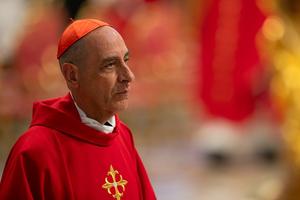
In a letter dated Feb. 18 — Ash Wednesday — Father Davide Pagliarani, the SSPX superior general, told Cardinal Víctor Manuel Fernández, prefect of the Dicastery for the Doctrine of the Faith, that the traditionalist group could not accept either the Vatican’s proposed framework for renewed dialogue or a delay of the announced consecration date.
The SSPX, which exclusively celebrates the Traditional Latin Mass, maintains doctrinal differences with certain teachings and reforms of the Second Vatican Council, particularly with regard to religious freedom and the Church’s approach to other faiths.
“I cannot accept the perspective and objectives in the name of which the dicastery offers to resume dialogue in the present situation, nor indeed the postponement of the date of 1 July,” Father Pagliarani wrote.
The Vatican’s doctrinal office had recently proposed what it described as a “specifically theological” path of dialogue aimed at identifying the minimum conditions for full communion with the Catholic Church but made the opening of that process contingent on suspending the planned July 1 consecrations. The Holy See warned that “the ordination of bishops without a mandate from the Holy Father” would “imply a decisive rupture of ecclesial communion (schism)” with “grave consequences” for the fraternity as a whole.
Under canon law, a bishop who consecrates another bishop without a papal mandate and the person who receives that consecration incur automatic (“latae sententiae”) excommunication reserved to the Apostolic See, a penalty that was publicly declared in the SSPX’s 1988 rupture with Rome.
SSPX argues consecrations would not be ‘schismatic’
Alongside Father Pagliarani’s letter, the SSPX circulated a doctrinal statement disputing the Vatican’s characterization of unauthorized consecrations as necessarily schismatic.
“The society defends itself against any accusation of schism and, relying on all traditional theology and the Church’s constant teaching, maintains that an episcopal consecration not authorized by the Holy See does not constitute a rupture of communion — provided it is not accompanied by schismatic intent or the conferral of jurisdiction,” the SSPX statement said.
- Keywords:
- sspx