The Joy of Ascension Shines Through the Wounds of the Passion
St. Augustine calls this life the ‘Before Easter’ season — a time of labor, suffering and praise — preparing us for the eternal ‘After Easter’ joy of heaven.

As the Easter season continues, it may feel like a lot of time has passed since our solemn commemoration of Christ’s Passion and Death because of Pope Francis’ death on Easter Monday, followed by the election of his successor, Pope Leo XIV.
It’s tempting to take our eyes off images of Christ’s suffering as we contemplate the joy of Easter, the arrival of summer, and all the emotions surrounding Leo’s new pontificate.
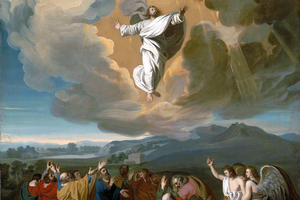
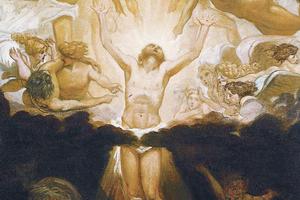
But the Church and Scriptures teach that the risen Christ still bears the marks of his five wounds. By keeping in mind the entire Paschal Mystery as we commemorate Jesus’ Resurrection and Ascension, we can better make sense of our own suffering and increase our hope for eternal life with him.
The Paschal Mystery — Christ’s Passion, Death, Resurrection and Ascension — will always be “recurring events” on the Church’s calendar through the Mass, which is continually celebrated somewhere in the world.
During every season of the liturgical year, we have an opportunity not only to commemorate the Last Supper at the Eucharist but to enter more deeply into Christ’s Passion and Death.
The Catechism says, “The Eucharist is thus a sacrifice because it re-presents (makes present) the sacrifice of the cross, because it is its memorial and because it applies its fruit” (CCC 1366).
Visual images in the film The Passion of the Christ powerfully connect Jesus’ sacrifice and the Eucharist. Like many Catholics I know, I try to watch this film during Holy Week and I find that throughout the year, scenes such as these bring to mind truths of the Passion.
St. Augustine considers the Church’s annual commemorations of the Paschal Mystery within what he labeled two broader seasons of life on earth and in eternity.
In his commentary on Psalm 148, he describes our present life with its temptations and tribulations as the season “Before Easter” and eternal life in heaven he named “After Easter.”
“The celebration then which we keep before Easter is what we do now,” St. Augustine writes, “by that which we keep after Easter, we signify what as yet we have not.”
During the Church’s annual observances of Lent and Holy Week, Catholics fast and pray while during the celebration of Easter, they praise and relax their fast. “This is the Alleluia that we sing,” he writes, “which, as you know, means (in Latin), ‘Praise the Lord.’”
In our earthly lives in the “Before Easter” season, we are to praise God, following Christ’s example, so we will be prepared to praise him in the “After Easter” season, he says.
In joy we praise with our voices, while during trials we pray with groans, St. Augustine writes. To prepare for eternity with God, we praise also with our conscience, life and deeds, as Christ did through his total gift of self in suffering and death.
“We must toil, be harassed, and, at last, die,” he writes. “But the resurrection and glorification of the Lord sets forth to us the life which we are to have hereafter, when He shall come to recompense due rewards, evil to the evil, good to the good.”
When the last Easter hymn is sung and decorations are removed from church sanctuaries, the crucifix will continue to remind us not only of how Jesus suffered to redeem us, but how with his total gift of self, he offers praise that points us toward the “After Easter” season.
- Keywords:
- ascension
- passion of christ
- suffering
- easter