11. Learning to Bow
For each of the 12 days of Christmas, I’ll review and fill out one of the “12 Ways of Christmas” …
Overlooked in the first year of his pontificate were Pope Benedict XVI’s excellent meditations on the Magi, given at World Youth Day in Cologne, whose cathedral houses relics of the Magi.
At the stable, said the Pope, “Outwardly, the journey of the Magi was now over. They had reached their goal. But at this point, a new journey began for them, an inner pilgrimage which changed their whole lives.”
On this (U.S.) Epiphany Sunday, here are some excerpts from the Holy Father’s explanation of the Aug. 20 vigil address at Marienfeld:
“Their mental picture of the infant King they were expecting to find must have been very different. … Yet, now they were bowing down before the child of poor people.”
“They had to change their ideas about power, about God and about man, and in so doing, they also had to change themselves.”
“God’s ways are not as we imagine them or as we might wish them to be. God does not enter into competition with earthly powers in this world. He does not marshal his divisions alongside other divisions. God did not send twelve legions of angels to assist Jesus in the Garden of Olives (cf. Matthew 26:53).”
“He contrasts the noisy and ostentatious power of this world with the defenseless power of love.”
“They had come to place themselves at the service of this King, to model their own kingship on his.”
They brought gold, frankincense and myrrh, but “now they have to learn to give themselves — no lesser gift would be sufficient for this King.”
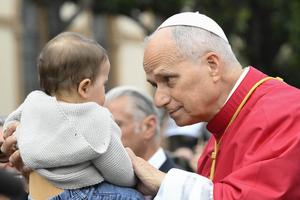
We all make ourselves kings in our minds. Our 11th way of Christmas reminds us that like the Three Kings, we need to learn how to bow:
“11. Only the humble know God. The shepherds were society’s outcasts. The Virgin Mary was no queen, by human standards. Joseph was a carpenter who had to offer the poor man’s sacrifice at the Temple. If we’re having trouble in our relationship with God, the first thing to do is to remember how unutterably great he is, and how infinitesimally small we are.”
— Tom Hoopes