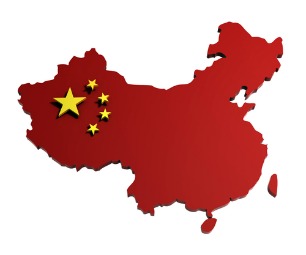
Whatever its other accomplishments, Henry Kissinger’s new book, On China, ought to cause serious reconsideration of that now-familiar refrain: “China is the lead country of the future.”
Kissinger’s analysis of Chinese history has been criticized, as has his reticence about evils like the massacres at Tiananmen Square. But his conclusion — that China’s future depends on the resolution of the conflict between those of its leaders who want to maintain totalitarian political control at all costs and those who want to complete the country’s remarkable economic development with a genuine opening toward democratic governance — strikes me as a fair summary of the situation. And it should give no comfort to the China-is-inevitably-No.1 crowd. A country that conflicted about its political future is an unlikely contender for world supremacy.
The current division with the Chinese political leadership will also be of interest to the Holy See. In Rome, some Vatican diplomats have long advocated a fast march toward full diplomatic relations with the Beijing government; others have urged a more measured approach, which has been the path chosen by both John Paul II and Benedict XVI. The latter seem to me to have the better of the argument. Indeed, it is not easy to see any advantage to the Catholic Church in quickly closing a diplomatic deal with the People’s Republic of China, ruled as it is today, and for three reasons.
1. The current regime cannot be trusted to keep its word. For some time, a modus Vivendi was in place between the Vatican and Beijing on the appointment of bishops. It was never codified, but everyone knew the basic rules of the road: No bishops are to be ordained without the tacit approval of the Holy See. The regime brazenly broke that working agreement late last year, going so far as to drag one elderly Chinese bishop by his hair to an illicit episcopal ordination. There is no reason to think that formal diplomatic relations between the Holy See and the PRC will resolve this bottom-line issue of the Church’s independence to control its own life; that issue has to be resolved before any diplomatic deals are concluded.
2. Diplomatic relations with Beijing means severing diplomatic ties with Taiwan. Taiwan is the first Chinese democracy in history; the Catholic Church has made clear for three decades now that, under modern conditions, democracy is morally superior to other forms of governance, most certainly including totalitarianism. For the Holy See to throw a Chinese democracy over the side while embracing Chinese totalitarians would raise grave questions about the Church’s commitments to human rights and democracy. The struggle that Kissinger describes over China’s future must be farther along the road toward a resolution in favor of the reformers before diplomatic relations between the Holy See and China make sense — not least because that kind of resolution could render the Taiwan issue moot.
3. Diplomatic relations with Beijing under current circumstances could well impede the Church’s evangelical mission in the China of the future. There is serious persecution of Christians in China. Yet, if and when China finally opens itself fully to the world, China is likely to become the greatest field of Christian mission since the Europeans came to the Western Hemisphere in the 16th century. If the Catholic Church is seen as an ally of the old regime in the period immediately after the old regime falls, the Church’s missionary efforts are going to be seriously compromised. Evangelical Protestants and Mormons, who are gearing up for major missionary efforts in China when that becomes possible, don’t have to worry about such linkages being drawn. The Catholic Church should not put itself at a disadvantage in the missionary China of the future by its diplomatic actions today.
The Catholic Church is 2,000 years old; the current Chinese regime took power in 1949. The Church can afford to wait. Keeping the pressure on, especially about religious freedom and the free appointment of bishops, is more important now than a nunciature and a Vatican ambassador in Beijing.
George Weigel is distinguished senior fellow of the Ethics and Public Policy Center in Washington, D.C. Weigel’s column is distributed by the Denver Catholic Register, the official newspaper of the Archdiocese of Denver.



Comments
Post a Comment
It is important that the Vatican realize that it is one very few governments that are not literally indebted to China and its moral authority cannot appear to ever be compromised (the Jesuits and Maryknollers should take note). The People’s Republic of China has always said one thing and done exactly what they want, dismissing any complaints as, “Interfering in China’s domestic affairs.” One could have foreseen the illegal consecration of bishops that is currently taking place - more will certainly occur. Pius XII was not afraid to call it like it is in China during his time and his encyclicals of the period are just as germane today as they were then.
Kissinger is arguably responsible for the murder of hundreds of thousands of Vietnamese and Latin Americans… His dirty hands and musings preclude him from a place at the table of righteous men and women. But then again the subject matter is not esoteric but in the realm of common sense.
Thank you for this excellent, clear and concise article.
That a international criminal like Henry Kissinger is even mentioned on a Catholic web site is truly dis-heartening.
Dealing with the so-called “People’s Republic of China” is like dealing with the Mafia. In fact, it is the world’s largest and most oppresive mafia.
Think of all the “jokes” about dealing with local mafia hoods, the ones who run “legit businesses” ... one as a Potemkin-like front, the real one as a gang of thieves, however loosely or tightly organized ... and of course, their two sets of books.
The Chinese government, its politburo, operates in much the same manner insofar as the rest of the world is concerned. the old boys (sometimes, even with considerable gall, grudgingly) put up a show of paying at least lip-service and a nod to…the rules of civilized nations as clearly stated in the UN Charter and other diplomatic/trade agreements they’ve signed to. Ask anybody at Google how well Beijing lives up to its agreements.
Then there’s the other Chinese government; the one that tolerates a Spencarian capitalist environment for foreign companies willing to go Faustian with China and Benedict Arnold on their own countrymen back home. (That’s where you’ll find the “other set of books” in use. BTW, when the heck is anybody in State, Commerce and the DOJ going to conduct hearings on sweetheart deals between Fayetteville, AR and Beijing?!)
When it comes to missionary work, by many apprearances, Evangelical Protestants, however sincerely well-meaning their intentions are and good works have accomplished insofar as helping to bring people to know the Lord and provide educational/job training opportunities to help their converts and members the chance to advance above the rice paddies and sweatshops ... I’m still interested to see if “another set of books” is being kept insofar as they’re concerned. Thankfully the Vatican has seen fit to back off knowing full-well Beijing doesn’t grant concessions without taking more than even what its party hacks consider a “fair pound of flesh” in return. How many other “rights” will Chinese Protestants have to give up just to eat one day? Maybe they should ask their Evangelical friends if they have any literature concerning the feeding and clothing of famished Irish Catholics in County Mayo during the Great Hunger.
Foolish me! Wrong people I guess for them to ask, eh? Before we know it, Beijing will have all non-Evangelicals over there “taking the soup.”
Same warning goes for the Mormons, unless former Amb. Huntsman succeeds President Obama who appointed him as ambassador to Beijing in the first place. Hmmm, they’d better think twice given his record of consistency. Forget Romney. (Any “front runner” who trails the looniest excuse of a Christian politician in the civilized world, Michele Bachmann, won’t raise any hopes for Chinese Mormons should things turn for the worse for them in the upcoming year.
Let Taiwan wither diplomatically speaking. The Vatican shouldn’t recognize its government (the creation of General Douglas MacArthur, and fascist Chiang Kai Shek and his diabolically cunning wife, Madame Chiang sp?.)... but on the other hand DON’T give in on insisting that any government there, Taiwan’s existing gov’t or the boyos in Beijing, HAS TO ... do some kowtowing of its own to the Holy See first.
It’s not a matter of seeking Catholic triumphalism that I’m taking such an admittedly hard stand. Nor do I have anything against the Chinese people. Quite the contrary! I want an end to that barbaric and still self-styled “socialist, Marxist” thugocracy! Even Marx must be spinning in his grave! My expressed disgust with the Beijing boyos on the Politburo is a matter of standing up for any religious body to freely govern its own ecclessiastical matters first and foremost.
Maybe Kissinger long ago forgot what becoming an American was supposed to be about, especially when it comes to matters far more important and permanent than an appreciation for the fine art of practicing diplomatic “realpolitik.” But a lot of us here and many Chinese Catholics and other oppressed people living in that half-capitalist/half thugocracy, haven’t. Nor should any of us.
Diplomatic recognition from the Holy See for China? Like Hell! Never forget Tianament Square. After all, it’s right outside the politburo’s office windows.
It’s no small wonder why John Paul II and Benedict XVI haven’t been so kindly disposed to mortgaging the Church’s higher principles for the sake of making everything all nicey-nice with dictators in hopes they won’t be pushed around. They NEVER forgot what Hitler and Stalin pulled.
All devout Roman Catholics need to pray many rosaries and novenas for the conversion of China. As avid consumers of the products of this highly immoral country and its people, whom God loves and for whom Our Lord died, all Christians, especially Catholic Christians, have a moral debt to pray for the spiritually poor and the spiritually ignorant in China. Thus, the Catholic Church has the highest moral obligation to continue its prayers for this morally bankrupt country which not only flaunts its violations of international human rights and persecutes Christians, but will also be an even greater agent of moral tyrrany, sabotage and subversion in the future as the world spirals to a state of great distress.
Dna. Maria St. Catherine, IVD
Post a Comment
By submitting this form, you give The National Catholic Register permission to publish this comment. Comments will be published at our discretion, and may be edited for clarity and length. For best formatting, please limit your response to one paragraph and don't hit "enter" to force line breaks.