A Young Man Discerning the Priesthood Asks...
The Church in the modern era (especially flowing from Vatican II) seems to be investing sizable resources in articulating the reality of equal dignity between men and women: while not the “same”, both are equal in God’s gift of Himself to each. One practical application of this principle can be seen in the Church’s steadfast belief that, while a woman cannot be ordained, she still has equal worth to that of an ordained man.
However, someone recently tried to explain to me that the ontological change a man undergoes in the sacrament of ordination disposes him more fully to a life of holiness. Here, then, is my question: Does the ontological effect of ordination dispose a priest (or, bishop or deacon) more fully to a life of holiness? That is, does ordained life allow for a man to be more able to receive the Lord’s grace when compared to both women in consecrated life (nuns, consecrated virgins, etc.) and members of the laity of either sex?
While this might seem trivial, I’m wrestling with this and would greatly welcome any help/direction you could provide. Additionally, any reference to Church documents and/or reputable theologians would be greatly appreciated!
I’m no expert on this at all, so I turn to the Catechism to see what it says. When I do, I find this:
Two participations in the one priesthood of Christ
1546 Christ, high priest and unique mediator, has made of the Church “a kingdom, priests for his God and Father.“20 The whole community of believers is, as such, priestly. The faithful exercise their baptismal priesthood through their participation, each according to his own vocation, in Christ’s mission as priest, prophet, and king. Through the sacraments of Baptism and Confirmation the faithful are “consecrated to be . . . a holy priesthood.“21
1547 The ministerial or hierarchical priesthood of bishops and priests, and the common priesthood of all the faithful participate, “each in its own proper way, in the one priesthood of Christ.” While being “ordered one to another,” they differ essentially.22 In what sense? While the common priesthood of the faithful is exercised by the unfolding of baptismal grace—a life of faith, hope, and charity, a life according to the Spirit—, the ministerial priesthood is at the service of the common priesthood. It is directed at the unfolding of the baptismal grace of all Christians. The ministerial priesthood is a means by which Christ unceasingly builds up and leads his Church. For this reason it is transmitted by its own sacrament, the sacrament of Holy Orders.
In the person of Christ the Head . . .
1548 In the ecclesial service of the ordained minister, it is Christ himself who is present to his Church as Head of his Body, Shepherd of his flock, high priest of the redemptive sacrifice, Teacher of Truth. This is what the Church means by saying that the priest, by virtue of the sacrament of Holy Orders, acts in persona Christi Capitis:23
It is the same priest, Christ Jesus, whose sacred person his minister truly represents. Now the minister, by reason of the sacerdotal consecration which he has received, is truly made like to the high priest and possesses the authority to act in the power and place of the person of Christ himself (virtute ac persona ipsius Christi).24
Christ is the source of all priesthood: the priest of the old law was a figure of Christ, and the priest of the new law acts in the person of Christ.251549 Through the ordained ministry, especially that of bishops and priests, the presence of Christ as head of the Church is made visible in the midst of the community of believers.26 In the beautiful expression of St. Ignatius of Antioch, the bishop is typos tou Patros: he is like the living image of God the Father.27
1550 This presence of Christ in the minister is not to be understood as if the latter were preserved from all human weaknesses, the spirit of domination, error, even sin. The power of the Holy Spirit does not guarantee all acts of ministers in the same way. While this guarantee extends to the sacraments, so that even the minister’s sin cannot impede the fruit of grace, in many other acts the minister leaves human traces that are not always signs of fidelity to the Gospel and consequently can harm the apostolic fruitfulness of the Church.
1551 This priesthood is ministerial. “That office . . . which the Lord committed to the pastors of his people, is in the strict sense of the term a service.“28 It is entirely related to Christ and to men. It depends entirely on Christ and on his unique priesthood; it has been instituted for the good of men and the communion of the Church. The sacrament of Holy Orders communicates a “sacred power” which is none other than that of Christ. The exercise of this authority must therefore be measured against the model of Christ, who by love made himself the least and the servant of all.29 “The Lord said clearly that concern for his flock was proof of love for him.”
Again, speaking as a non-expert on the matter and open to correction (particularly from any priest or theologian readers), it seems to me that you may be formulating the question wrongly. Augustine says, ““For you I am a bishop but with you I am a Christian.” This reflects a basic principle found everywhere in the Tradition: namely, that the Chosen are always chosen for the sake of the unchosen. To be “holy” is to be “set apart”. In the case of sacerdotal ordination, a priest is being set apart for the sake of those who are not ordained. However, those who are baptised are likewise “set apart” for the particular mission God is giving them as laity. Merely to be set apart is not, necessarily, to be a saint or bound for heaven (Judas was, we must never forget, set apart by Jesus to be an apostle). Nonetheless, the purpose of being set apart for whatever the Lord calls us to *is* to seek our sanctification. But as the sinful priests who have blighted the last decade demonstrate, the fact of their consecration as priests does not necessarily imply that they are “holier” than the people to whom they minister (and upon whom they preyed) in the sense of being more closely conformed to the image and likeness of Jesus Christ.
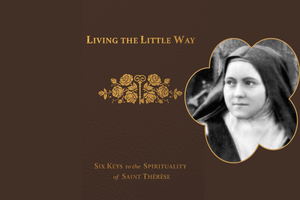
I suspect the best way to think about whatever vocation God calls us to is not to waste time with whether one is “higher” or “holier” than somebody who is called to some other vocation, but rather to recall the invaluable image of St. Therese. She tells us that some people are made by God to be buckets and some to be thimbles. The grace of whatever vocation you are called to, whether ordained or lay, is intended to help you be as open as you can be to the kind of vessel God made you to be. If you are a thimble and God calls you to be a priest, ordination will help you become the best thimble you can be. If you are a layman and God makes you a bucket, then seek his grace to make sure there is nothing filling the bucket with junk so that you can’t recieve the water of the Spirit. At the end of the day, God is the one who makes us a bucket or a thimble and we please him by being what he made us to be, not by comparing ourselves with others. If you are called to be a priest then the best thing you can do is priest as well as you can for Jesus, knowing that wherever you stand in the relative ranking of the saints, the people for whom you were chosen will be grateful to you throughout endless ages because of the cooperation you offered Jesus when he sought to save them through you.
As I say, I’m not an expert here and your mileage may vary, but it seems to me that this is the way to approach the matter.