Plight of Persecuted Christians Is ‘Urgent and Needs to Be Addressed,’ Hungarian Relief Official Says
Tristan Azbej, Hungary’s state secretary for persecuted Christians, discusses how Hungary Helps, his nation’s international aid agency, is living out the Pope’s vision for authentic human flourishing.
On Monday, Pope Leo XIV met with Hungarian Prime Minister Viktor Orbán. Details of what the two leaders spoke about were not made public, but one issue of particular concern to Orbán is the plight of persecuted Christians and endangered Christian communities around the world.
Orbán’s administration created a dedicated governmental unit to focus on that issue in 2016; and in 2018, the unit expanded to include Hungary Helps, an agency that functions as a nonprofit organization that supports aid efforts and development projects in various communities in the Middle East, Asia and Africa.
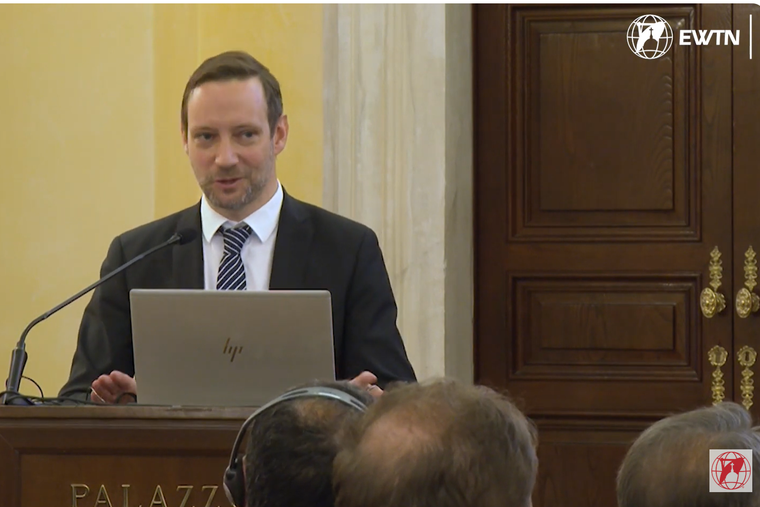
Hungary Helps is currently under the direction of Tristan Azbej, Hungary’s state secretary for persecuted Christians. This summer, he spoke to the Register while in Rome with members of the International Catholic Legislators Network, an organization that gathers Catholic scholars and politicians from all over the world. As is customary, the group had an audience with the Holy Father on Aug. 23.
The Pope told the network that “authentic human flourishing stems from what the Church calls integral human development, or the full development of a person in all dimensions: physical, social, cultural, moral, and spiritual. This vision for the human person is rooted in natural law, the moral order that God has written on the human heart, whose deeper truths are illuminated by the Gospel of Christ.”
Azbej told the Register that the Pope’s message fits with the goals of the program he leads. In this interview, he talks about the outcomes of the Hungary Helps initiative, the importance of God in the current geopolitical landscape, and the possibility of opening more initiatives like Hungary Helps in other countries.
You said that the Pope’s message to ICLN resonates with the work of Hungary Helps. In what ways, and how?
It was a privilege to listen to the wise guidance given to Catholic politicians by Pope Leo XIV. He talked to us about authentic human flourishing that consists in ensuring the freedom to seek truth, to worship God and to raise families in peace, including also the harmony with creation and solidarity across social classes and nations. The aim of Hungary Helps is precisely this: to allow Christian communities to live in peace, along with their neighbors and exercise their freedom of religion, and to help them achieve a harmonious development towards a sustainable and just future.
What are the outcomes that Hungary Helps has achieved so far?
Since the launch of the Hungary Helps program in 2017, Hungary has, to date, supported more than 350 projects in 64 countries worldwide, with a total budget of around 100 million EUR ($111 million) through the Hungary Helps agency. It was thus able to help in some way around 2 million people. The fundamental principle of Hungary’s efforts is to assist crisis-affected communities to remain and prosper in their homelands and to enable a dignified return for refugees and displaced persons.
An explicit but not exclusive aim of the Hungarian efforts is to enable Christians persecuted or discriminated on grounds of their faith to preserve their identity, their tangible and intangible heritage, and to remain and prosper in their homelands. It is always a great joy for me to receive feedback, like regarding the Syriac Orthodox school that we helped to build in Erbil that was able to convince that community not to emigrate since the best education is now available for them over there. In other areas, we simply support or complement the social mission of the Church. For example, I was moved to meet some people in Kenya who have been assisted, with our support, to return from Nairobi slums to their original lands, and restart their life, and work.
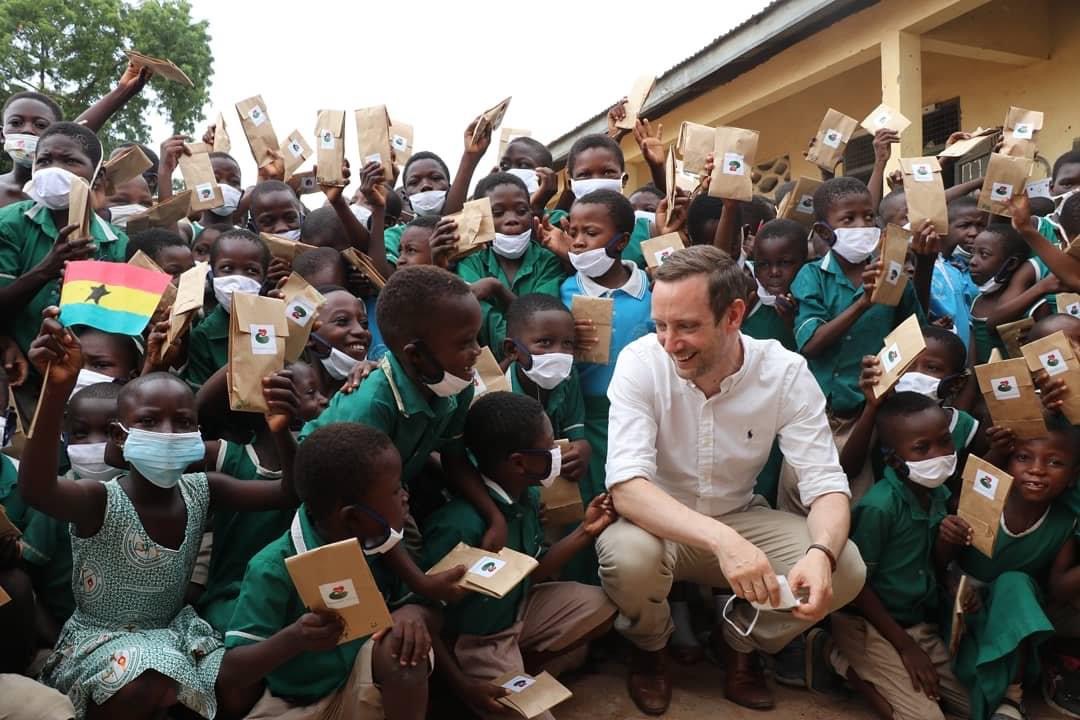
Hungary Helps has been very active in the Middle East. How is it helping the current situation in the Holy Land, with a particular reference to the Gaza situation?
Since its establishment, the Hungary Helps program has paid special attention to the Middle East. What Hungary is doing in the present situation is not going on to protest or invoking sanctions, but to listen to the local — most of the time, Christian, faith-based — actors, how could we be useful for them. Over the past nearly 10 years, several hundred smaller or larger aid and development programs have been carried out in the Levant region with the support of the Hungary Helps program, involving Churches and civil partners. Outstanding among these are the programs implemented in Lebanon, Syria and Iraq, many of which have been truly unique and filled crucial gaps in the region. Examples include the projects supporting the return and new start of internally displaced persons (IDPs) in Homs, Syria, or the educational and agricultural initiatives in Iraq, on the biblical lands of the Nineveh Plains. And the list could go on.
As for the Gaza situation: We are closely monitoring developments. It is clear that we do have a humanitarian obligation there, not in the context of Christian persecution — as the ongoing violence is rather stemming from a political conflict — but with the clear objective that we shall support those who care for the most vulnerable victims of this war. Since Hungary Helps often supports the social and humanitarian mission of the Church, I have contacted personally His Beatitude Cardinal Pierbattista Pizzaballa, the Latin patriarch of Jerusalem, and then did what we could in order to help his mission in supporting those who suffer in Gaza, Christians and Muslims alike.
The presence of the Hungary Helps program in the Middle East is of key importance for the program as a whole and will remain so in the future.
From your specific perspective, what do the Catholic world and communities need more? And what can politics do to help the Catholic communities?
To echo the words of the Holy Father, the Catholic Church needs Christ. I am moved by the clear and unequivocal message by His Holiness Pope Leo, who wants us to put Christ at the center of our lives. Sure, Catholic politicians are called to be authentic while exercising their profession. And they can do a lot in order to help faith communities to carry out their mission within our societies, for the benefit of all, while respecting their autonomy. This is at the basis of what the government of Hungary is doing at home, and this is also the philosophy of the Hungary Helps program: helping but not imposing our own agenda. Hungary has always avoided any sort of “ideological colonization.”
Do you think religion is under threat in the current world order?
From a religious perspective, we can say that evil is always at work in the world, so faith and in some countries Christians themselves are in danger. From a more political perspective, I see a lot of undue interference and even threats from radical secularist ideologies or Islamist extremism endangering Christians. Suffice it, looking to the news: Christians slaughtered in Nigeria, people arrested in some Western countries for praying or citing the Bible, churches vandalized or burned. I am convinced that more political leadership is needed in order to end these phenomena.
In these years, we see more special envoys for religious freedom — though the EU has not appointed the new one yet — but fewer offices for persecuted Christians, and Hungary Helps is sort of a “unique” experience. How do you value the need of a religious freedom office? And how do you think that the Hungary Helps experience can be an example for other similar offices?
Advocacy for human rights and freedom of religion, in particular, is certainly quite important. Yet it is equally important to ensure that people can effectively live out their freedom. I am not exactly free to exercise my religion if the church is destroyed, if I have no possibility to attend religious education, if the Church cannot afford the formation of new clergy, etc. So the practical details are also vital. This is the speciality of the Hungary Helps program: to focus on these concrete needs of the people, especially for Christians, who are absolutely the most persecuted religious group in the world.
There are also Western countries that understand this approach and try to focus on the concrete issues, but sometimes legal and administrative constraints, or the necessity to stay politically correct, refrain their goodwill. Hungary, through the special Hungary Helps law, has given a solid basis for our humanitarian and development activity. We remain open for cooperation with other interested governments, since the cause of persecuted or endangered Christians is urgent and needs to be addressed.
- Keywords:
- hungary helps
- persecuted christians
- tristan azbej